

Fine motor activities for preschoolers that a therapist actually recommends

The best fine motor activities preschool kids can do look a lot like ordinary play: blocks, beads, crayons, play dough, and pouring water. Everyday play builds small hand muscles better than a stack of worksheets.
The rule our occupational therapists (OTs) follow is simple. Keep practice short, keep it frequent, and set it one step above easy. This guide gives you the activity list, the targets for ages 3 and 4, how OTs sort activities by skill, a simple home plan, the safety rules, and the signs that call for more than play.
A licensed occupational therapist (OTR/L) on our team reviewed this guide before it went live. Our clinical team has served more than 10,000 kids over 22 years, and fine motor skills are one of the core areas our OTs treat.
What activities build fine motor skills in preschoolers?
Everyday play builds fine motor skills in preschoolers. The American Academy of Pediatrics lists building blocks, simple puzzles, pegboards, large beads, crayons or chalk, pouring water, and dressing dolls. At ages 4 to 5, add cutting with safety scissors, clay, brush painting, and tracing shapes like stars or diamonds.
Here is the full list from the AAP's hand and finger skills guide, one line per activity:
- Blocks: stack and build towers, bridges, and roads.
- Simple puzzles: start with 4 or 5 large pieces.
- Pegboards: push pegs in and pull them out.
- Large wooden beads: string them on a thick lace.
- Crayons or chalk: color, scribble, and draw on paper or the sidewalk.
- Pouring water: pour between cups and containers of different sizes.
- Doll dressing: work large zippers, snaps, and laces on doll clothes.
- Safety scissors and paste (ages 4 to 5): cut paper strips and glue them down.
- Clay (ages 4 to 5): roll, pinch, and shape.
- Brush painting (ages 4 to 5): paint with a brush, then with fingers.
- Tracing shapes (ages 4 to 5): trace and copy patterns like stars or diamonds.
Every activity on the list costs little or nothing. Your kitchen, a box of crayons, and a tub of play dough cover most of it.
You can skip doing all eleven at once. Pick two or three that match what your child already loves, and rotate in a new one each week. A child who loves trucks can load beads into a toy dump truck. A child who loves art can tear and glue paper for a collage.
Why preschool fine motor skills activities matter
Preschool fine motor skills activities matter because hand skills before kindergarten link to school success later. The clearest evidence involves copying shapes and designs.
In a 2012 study of 213 children by Cameron and colleagues, design copy, a fine motor task where children copy shapes, predicted higher achievement on several kindergarten tests. It also predicted growth in achievement from fall to spring. Executive function, the brain's planning and self-control system, mattered too.
A 2025 study by Karimi and colleagues summed up that research this way: fine motor skills, especially copying shapes and designs, were strongly linked to letter-word identification. In plain terms, the child who can copy a cross or a square is building the same control needed to form letters.
So when your 4-year-old copies a circle at the kitchen table, that small moment carries real weight. It is early writing practice in disguise.
One honest note. These studies show a link between hand skills and school skills. They offer no guarantee that more play dough means higher test scores. The takeaway is simpler: hand skills are worth building, and play is a low-cost way to build them.
Fine motor skills activities for 3-4 year olds
The CDC milestone checklists give a short, useful set of targets for 3 and 4 year olds. Use them as a guide for which activities to offer, and keep the full milestone charts for our longer references.
Age 3 targets
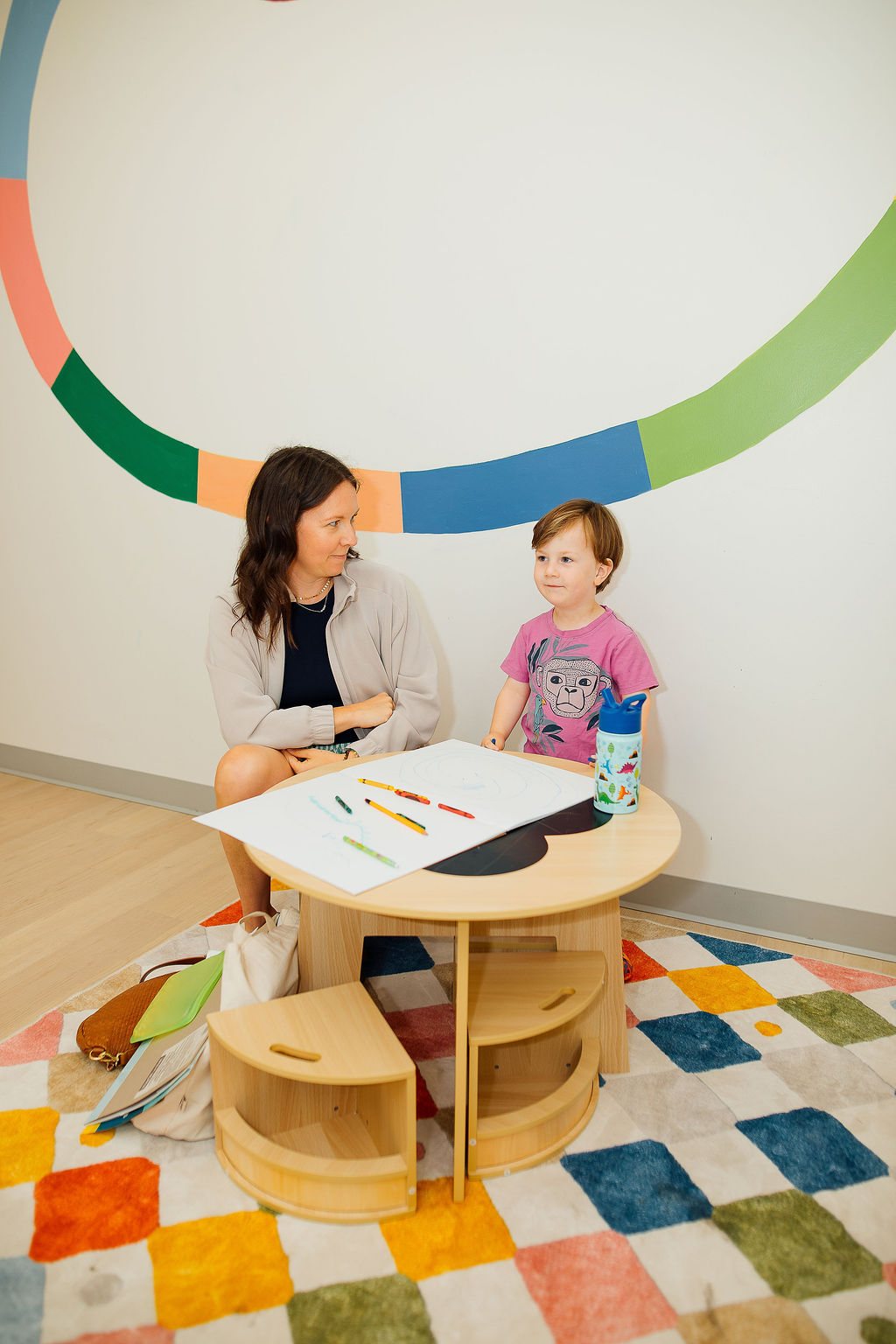
By age 3, the CDC says most children string items together, like large beads or macaroni, use a fork, and draw a circle when you show them how. Good activities at this age: big beads, scooping and stirring, and drawing circles side by side with you.
Age 4 targets
If your 3-year-old is still working toward these, keep the materials big and the steps small. Thick laces, chunky beads, and a wide fork are easier to control.
By age 4, most children hold a crayon or pencil between fingers and thumb, with no fist, and unbutton some buttons. Good activities at this age: short crayons, doll clothes with buttons, and pouring water with supervision.
For the full picture, read our guide to fine motor skills vs gross motor skills. Our upcoming fine motor skills by age reference will cover every milestone in detail.
Fine motor activities preschool OTs use, sorted by skill
OTs sort fine motor activities preschool children enjoy into four skill groups: hand strength, pinch and grasp, two hands together, and pre-writing. Most activities of fine motor skills touch more than one group, and picking one main group at a time keeps practice focused.
Hand strength
Strong hands make every other skill easier. The American Occupational Therapy Association's school-based special interest section (AOTA CYSIS) lists play dough or putty to build the strength behind a good grasp.
- Play dough: squeeze, roll, and pinch it.
- Squeeze toys: squish balls and squeeze bath toys.
- Spray bottles: water plants or spray chalk drawings on the sidewalk.
Pinch and grasp
Grasp develops in a set order. AOTA CYSIS lists a static tripod grasp at about 3 to 4 years, then a dynamic tripod grasp from 4 to 5 years. In a static tripod, the pencil sits between the thumb and two fingers and the whole hand moves. In a dynamic tripod, the fingers move the pencil on their own.
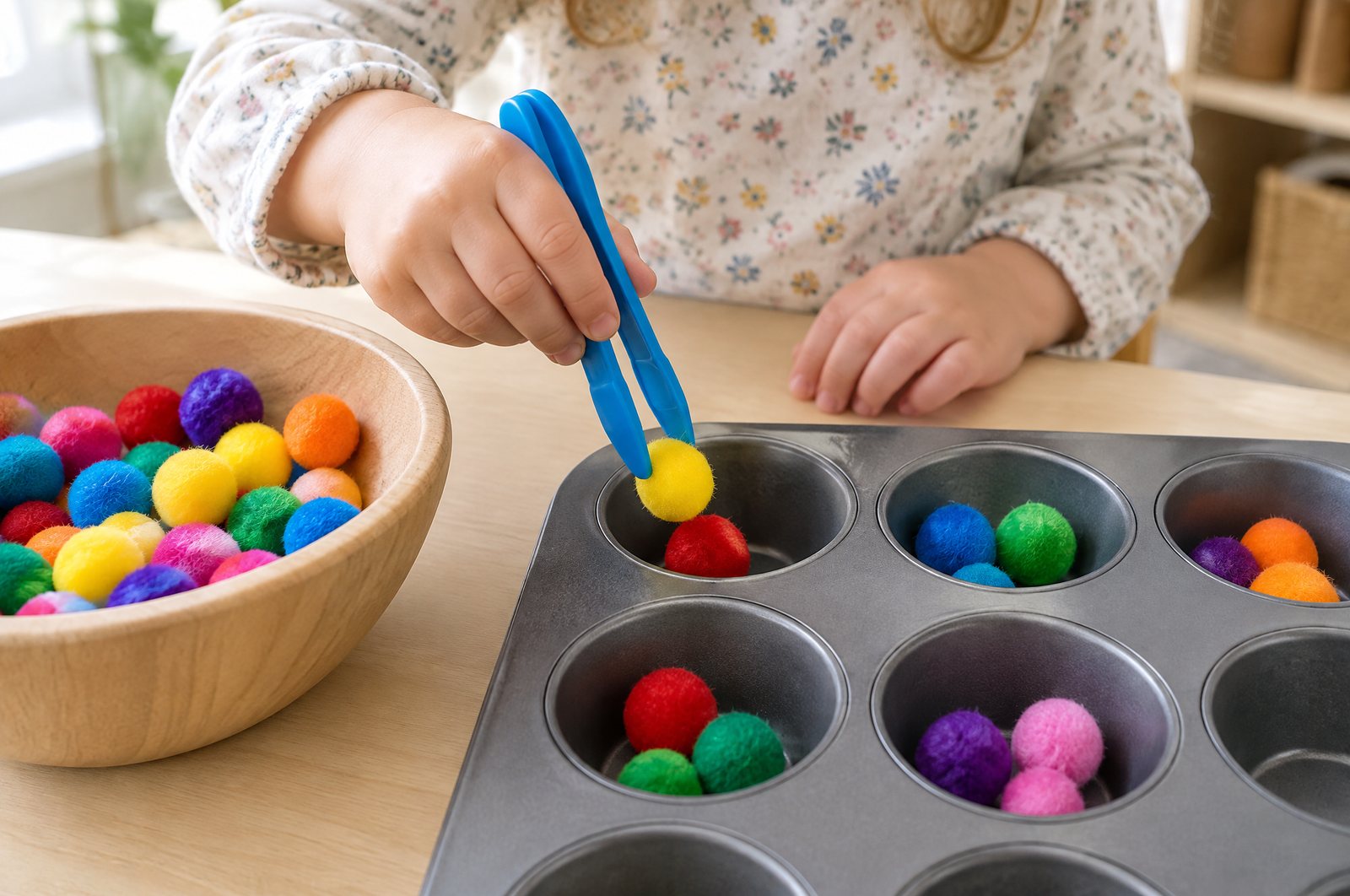
- Tweezers: pick up pom-poms or cereal pieces and drop them in a cup.
- Play dough worms: roll thin worms, then shape them into lines and circles.
- Short crayons: break crayons in half. A short crayon leaves room only for the fingertips, which nudges the hand toward a tripod grasp.
Two hands together
Many tasks need one hand to hold while the other one works. This is called bilateral coordination.
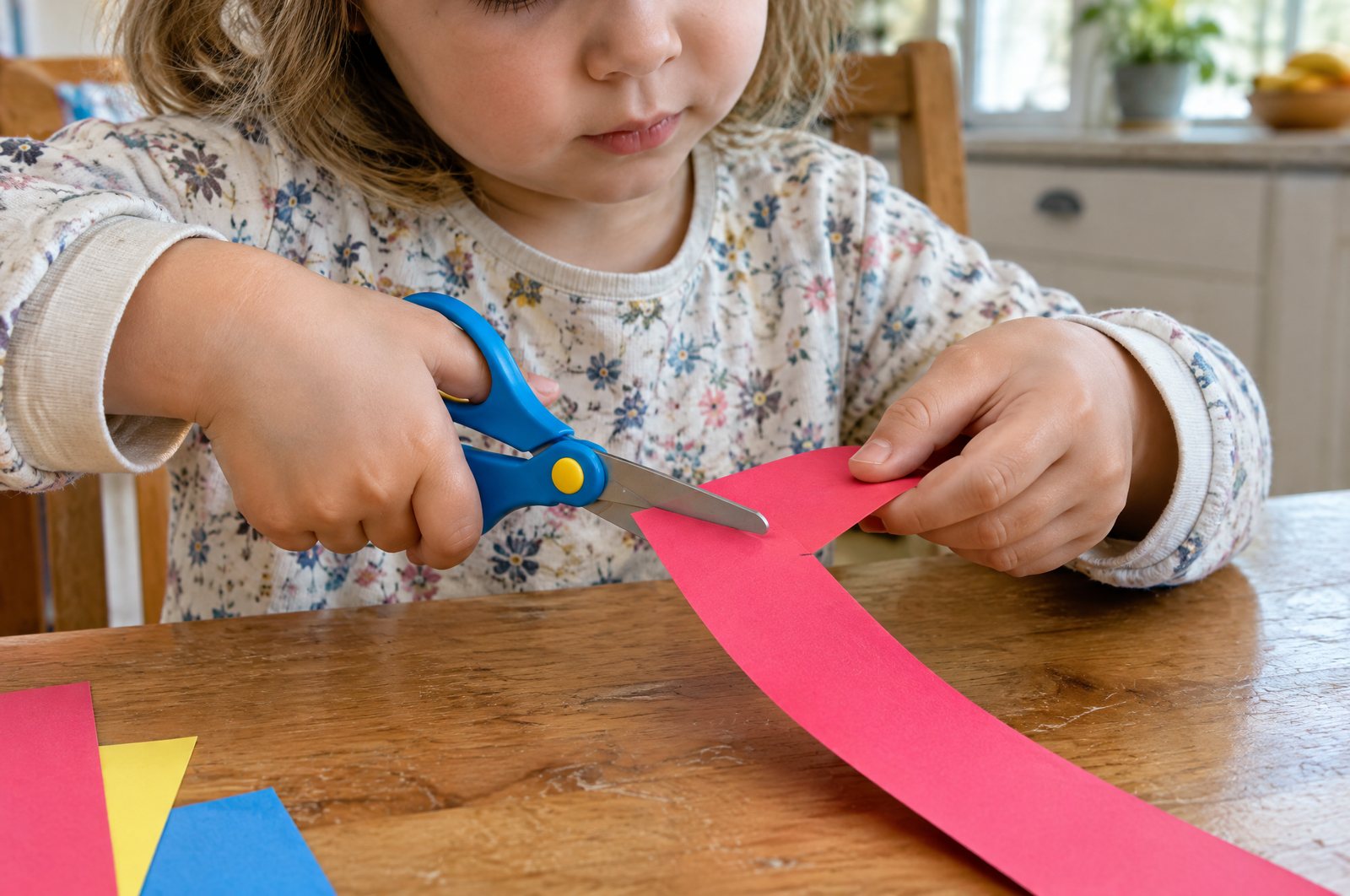
- Cutting: one hand holds the paper, the other cuts.
- Stringing: one hand holds the lace, the other pushes the bead.
- Jar lids: twist lids on and off clean plastic jars.
Pre-writing
Pre-writing is the bridge from scribbles to letters. The CDC's milestone booklet suggests drawing with crayons on paper, shaving cream on a tray, or chalk on a sidewalk. Then draw a straight line and see if your child copies it. When lines are easy, show them a circle.
These pre-writing tips start around 30 months in the CDC booklet, and they stay useful through the preschool years.
How to set up fine motor practice at home
Good fine motor practice at home takes four steps and a few cheap supplies. Most sessions last a few minutes.
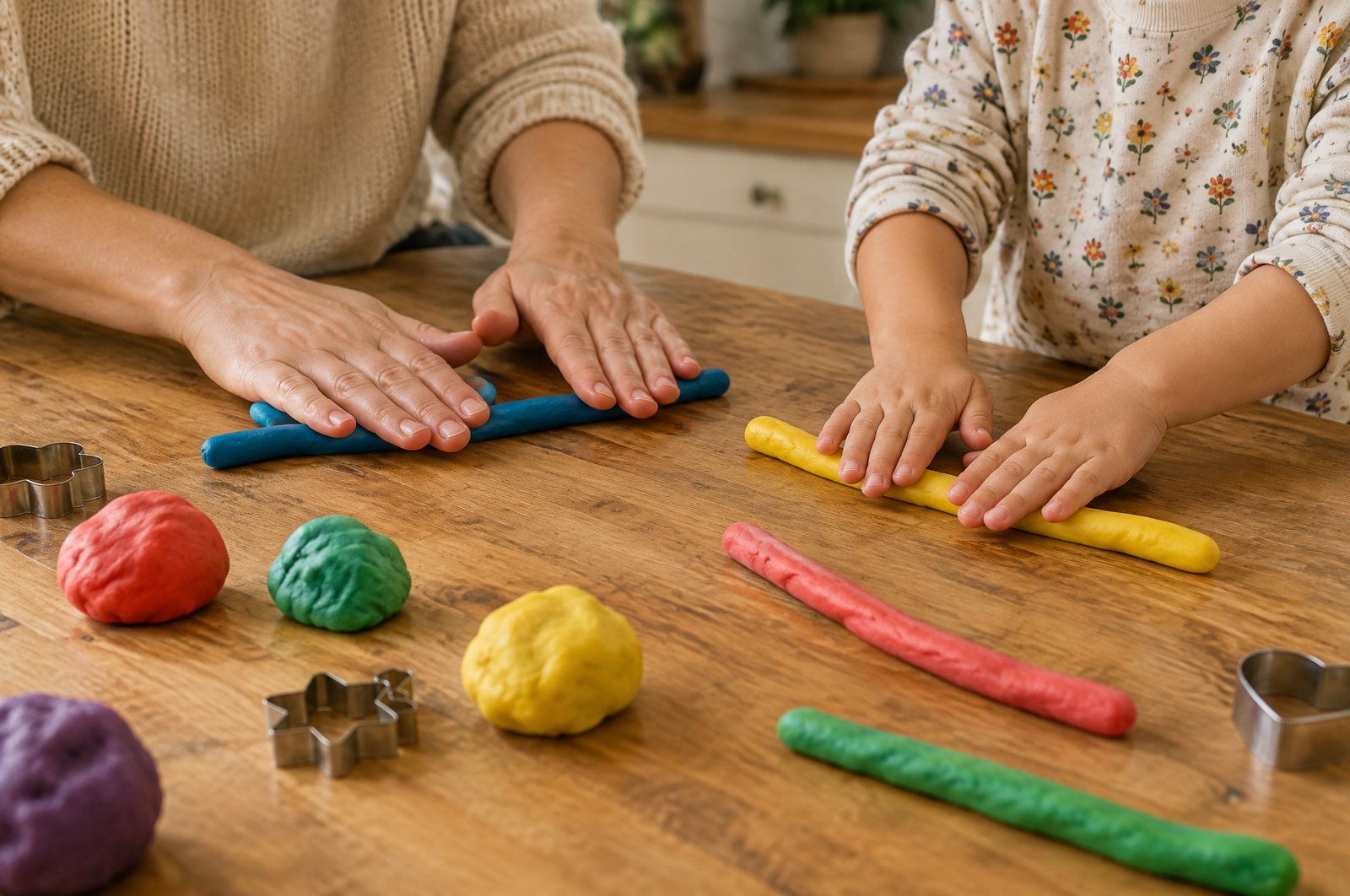
The fine motor activities preschool OTs suggest for home use toys you likely own already. The plan matters more than the toys. A clear skill, the right challenge, a steady rhythm, and a child doing the work themselves: that is the whole method, and these four steps are how to put it in place.
- Choose one skill. Pick hand strength, pinch and grasp, two hands together, or pre-writing for the week.
- Set the difficulty one step above easy. Your child should succeed most of the time with a little effort. Too easy is boring. Too hard ends in tears.
- Keep it short and daily. A few minutes most days beats one long session on the weekend.
- Let your child do it. Resist the urge to finish the zipper or fix the bead. The struggle is where the skill grows.
A sample week
Here is what one week of fine motor practice might look like for a 4-year-old working on pinch and grasp:
- Monday: tweezers and pom-poms, sorted by color into a muffin tin.
- Tuesday: play dough worms, shaped into lines and circles.
- Wednesday: short crayons and a coloring page.
- Thursday: stickers peeled and placed on a paper road.
- Friday: stringing large beads into a necklace for someone they love.
Supplies that cover it
Cheap materials are enough. The AAP's toy guide notes that high quality and a high price are two different things, and names crayons, clay, and stickers as great gifts. It also lists blocks among the classic toys that support fine motor skills. Peeling and placing stickers is a fine motor skill activity on its own.
A tip from our OT team
Our Lake Highlands clinic has a dedicated fine motor room. One setup idea from therapy rooms works well at home too: turn the table on its side. Tape paper to a wall, use an easel, or tape a coloring page to the side of a box.
Drawing on a vertical surface puts the wrist in a slightly bent-back position, which leaves the fingers free to do the work. In a 2018 study in the American Journal of Occupational Therapy, Portnoy and colleagues found that preschoolers copied shapes faster and more smoothly on a vertical surface, with no loss of accuracy.
Try it with chalk on an outdoor wall, crayons on paper taped to the fridge, or play dough worms pressed onto a window.
Small motor skill activities for preschoolers: safety first
Small motor skill activities for preschoolers often use small objects, so safety comes first. Supervise every activity with small parts.
The U.S. Consumer Product Safety Commission bans small parts in products for children under 3 because of choking, aspiration, and swallowing risks. A part counts as small if it slips entirely inside a test cylinder sized like a young child's throat.
- Supervise beads, pegs, buttons, and coins at all times.
- Keep small parts away from younger siblings under 3.
- Count pieces out and back in at the end of play.
- Use large beads and chunky pegs for younger preschoolers.
Fine motor activities for pre-K that miss
Worksheets and drills miss the point when they replace real tasks. Real tasks build real skills.
AOTA finds no evidence for isolated activities that train the parts of handwriting on their own, like visual-motor drills done away from writing. AOTA CYSIS gives the same advice: skip isolated skill drills.
So a tracing worksheet can be one small piece of the plan. The goal is a child who can zip a coat, open a snack, cut a card, and draw a picture of the family. Fine motor activities for pre-K should end in a real task your child cares about.
Here is the difference in practice. A worksheet asks a child to trace ten circles in a row. A real task asks the same child to draw the sun in a picture for grandma, then cut it out and tape it to the fridge. Both use circles. Only one gives the child a reason to care.
Screens are a common miss too. The AAP says digital toys should never take the place of real, face-to-face play, and recommends less than 1 hour of screen time per day for children 2 and older.
When play needs extra support
Play builds skills, and some children need more support. Act early if you see warning signs.
- A fist grip after age 4. The CDC's 4-year checklist expects fingers and thumb on the crayon.
- Avoiding hand play. Your child skips crayons, puzzles, and play dough again and again.
- A lost skill. The CDC says to act early if your child loses skills they once had.
Before the visit, write down what you see. Note which tasks your child avoids, how they hold a crayon, and when a skill seemed to slip. A short phone video of your child coloring or stringing beads can help the doctor see what you see.
The CDC's advice is clear: share your concerns with your child's doctor and ask about developmental screening. If concerns remain, ask for a referral to a specialist.
Writing struggles that show up later, in kindergarten and beyond, are a different topic. Our guide to occupational therapy for dysgraphia covers handwriting concerns in school-age kids.
Fine motor activities preschool children do at home are a great start. When progress stalls, an OT evaluation adds a clear picture.
Frequently Asked Questions
Do fine motor activities preschool kids do at home help?
Yes. Everyday play gives children many short chances to practice, and short, frequent practice is how skills grow. The AAP lists blocks, puzzles, beads, crayons, and clay as activities that build hand and finger skills.
What age should a child use scissors?
The AAP lists cutting with safety scissors among favorite activities at ages 4 to 5. Many 3 year olds show interest in scissors, so start with supervised snipping of paper strips.
Are tablets bad for fine motor skills?
Tablets work best as a small extra. The AAP says digital toys should never take the place of real, face-to-face play, and recommends less than 1 hour of screen time per day for children 2 and older.
How often should we practice?
A few minutes most days is the target. Short and frequent beats long and rare, and every session should stay one step above easy so your child succeeds most of the time.
Next step
Three things to remember. Everyday play beats worksheets. Practice a few minutes most days, one step above easy. And watch for a fist grip after 4, avoidance, or a lost skill.
Want to go deeper? Read our guide to fine motor skills vs gross motor skills. Our guides to occupational therapy for dysgraphia and gross motor games for preschoolers round out the set. Our pediatric occupational therapist page explains how OT works at our clinics.
If you have questions about your child's hand skills, our 10-minute Get Started form is a low-pressure first step. Oaklin Lane's team will talk with you about what you are seeing and check your benefits.
Every child is different. Play and therapy can help, and results vary from child to child. This guide is general information and carries no guarantee of a specific outcome. Talk with your child's doctor about your child's needs.
Sources
- AAP HealthyChildren, Hand and Finger Skills of Your Preschooler (updated July 28, 2022)
- Cameron et al. (2012), Fine motor skills and executive function both contribute to kindergarten achievement, Child Development 83(4)
- ERIC record EJ991706 for Cameron et al. (2012)
- Karimi et al. (2025), Fine motor skills, executive function, and school readiness in preschoolers, Behavioral Sciences 15(5)
- CDC, Milestones by 3 years
- CDC, 4-year milestone checklist
- CDC, Milestone Moments booklet (2025)
- AOTA CYSIS, Pre-writing and handwriting infographic (2025)
- AOTA, Evidence-informed intervention ideas: Handwriting, children and youth 5-21
- AAP HealthyChildren, Toy buying tips for babies and young children (November 23, 2021)
- CPSC, Small parts for toys and children's products
- Portnoy et al. (2018), American Journal of Occupational Therapy, on copying shapes on a horizontal vs vertical surface. PDF · summary
- Portnoy et al. 2018 (PDF)
- Your Therapy Source summary of Portnoy 2018