

Tummy time by age: how much your baby needs, and what to do when they hate it

Your baby is on the floor, face down on the play mat, and within thirty seconds the crying starts. You scoop them up. You feel a little guilty. You read somewhere that tummy time matters, but nobody told you how much, how often, or what to do when your baby clearly hates it.
You are not doing anything wrong. Lots of babies protest tummy time at first, and it gets easier. This guide walks you through exactly how much tummy time your baby needs at each age, the positions our pediatric physical and occupational therapists teach families every week, what to do when your baby fusses, and the signs that mean it's worth asking a professional. Everything is based on guidance from the American Academy of Pediatrics (AAP), the Centers for Disease Control and Prevention (CDC), the World Health Organization (WHO) and published research, with sources at the end.
Some links below are affiliate links, which may earn Oaklin Lane a small commission at no cost to you. As an Amazon Associate, Oaklin Lane earns from qualifying purchases.
The 60-second answer
- When to start: the day your baby comes home from the hospital, as long as they're awake and you're watching.
- How much at first: 2 to 3 short sessions a day, about 3 to 5 minutes each. Even 1 minute counts.
- The goal: work up to about 15 to 30 minutes a day by around 7 weeks (AAP), and at least 30 minutes a day, spread out, for babies who aren't crawling yet (WHO).
- It doesn't have to be on the floor. Tummy time on your chest, across your lap or in a tummy-down carry all count.
- If your baby hates it: go shorter and more often, get down face to face, try your chest, and stop before the tears. Most babies come around within a few weeks.
- Always: back to sleep, tummy to play. Tummy time is only for when your baby is awake and a grown-up is right there.
- Ask a professional if your baby always turns their head one way, has a flat spot that isn't improving, or isn't lifting their head on their tummy by about 2 months.
What tummy time is, and why it matters so much
Tummy time is any time your baby spends awake on their stomach while you supervise. That's it. It doesn't need a special mat, a schedule or a timer. A few minutes on your chest after a diaper change is tummy time. So is lying across your lap while you pat their back.
It matters because of how babies sleep. Since the 1990s, doctors have told families to put babies to sleep on their backs, and that advice has saved thousands of lives by lowering the risk of sudden infant death syndrome (SIDS). The AAP still recommends back sleeping for every nap and every night. But a baby who sleeps on their back and then spends much of the day in a car seat, swing or bouncer gets very little time with their weight on their tummy. That's where the phrase "back to sleep, tummy to play" comes from. Back is for sleep. Tummy is for awake play.
What tummy time builds
When your baby lies on their tummy and lifts their head to look around, they are doing a full-body workout. Our physical therapists explain it like this: tummy time is where crawling, sitting and even walking get their start.
- Neck strength and head control. Lifting a heavy head against gravity is the first big strength skill babies learn.
- Shoulder and arm strength. Pushing up onto forearms, then straight arms, builds the shoulders your baby will later use to crawl, catch themselves and, years from now, hold a crayon steady.
- Back and core muscles. These hold your baby upright when they learn to sit.
- Rolling, pivoting and crawling. Tummy time is the launch pad for moving across the floor.
- A rounder head shape. Time off the back of the head gives the soft skull a break from pressure.
- Seeing the world differently. On their tummy, babies practice using their eyes and head together and get a new view of faces, toys and the room.
Research backs this up. A 2020 review in the journal Pediatrics pulled together 16 studies of more than 4,200 babies. Tummy time was linked to better gross motor development (big-muscle skills), better overall development, better ability to roll and crawl, and fewer cases of flat head shape (brachycephaly). Most of the studies were observational, so they show a strong connection rather than proof of cause, but the direction is clear and consistent.
Back to sleep, tummy to play
One more point before the how-to, because it confuses a lot of parents: tummy time is never a sleep position. If your baby falls asleep during tummy time, gently roll them onto their back and move them to their crib or bassinet. The AAP's safe sleep advice is simple and worth repeating: on the back, on a firm, flat surface, in an empty sleep space with no pillows, bumpers, loose blankets or positioners.
How much tummy time does your baby need? An age-by-age guide
Think of tummy time like a muscle you build slowly. Newborns tire fast, so you start tiny and add a little time as your baby gets stronger. These are general targets. Every baby grows on their own timeline, and the normal range is wide.
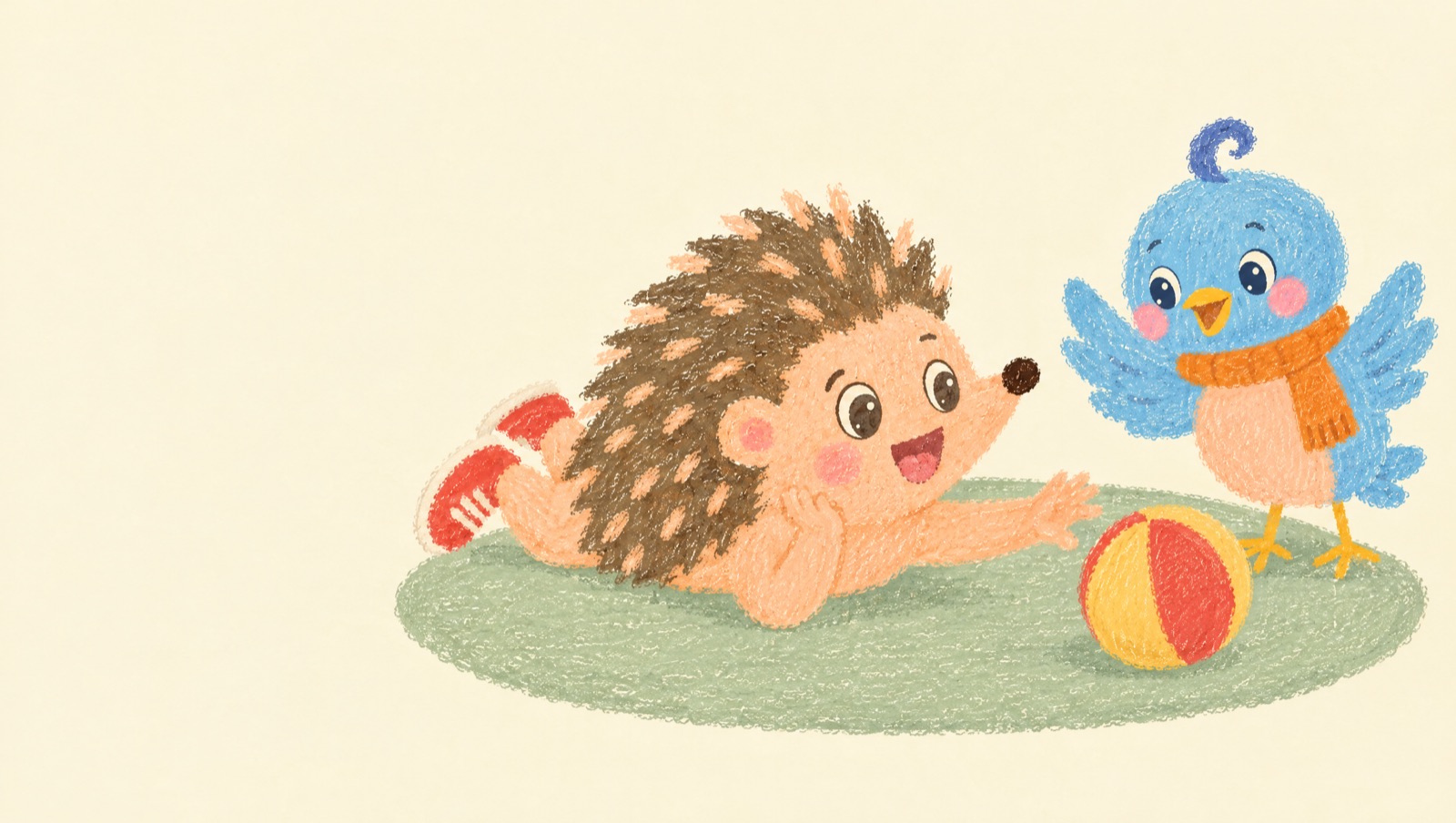
Newborn to 1 month
How much: 2 to 3 sessions a day, 1 to 5 minutes each. Many newborns do best with lots of very short sessions, even just a minute or two at a time.
What it looks like: your newborn will mostly turn their head to one side and rest their cheek down. They may lift their head for a second or two and bob it around. That's normal and exactly right. Their arms will be tucked under their chest and their bottom may be up in the air.
Best positions: on your chest while you recline, across your lap, and short sessions on a firm blanket on the floor. If the umbilical cord stump hasn't fallen off yet, tummy time is still fine; the AAP suggests chest-to-chest time and simply keeping the area clean and dry.
1 to 2 months
How much: work up toward about 15 to 30 minutes a day total by around 7 weeks, still split into short sessions spread through the day.
What it looks like: your baby starts lifting their head higher and holding it up longer, often to look at your face. The CDC lists "holds head up when on tummy" as a milestone most babies reach by 2 months.
Best positions: face to face on the floor, chest to chest, lap time, and the tummy-down carry while you walk around the house.
2 to 4 months
How much: at least 30 minutes a day total, broken into sessions of a few minutes up to 10 minutes or more as your baby enjoys it. The WHO recommends at least 30 minutes of tummy time a day, spread out while awake, for babies who aren't moving around on their own yet. More is great.
What it looks like: your baby props up on their forearms, holds their head up steadily and looks around. By about 4 months, the CDC milestone is "pushes up onto elbows/forearms when on tummy." You may see them start to rock side to side or reach a hand forward.
Best positions: forearm propping on the floor, a small rolled towel under the chest if they need a boost, and reaching for toys placed in front of them.
4 to 6 months
How much: as much floor time as your baby enjoys, often an hour or more spread across the day. At this age, tummy time stops being a "session" and becomes simply how your baby plays.
What it looks like: your baby pushes up onto straight arms, reaches for toys while balancing on one arm, pivots in a circle on their belly and starts rolling. By about 6 months, the CDC lists "rolls from tummy to back" and "pushes up with straight arms when on tummy."
Best positions: reaching for toys in a circle around them, toys slightly out of reach to encourage pivoting, and plenty of free floor time.
6 months and beyond
How much: your baby doesn't need "tummy time" sessions once they're rolling, pivoting and moving across the floor, because they'll choose to be on their tummy when they play. The goal now is lots of floor time and less time strapped into seats.
What it looks like: crawling on the belly, getting up on hands and knees, rocking, and eventually crawling. The WHO also suggests limiting time restrained in strollers, high chairs and carriers to no more than an hour at a time.
If your baby was born early
For babies born prematurely, doctors and therapists usually use adjusted age (age from the due date, not the birth date) when looking at milestones, typically until about age 2. A baby born 6 weeks early who is 3 months old is working on skills closer to a 6-week-old. Start tummy time the same way, keep sessions short, and ask your baby's doctor or NICU follow-up team about any special positioning advice.
What to try at home: 8 tummy time positions our therapists teach
Good news for tired parents: tummy time doesn't have to happen on the floor, and it doesn't have to happen all at once. These are the positions our physical and occupational therapists teach families most often, from easiest to hardest. Mix and match through the day.
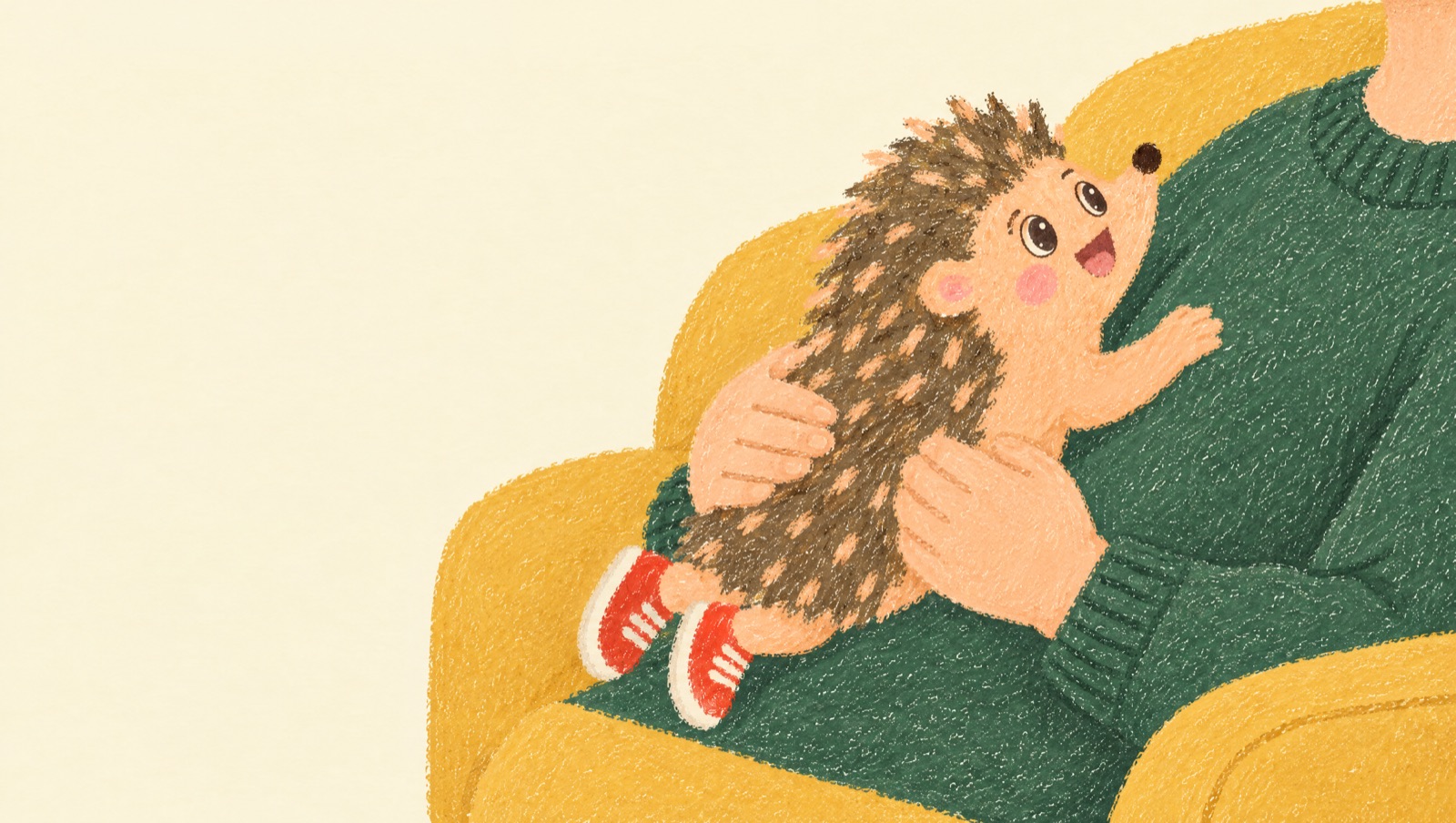
1. Chest to chest
- Recline on a couch or bed, propped up on pillows at about a 45-degree angle.
- Lay your baby tummy-down on your chest, with their arms tucked under their shoulders.
- Talk, sing or make silly faces so they want to lift their head to see you.
- As your baby gets stronger, recline flatter. The flatter you lie, the harder your baby works.
Why it works: your face is the most interesting thing in your baby's world, and the slight incline makes lifting the head easier. It's the best place to start with newborns and babies who protest the floor.
2. Lap tummy time
- Sit on the couch or the floor with your legs out.
- Lay your baby across your lap, tummy down, with their arms over one leg.
- Rest one hand gently on their back or bottom to keep them steady.
- Gently rock or bounce your legs, or pat their back, while they look around.
Why it works: it's cozy and calming, especially after a feed once some time has passed, and it's an easy way to sneak in tummy time while you're sitting anyway.
3. The tummy-down carry
- Slide one hand between your baby's legs and under their tummy and chest.
- Use your other hand to support their head and shoulders.
- Hold your baby tummy-down, close to your body, and walk around the room showing them things.
Why it works: your baby works their neck and back while getting a moving tour of the house. Many babies who cry on the floor are perfectly happy here. Some parents call it the "football hold."
4. Floor time on a firm, flat surface
- Lay a blanket or play mat on the floor (a firm surface, not a bed or couch).
- Place your baby tummy-down with their elbows under their shoulders.
- Get down at their eye level with a toy, a book or your face.
- Start with 1 to 2 minutes and stop while they're still happy.
Why it works: the floor is where babies eventually learn to push up, pivot, roll and crawl, so this is the position everything builds toward.
5. A rolled towel under the chest
- Roll a small hand towel or receiving blanket into a tube about 2 to 3 inches thick.
- Place it under your baby's chest, with their arms forward over the roll and their elbows under their shoulders.
- Stay right there and watch the whole time.
Why it works: the little lift makes it easier to raise the head and bear weight through the arms. It's a great bridge for babies who are frustrated with flat floor time. Remove the roll once your baby can prop on their forearms on their own, and never leave a towel roll with a sleeping baby.
6. Face to face on the floor
- Lie on your own tummy on the floor, facing your baby, nose to nose.
- Talk, smile, sing or blow raspberries.
- Slowly move your face up a little so your baby lifts their head to follow you.
Why it works: babies love faces more than any toy. Siblings are great at this one, with a grown-up supervising. A baby-safe floor mirror does something similar when you need a break.
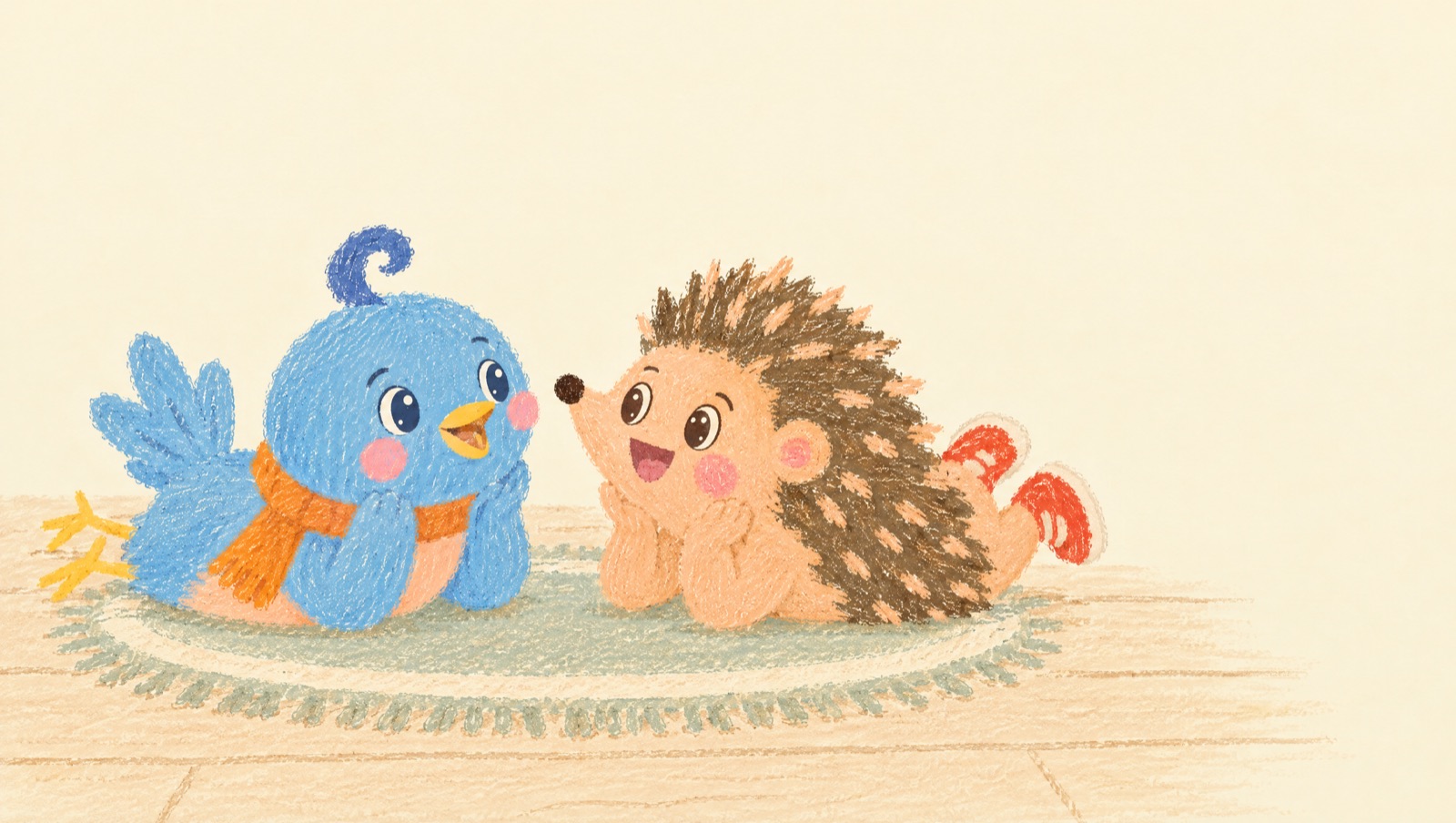
7. Side-lying play
- Lay your baby on their side on the floor, with a rolled towel behind their back for support.
- Bring both of their hands together in front of them.
- Place a toy in front of them to look at and touch. Switch sides.
Why it works: side-lying isn't tummy time, but it's another off-the-back position that takes pressure off the head and brings hands together at the middle of the body. It's a nice break between tummy sessions.
8. Reach and pivot (about 4 months and up)
- Once your baby props on forearms or straight arms, place a toy just out of reach in front of them.
- Move it slowly to one side so they shift their weight and reach.
- Try a circle of toys around them so they pivot to reach each one.
Why it works: reaching while balancing on one arm builds the weight shifting your baby needs for rolling and crawling. The AAP suggests placing toys in a circle around your baby for exactly this reason.
What to do when your baby hates tummy time
If your baby cries the moment they land on their tummy, you are in very good company. It's one of the most common things families ask our therapists about.
Why so many babies protest
- It's hard work. A baby's head is heavy compared to their body, and lifting it is like a workout. Being tired and frustrated is normal at first.
- It's new. Babies who spend most of their time on their backs or in seats aren't used to the feeling of being on their tummy.
- They want to see you. Face down on a mat, your baby can't see much. Many babies just want your face.
- Full tummies. Lying on a full stomach right after a big feed can be uncomfortable, especially for babies who spit up a lot.
- Tight neck muscles. Some babies have tightness that makes it uncomfortable to turn or lift their head one way. If your baby always looks to one side, read the section on torticollis below.
Ten fixes our therapists recommend
- Go shorter and more often. Ten 1-minute sessions count just as much as one 10-minute session, and they end before the tears.
- Start on your chest. Your chest is warm, familiar and comes with a face. Then move to your lap, then the floor.
- Get down to their level. Lie on the floor face to face. Your face is the best toy you own.
- Pick the right time. Try after a diaper change or a nap, when your baby is rested. If your baby spits up a lot, many therapists suggest waiting a little while after a full feed.
- Add a small roll under the chest. A rolled towel gives a little lift and makes head lifting easier.
- Change the view. Use a baby-safe floor mirror, high-contrast cards, a sibling, or a window with something to watch.
- Help their arms. Gently tuck their elbows under their shoulders. It's much easier to lift the head when the arms are doing some of the work.
- Use gentle movement. A soft pat on the back, gentle rocking on your lap or the tummy-down carry can calm a fussy baby.
- Stop before the meltdown. End on a good moment, while your baby is still happy. You want tummy time to feel safe and fun, not like a battle.
- Keep going, a little every day. Most babies come around within a few weeks as they get stronger. Steady, daily practice matters more than long sessions.
A simple daily routine you can actually keep
The easiest way to get enough tummy time is to tie it to things you already do every day. Here is the routine our therapists suggest to busy families:
- After every diaper change: 1 to 3 minutes on the floor or across your lap before you pick them up.
- After waking up from a nap: chest-to-chest time while you both wake up.
- During the day: carry your baby tummy-down while you move around the house.
- Before the evening bath: floor time face to face with a parent or sibling.
With 6 to 10 diaper changes a day, that alone can add up to the 30 minutes the WHO recommends without ever setting a timer.
Worried your baby still isn't tolerating tummy time, or keeps turning their head the same way? Our pediatric physical therapists help families with this every week. You can get started with an evaluation at Oaklin Lane, and we'll help you figure out what's going on.
Tummy time and your baby's head shape
A baby's skull is soft and still growing. When a baby spends a lot of time with their head resting in the same spot, it can flatten. A flat spot on one side of the back of the head is called plagiocephaly. A flat spot across the whole back of the head is called brachycephaly. Both are common, and most are mild.
The AAP recommends a few everyday habits to help prevent flat spots, and tummy time is at the top of the list:
- Lots of supervised tummy time while your baby is awake.
- Switch which end of the crib your baby's head goes each night, so they turn both ways to look out at the room. Your baby still sleeps on their back.
- Switch sides when you feed, the way you'd switch sides for breastfeeding.
- Limit time in car seats, swings, bouncers and loungers when you're not traveling. Hold your baby, or put them on the floor instead.
- Put toys and talk to your baby from the side they turn to less.
Torticollis: when your baby always looks one way
Torticollis means a tight neck muscle that pulls a baby's head to tilt toward one side and turn toward the other. It's common, often linked to how a baby was positioned in the womb, and it can make tummy time uncomfortable. It also tends to go hand in hand with a flat spot, because the baby keeps resting on the same side of the head.
Signs to watch for:
- Your baby almost always turns their head to the same side, even when you're on the other side.
- Their head tilts toward one shoulder.
- They prefer one breast or one side for bottle feeding.
- A flat spot is forming on one side of the back of the head.
The good news: torticollis usually responds very well to physical therapy, especially when it starts early. The American Physical Therapy Association's clinical guideline for congenital muscular torticollis encourages early referral, because babies who start therapy in the first few months tend to need a shorter course of care. If you notice these signs, ask your pediatrician about a referral to a pediatric physical therapist.
Tummy time safety: the short list
- Awake and watched, every time. Stay within arm's reach and keep your eyes on your baby.
- Never for sleep. If your baby gets drowsy or falls asleep, move them onto their back in a safe sleep space.
- Firm, flat surface. Use the floor with a blanket or mat. Skip beds, couches and anything soft your baby could sink into.
- Clear the area. Keep pillows, loose blankets and small objects away from your baby's face.
- Pets and siblings: with a grown-up supervising, siblings make great tummy time buddies. Keep pets at a distance.
- Positioning pillows and props: use them only while your baby is awake and watched on the floor, put them away the moment your baby gets sleepy, and stop using them once your baby starts rolling. Your baby never needs one for sleep.
Our therapists' picks for tummy time
You don't need to buy anything to do tummy time well. Your face, your chest and a rolled towel are the best tools there are. But a few simple items can make floor time more interesting, especially for babies who protest. These are favorites of many pediatric therapists, and each one earns its spot for a specific reason.
Sassy Tummy Time Floor Mirror
A baby-safe mirror with a fabric-covered frame that stands up on the floor in front of your baby. Babies love faces, including their own, so a mirror gives them a reason to lift their head and look up when you need to step back for a minute. The bold black, white and colored patterns on the frame add something to look at for newborns, too.
Why it works: it brings the "face to face" position to the floor. Prop it a few inches in front of your baby, slightly above their eye line, so they have to lift their chin to see.
- Ages: newborn and up
- Best for: floor tummy time, babies who fuss when they can't see a face
- Find it: Sassy Tummy Time Floor Mirror on Amazon
Wee Gallery High Contrast Cards for Baby, Black and White Animals
Sturdy cards with bold black-and-white animal art. Newborns see high contrast best in the early weeks, so simple black-and-white shapes are easy for them to find and focus on.
Why it works: stand a card up on the floor in front of your baby, or hold it just above their eye level and slowly move it up, so they lift their head to follow it. Swap cards every few minutes to keep things new.
- Ages: newborn and up
- Best for: the first 3 months, short floor sessions
- Find it: Wee Gallery High Contrast Cards on Amazon
Lovevery The Play Gym
A padded play mat with a wooden frame and toys that change in stages as your baby grows, with room for tummy time, back play and side play.
Why it works: a big, washable, defined play space makes floor time an easy habit. It's an investment, so it's a better fit as a registry or family gift than a must-have. A blanket on a clean floor works too.
- Ages: newborn to about 12 months
- Best for: families who want one dedicated floor-play spot
- Find it: Lovevery The Play Gym on Amazon
Oball Classic Ball
A light, flexible ball full of finger-sized holes that tiny hands can grab easily. It rolls slowly and doesn't get away from your baby too fast.
Why it works: once your baby props on their arms (around 3 to 4 months and up), set it just out of reach to encourage reaching, weight shifting and pivoting. It's a classic for "reach and pivot" practice.
- Ages: newborn and up (best for reaching at about 3 to 4 months and older)
- Best for: reaching, pivoting and early rolling
- Find it: Oball Classic Ball on Amazon
What you don't need
- Anything for sleep. Never use a tummy time pillow, wedge or positioner for sleep, not even a nap.
- A tummy time "system." Fancy setups don't beat your face and a blanket.
- More baby seats. Bouncers and loungers are handy for a few minutes, but time in seats is time away from the floor.
When to talk to a professional
Every baby develops at their own pace, and one late skill on its own usually isn't a worry. Look for patterns. It's a good idea to talk with your pediatrician, and ask about a pediatric physical therapy evaluation, if you notice any of these:
- Your baby isn't lifting their head at all during tummy time by about 2 months.
- Your baby isn't pushing up on their forearms by about 4 months.
- Your baby isn't rolling at all by about 6 months, or isn't pushing up with straight arms on their tummy.
- Your baby always turns or tilts their head to one side.
- A flat spot on the head isn't getting better, or seems to be getting worse.
- Your baby feels very stiff or very floppy when you hold them.
- Your baby uses one arm much more than the other.
- Your baby cries every single time they're on their tummy, even after weeks of short, gentle practice.
- Your baby loses a skill they used to have. Tell your doctor right away.
- Your gut says something's off. You know your baby best.
What happens at a pediatric therapy evaluation
At Oaklin Lane, a pediatric physical therapist will watch your baby move and play, check head and neck movement, strength and muscle tone, look at head shape, and talk with you about feeding, sleep and daily routines. If your baby needs help, the therapist will build a plan with simple exercises and positions you can do at home between visits. Many families leave the first visit with a few new tummy time tricks the same day. You can read more about what pediatric physical therapy treats and what happens at a pediatric therapy evaluation. For feeding or hand-skill questions in the first year, see our guide to occupational therapy for infants.
FAQ
When should I start tummy time with my newborn?
You can start the day your baby comes home from the hospital. The AAP suggests 2 to 3 short sessions a day of about 3 to 5 minutes, while your baby is awake and you're watching. Chest-to-chest time on a reclined grown-up is a great way to start.
How much tummy time does a baby need each day?
Start with a few minutes at a time and build up. The AAP suggests working up to about 15 to 30 minutes a day by around 7 weeks. The WHO recommends at least 30 minutes a day, spread through waking hours, for babies who aren't moving around on their own yet. More is fine as long as your baby is happy.
Does tummy time on my chest count?
Yes. Any time your baby is awake on their tummy and lifting or turning their head counts, including on your chest, across your lap or in a tummy-down carry. As your baby gets stronger, recline flatter so they work a little harder.
What if my baby hates tummy time?
It's very common. Try shorter, more frequent sessions, start on your chest, get down face to face, use a small rolled towel under the chest, and stop before your baby gets upset. Most babies come around within a few weeks. If your baby still cries every time after several weeks, or always turns their head one way, ask your pediatrician about a physical therapy evaluation.
Is it OK if my baby falls asleep during tummy time?
No. If your baby falls asleep, gently roll them onto their back and move them to a safe sleep space: a firm, flat crib or bassinet with nothing else in it. Babies should always sleep on their backs.
When can my baby stop doing tummy time?
Once your baby is rolling both ways, pivoting on their belly and starting to crawl, usually between 6 and 9 months, they'll spend time on their tummy on their own while they play. Focus on lots of floor time and less time in seats.
Can tummy time help a flat head?
Tummy time helps prevent flat spots by taking pressure off the back of the head, and the AAP recommends it along with changing your baby's head position and limiting time in car seats and swings. If a flat spot is already there or isn't improving, talk to your pediatrician. A pediatric physical therapist can help, especially if tight neck muscles are part of the picture.
Should I do tummy time right after feeding?
Many babies are more comfortable if you wait a little while after a full feed, especially if they spit up a lot. After a diaper change or after waking from a nap are often the happiest times.
My baby was born early. When should they hit tummy time milestones?
Use your baby's adjusted age (counted from the due date) when you think about milestones. Start tummy time the same way, with short and frequent sessions, and ask your baby's doctor or follow-up team about any special advice.
From all of us on the Lane
Tummy time is one of the first things you'll do together that builds your baby's strength, and it doesn't have to be perfect. A minute here, a few minutes on your chest there, and lots of smiles along the way add up fast. If you have questions about how your baby is moving, our pediatric physical and occupational therapists see babies every day at our Lake Highlands and Rockwall clinics. Fill out the Get Started form, and our team will help you with the next step.
Sources
- American Academy of Pediatrics, HealthyChildren.org. Back to Sleep, Tummy to Play.
- Moon RY, Carlin RF, Hand I; Task Force on Sudden Infant Death Syndrome. Sleep-Related Infant Deaths: Updated 2022 Recommendations for Reducing Infant Deaths in the Sleep Environment. Pediatrics. 2022;150(1):e2022057990.
- Hewitt L, Kerr E, Stanley RM, Okely AD. Tummy Time and Infant Health Outcomes: A Systematic Review. Pediatrics. 2020;145(6):e20192168.
- World Health Organization. Guidelines on physical activity, sedentary behaviour and sleep for children under 5 years of age. 2019.
- Centers for Disease Control and Prevention. CDC's Developmental Milestones (2, 4 and 6 month checklists).
- Laughlin J, Luerssen TG, Dias MS; Committee on Practice and Ambulatory Medicine, Section on Neurological Surgery. Prevention and Management of Positional Skull Deformities in Infants. Pediatrics. 2011;128(6):1236-1241.
- Kaplan SL, Coulter C, Sargent B. Physical Therapy Management of Congenital Muscular Torticollis: A 2018 Evidence-Based Clinical Practice Guideline From the APTA Academy of Pediatric Physical Therapy. Pediatric Physical Therapy. 2018;30(4):240-290.
This article is for education and is not a diagnosis or medical advice. If you have concerns about your baby's health or development, talk with your pediatrician.