

Sensory-friendly holidays: an OT's plan for gatherings, travel and overwhelm

The lights are up, the cousins are coming, and your calendar has more parties than free nights. For a lot of families, December is the best month of the year. For a child whose senses run on high, it can also be the hardest. Think about what a holiday gathering asks of a small body: a house full of loud voices, music, a dog, the smell of six dishes at once, an itchy new outfit, relatives who want hugs, a late bedtime, and maybe a long drive or a flight to get there. No wonder so many holiday meltdowns happen right around the time the pie comes out.
You don't have to skip the season to protect your child. With a little planning, most kids can enjoy the parts of the holidays that matter and get through the rest. This guide is the plan our occupational therapists (OTs) share with families every year: what's going on in your child's nervous system, the early signs of overwhelm, how to prepare before the season starts, how to make gatherings and travel easier, calm-down strategies by age, a few tools therapists like, and when it's worth talking to a professional. It's written for every family, whether your child has a diagnosis, is still being figured out, or is simply a sensitive kid who melts down after big days. Everything here is based on guidance from the American Occupational Therapy Association (AOTA), the American Academy of Pediatrics (AAP) and published research, with sources at the end.
Some links below are affiliate links, which may earn Oaklin Lane a small commission at no cost to you. As an Amazon Associate, Oaklin Lane earns from qualifying purchases.
The 60-second answer
- Holidays are a lot of sensory input at once. Noise, lights, crowds, new smells and foods, scratchy clothes, broken routines and late nights all add up. Even kids who usually cope well can run out of room by the end of the day.
- Plan before the season starts. Notice which senses bother your child and which ones calm them. Then preview each event with a picture schedule or a short story about what will happen.
- Pack a calm kit and pick a quiet spot. Ear protection, a comfort item, a fidget, crunchy snacks and a water bottle with a straw fit in one bag. At every gathering, find a quiet room before you need it.
- Watch for early signs, not just the meltdown. Covering ears, hiding, getting silly or wild, whining, or "zoning out" often come first. A break at that point usually works better than one after the meltdown starts.
- Use movement and deep pressure to help your child reset. Carrying, pushing, jumping, a firm hug (if your child likes hugs) or wrapping up in a blanket often helps.
- Protect sleep and keep some routine. The AAP suggests keeping bedtimes and mealtimes as steady as you can during the holidays.
- Talk to an occupational therapist if sensory reactions are making everyday life hard, not just on big days: dressing, eating, sleep, haircuts, school or play.
Why the holidays are so much for little nervous systems
Every second, the brain sorts through information from the body and the world around it and decides what matters. Is that sound important, or background? Is that tag on my shirt a problem? Am I hungry? Am I about to fall? Occupational therapists call this sensory processing, or sensory integration. AOTA describes it as the ability to take in, organize and make sense of sensory information so a person can do the things they need and want to do each day.
During the holidays, the amount of input goes way up and the usual supports (sleep, routine, familiar places and food) go way down. That's tough for any child, and tougher for kids whose senses are more sensitive to begin with.
Your child has more than five senses
We all learned about sight, hearing, touch, taste and smell. OTs also pay close attention to three senses that are less famous but just as important:
- Vestibular (movement and balance): the inner ear tells the brain which way is up, how fast you're moving and whether you're about to tip over. Swinging, spinning, car rides and elevators all use it.
- Proprioception (body awareness): muscles and joints tell the brain where your body parts are and how hard you're pushing or pulling. Carrying heavy things, climbing and squeezing give lots of this input, and it's often calming.
- Interoception (inside signals): the body's sense of hunger, thirst, needing the bathroom, being too hot or cold, a racing heart or a tight tummy. When kids miss these signals or feel them too strongly, it can show up as sudden meltdowns, especially when meals and bedtimes shift.
A holiday party can light up all eight senses at once. It's the total load that matters.
Three patterns occupational therapists often see
Researchers and OTs often describe a few common patterns. Many children show more than one, and patterns change with tiredness, stress and age.
- Sensory sensitive (over-responsive): your child notices input faster and feels it more strongly. Loud rooms, bright lights, scratchy clothes, strong smells or being touched may feel unpleasant or even painful. These kids may cover their ears, hide, refuse to wear the new outfit or melt down in crowded places.
- Slow to notice (under-responsive): your child may need more input to notice it. They might seem tired, quiet or "in their own world" in a busy room, miss their name being called or not notice they're cold or hungry until it's urgent.
- Sensory seeking: your child craves input and goes looking for it. These are the kids crashing into couch cushions, spinning, jumping off the stairs, touching every ornament or getting louder and wilder as the party gets busier.
None of these patterns is "bad." They're simply information about what your child's body needs. A sensitive child needs less input and more warning. A seeking child needs safe ways to get the big input they crave. A slow-to-notice child may need help tuning in.
This isn't only about kids with a diagnosis
Sensory differences are common. In one study of kindergartners, parents reported sensory processing concerns in about 1 in 20 children, and up to about 1 in 7 using a broader definition. Another study found that about 1 in 6 elementary school children had signs of sensory over-responsivity based on parent reports. Sensory differences are also very common in children with autism and ADHD, and in children who were born early.
And every child has a limit. The ideas below help everyone, and they help some children a lot.
Signs your child is heading toward overwhelm
Meltdowns rarely come out of nowhere. Most of the time there's a build-up, and the earlier you notice it, the easier it is to help. Every child has their own signals, but here's what many parents see.
Early signs (time for a small break)
- Covering ears or eyes, squinting or turning away from people
- Clinging to you, asking to be held or hiding behind your legs
- Getting quieter than usual, or louder and sillier than usual
- Chewing on shirt collars, sleeves or fingers
- Pacing, spinning or crashing into furniture
- Whining, saying "I want to go home" or "I'm bored"
Middle signs (time for a real reset)
- Crying or yelling over small things, like the wrong cup
- Pushing, hitting or grabbing
- Refusing everything, even things they usually love
- Running off, or trying to leave the room
- A blank, "zoned out" look, or not answering when spoken to
A meltdown (time to keep everyone safe and calm)
In a full meltdown, the thinking part of the brain is offline for a bit. Talking, reasoning, bargaining and consequences won't work in the moment. What helps is fewer words, a calm voice, a quieter space, and keeping your child and others safe until the storm passes.
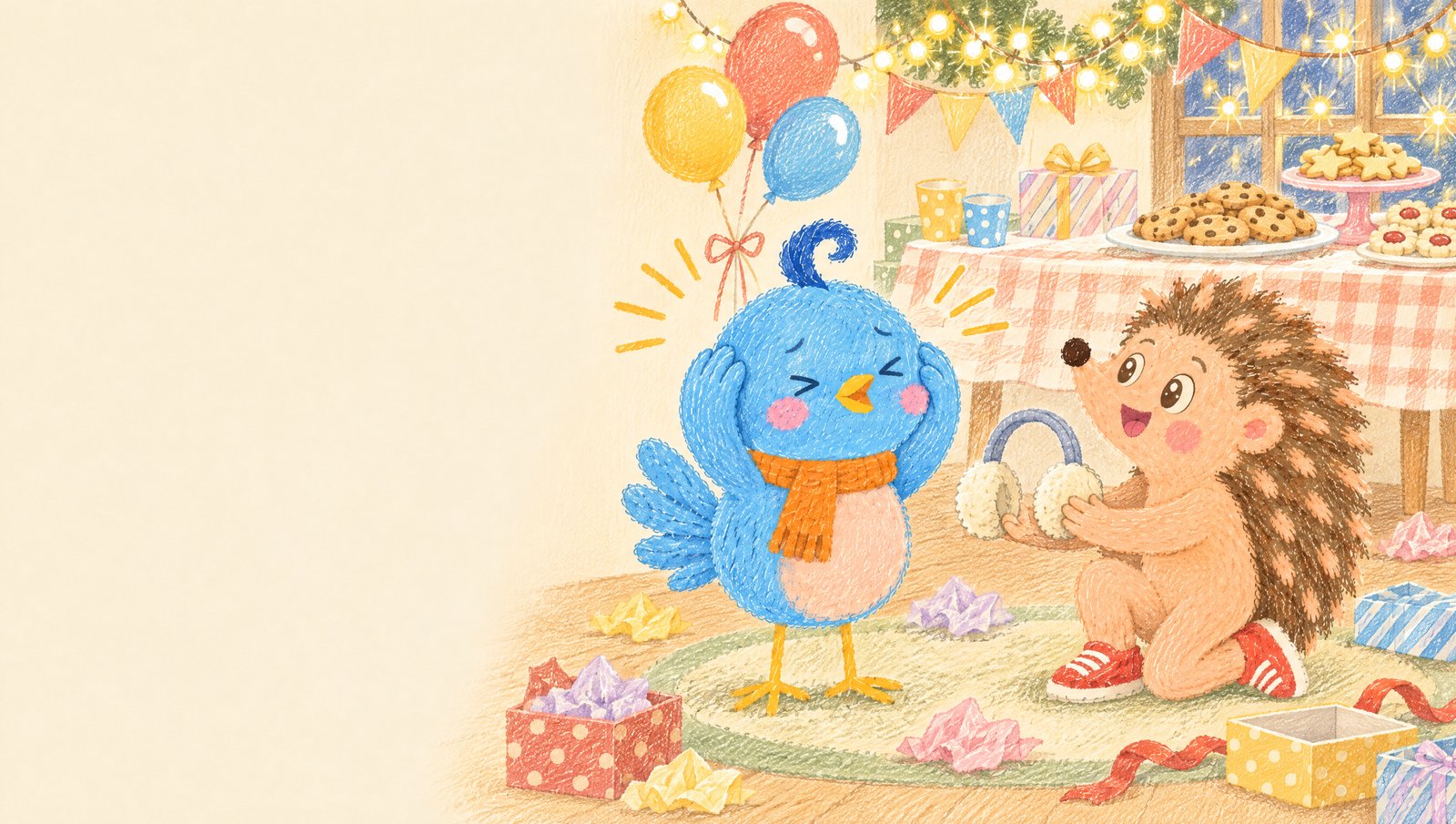
Your holiday sensory plan: four steps before the season
The best time to plan for a holiday party is a week before it, not in the car on the way there. These four steps take an evening and make the whole season smoother.
Step 1: Make a quick sensory map of your child
Grab a piece of paper and make two columns: "Bothers my child" and "Calms my child." Go sense by sense. Does your child hate loud, sudden sounds, or does steady music calm them? Do bright, blinking lights bother them? Strong smells, like perfume or a scented candle? Being touched lightly, or being hugged by people they don't know well? Which clothes do they refuse? What kind of movement helps: swinging, rocking, jumping, being squeezed? Which foods are "safe"?
This little map becomes your guide for every decision below, and it's useful to share with grandparents, babysitters and teachers.
Step 2: Preview everything with pictures and stories
Surprises are hard for many children, especially sensitive ones. Previewing what will happen helps the brain know what's coming. Two simple tools work well:
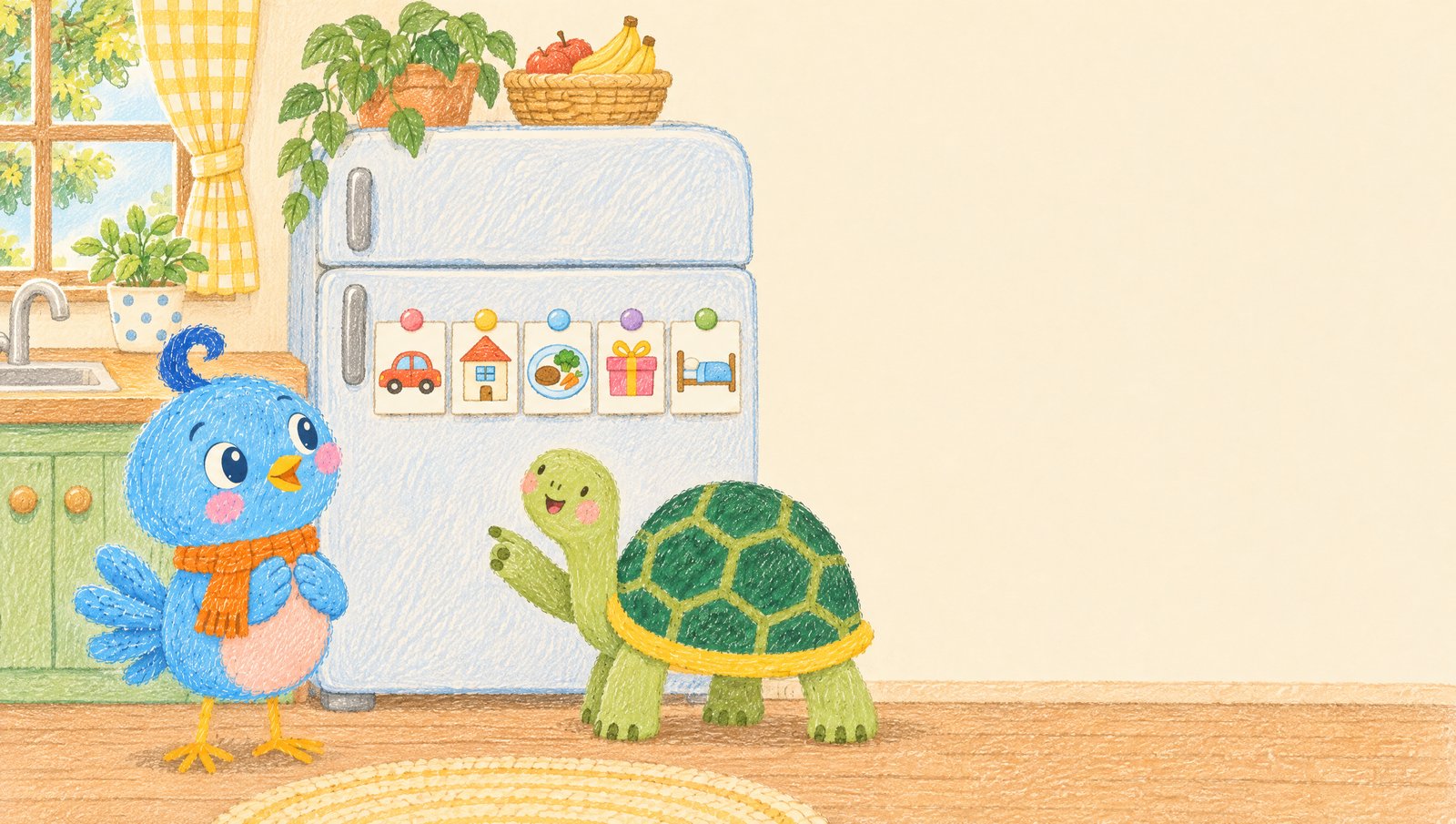
- A picture schedule. Line up simple pictures of the day in order: car, Grandma's house, dinner, presents, car, bed. Your child can take each one off or check it when it's done. Visual supports like this are among the strategies with the strongest research support for autistic children, and they help lots of other kids too.
- A short story about the event. Write three to six simple sentences about what will happen, ideally with photos of the real place and people. "On Saturday we will drive to Aunt Maria's house. It will be loud because lots of people will be there. If it feels too loud, I can wear my earmuffs or go to the quiet room with Mom. Then we will eat dinner. I can eat my safe foods." Read it together a few times in the days before.
Show photos of relatives your child doesn't see often. Look at pictures or videos of the place you're going. If there's a tradition that could be scary (a Santa visit, fireworks, a loud song everyone sings), talk about it ahead of time and practice the plan.
Step 3: Pack a calm kit
A calm kit is a small bag of things that help your child feel safe and organized. Keep it by the door all season. Most families include some of these:
- Ear protection: kids' earmuffs or noise-reducing headphones for loud rooms, music and fireworks
- A comfort item: a favorite stuffed animal, small blanket or familiar pillowcase
- Something for the hands: a fidget toy, a small squishy ball or a bit of putty
- Something for the mouth: crunchy or chewy snacks your child already likes, and a water bottle with a straw
- Something for the eyes: a hat with a brim or sunglasses for bright rooms, plus a favorite book
- A change of comfortable clothes, in case the party outfit stops working
- The picture schedule or story you made in Step 2
Let your child help pack it. Kids use tools they chose.
Step 4: Agree on an exit plan and a code word
Before you walk in, decide with your partner or another adult: Where's the quiet spot? Who takes the first break? When do we leave, no matter what? Then give your child a simple way to tell you they need a break, like a code word ("pineapple"), a hand signal or a card they can hand you. Practice it at home so it feels like a game.
Leaving early isn't failing. An hour that ends happily beats four hours that end in tears.
Holiday gatherings: how to make the party work
Every family's traditions are different, but the same few moments trip kids up again and again. Here's how to make each one easier.
Arrive early, or arrive late
Walking into a full, loud room is a lot. If you can, arrive early, so your child can explore while it's quiet and watch people arrive one at a time. For some children the opposite works better: arrive after the big greeting rush and skip the busiest part. Either way, avoid walking in at the peak.
Find the quiet spot first
Ask the host ahead of time if there's a bedroom, office or even a parked car your child can use for breaks. When you arrive, walk there together first, so your child knows where it is. Bring the calm kit. Use the quiet spot early and often, before your child is upset, not only after.
Greetings without forced hugs
Light, unexpected touch can feel really unpleasant to sensitive kids, and being hugged or kissed by someone they barely remember can be a lot. Give your child choices: a hug, a high five, a fist bump, a wave or just saying hi. Let relatives know ahead of time, kindly: "We're letting her choose how to say hello this year. A wave is a great start!"
Turn the volume down where you can
You can't make a family party quiet, but small changes help: seat your child at the end of the table instead of the middle, away from the speaker, or near a doorway they can step through. Offer ear protection before things get loud. For noise you can't control, like fireworks, plan to watch from inside or from farther away. Children's ears are sensitive to very loud sounds, and the National Institute on Deafness and Other Communication Disorders recommends hearing protection like earmuffs for kids at fireworks and other very loud events.
Food: keep it low-pressure
Holiday meals are full of new smells, textures and mixed-up dishes, which is a lot for children who are sensitive to food. Bring or ask for one or two of your child's safe foods, put a small taste of something new on the side, and let them decide whether to try it. No bribes, no "one more bite." We wrote a whole guide on this: a holiday meal plan for picky eaters.
Presents: open them at your child's pace
Gift opening is often loud, fast and crowded, with everyone watching. Some kids love it. Others freeze or fall apart. You can let your child open gifts in a quieter corner, open one now and save the rest for later, or open gifts at home the next day. Practice how to react to a gift, too ("thank you" is enough, even if they don't love it). If you're still shopping, our list of holiday gifts that build skills includes calm, sensory-friendly ideas.
Santa visits, photos and big traditions
Long lines, costumes, flash photos and being placed on a stranger's lap can be a lot. Ask about sensory-friendly Santa times, which many malls offer, with quieter music and shorter waits. It's also fine to wave from a distance, take the photo standing next to Santa or skip it this year. The goal is a happy memory, not a perfect picture.
Let your seeker move
If your child gets wilder as the party gets busier, they may be looking for big movement and pressure to help their body feel organized. Give them a safe "job" that does the same thing: carrying coats to the bedroom, helping move chairs, taking a walk outside with an adult, doing jumping jacks in the hallway or playing tug of war with a cousin. Movement breaks often lead to calmer behavior at the table.
A note from our team: if holidays are always this hard for your child, and the same struggles show up in everyday life too, you don't have to figure it out alone. Our occupational therapists at our Lake Highlands and Rockwall clinics help families build plans like this one for their own child. You can start an evaluation here whenever you're ready.
Holiday travel: car rides, flights and sleeping somewhere new
Travel takes away almost everything that helps kids stay regulated: their own bed, their usual food, their routine and their space to move. A little planning goes a long way.
Road trips
- Plan stops for movement, not just gas. A few minutes of running, jumping or climbing at a rest stop or park can make the next stretch much calmer.
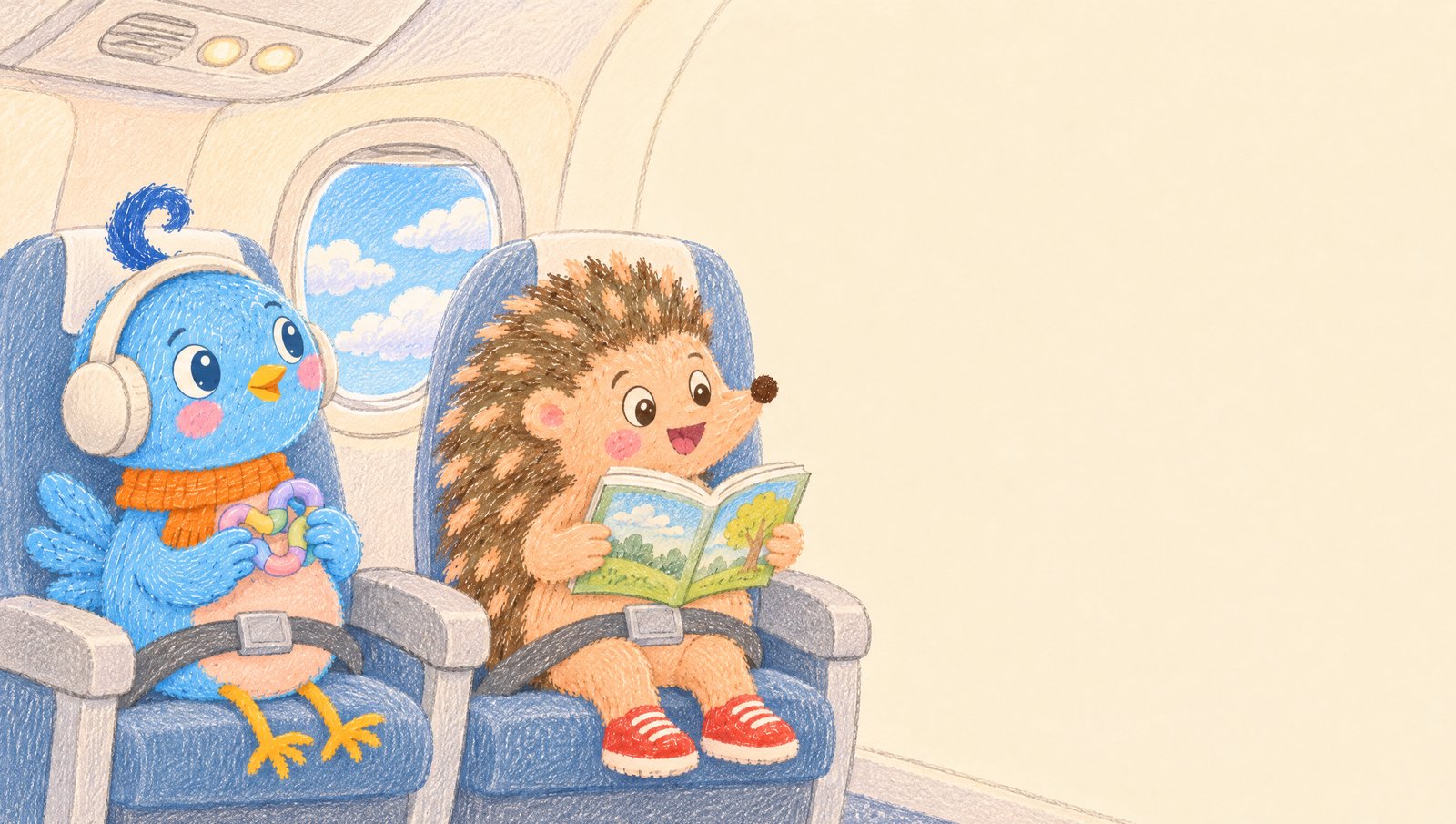
- Bring the calm kit within reach, plus headphones for music or stories.
- Keep car seats safe. The AAP advises against putting bulky coats or snowsuits under car seat straps. If your child is sensitive to the feel of a coat, that's good news: buckle them in wearing thinner layers, then lay a blanket or their coat over the straps.
- Don't fight the clothing battle in the car. Let your child travel in their comfiest clothes and change into the party outfit when you arrive, if at all.
Airports and flights
- Preview the airport. Watch a video of going through security and boarding a plane. Explain the noises, the lines and the people checking bags.
- Know about TSA Cares. The Transportation Security Administration has a helpline for travelers with disabilities and medical conditions, including children with sensory needs. TSA asks families to reach out at least 72 hours before the flight, and may be able to have an officer help you through screening.
- Ask the airline about boarding. Some families like to board early to get settled; others prefer boarding last to spend less time in the plane. Ask what your airline offers.
- Help ears during takeoff and landing. Swallowing, sipping through a straw, chewing a snack your child can safely eat, or nursing or a bottle for babies can help with ear pressure.
Sleeping somewhere new
Sleep is when the brain resets, and an overtired child has a much shorter fuse. The AAP encourages families to keep sleep and mealtime routines as steady as possible during the holidays. To help your child sleep in a new place:
- Bring their own pillowcase, blanket or comfort item. The familiar smell and feel matter more than you'd think.
- Keep the bedtime routine the same: bath, pajamas, two books, song, lights out, whatever yours is.
- Pack a nightlight, and a white noise app or small fan if the house is noisy.
- Try to keep bedtime within about an hour of usual, and protect naps for little ones.
A safety note for babies: travel cribs and borrowed beds should follow safe-sleep rules: baby on their back, on a firm flat surface, with no pillows, bumpers, blankets or weighted products. The AAP specifically recommends against weighted blankets, sleepers and swaddles for infants.
Calm-down strategies occupational therapists use
When your child is starting to feel overwhelmed, these are some of the go-to strategies OTs teach families. Not every one works for every child, so try a few at home on an ordinary day first and see which ones your child likes.
Heavy work
"Heavy work" means activities that push, pull, lift or carry. They send strong body-awareness signals to the brain, and many children find them organizing and calming. At a holiday gathering, heavy work might be carrying grocery bags in from the car, pulling a wagon of gifts, pushing a laundry basket of coats down the hall, wall push-ups in the bathroom, carrying a stack of plates (unbreakable!) or helping knead dough.
Deep pressure
Firm, steady pressure is calming for many kids, while light touch can be alerting or irritating. If your child likes it, try a firm hug, a "burrito" roll in a blanket (head and face always uncovered), squishing gently between couch cushions or a slow, firm back rub. Always follow your child's lead: stop if they say no or pull away.
Rhythmic, steady movement
Slow, steady, back-and-forth movement tends to calm, while fast, spinning movement tends to rev kids up. Rocking in a rocking chair, swinging gently, slow bouncing on a ball or walking together outside can help a child settle.
Mouth and breathing
Sucking, chewing and blowing are powerful for many kids. Crunchy or chewy snacks, sipping a thick drink through a straw, or blowing bubbles or a pinwheel can help. For preschoolers and older kids, make breathing playful: "smell the cookie" (breathe in through the nose), "blow out the candle" (breathe out slowly through the mouth).
Less input, fewer words
Sometimes the best strategy is taking things away: dimmer lights, a quiet room, fewer people, fewer questions. When a child is overloaded, every word is more input. Try short, calm phrases like "You're safe. I'm here. Let's take a break."
Your calm is contagious
Children borrow calm from the adults around them. OTs and psychologists sometimes call this co-regulation. A slow voice, relaxed shoulders and a steady presence help your child's body settle, even when they can't use words yet. That also means taking care of yourself this season matters. The AAP points out that children are affected by their parents' stress, and that seeing you cope well helps them learn to cope, too.
An age-by-age guide to sensory-friendly holidays
Every child is different, but here's what holiday overwhelm often looks like at different ages, and what tends to help most.
Babies (birth to 12 months)
Babies show overload by fussing, crying, turning their head away, arching, hiccuping, yawning or suddenly falling asleep in a noisy room. Many babies get passed from person to person at gatherings, which can be a lot. Try a baby carrier to keep your baby close and give them a break from handling, step into a quiet, dim room to feed, protect naps as much as you can, and keep your baby away from very loud noise. A simple rule helps: if your baby starts looking away or fussing, that's the signal for a quieter moment.
Toddlers (1 to 3 years)
Toddlers feel big feelings and don't have words for them yet. Overload often looks like clinging, running off, tantrums, throwing, biting or refusing everything. Keep things simple: short visits, a picture or two to preview where you're going, lots of chances to move, familiar snacks, and naps protected as much as possible. Toddlers do best with a short list of choices ("Do you want the earmuffs or the quiet room?").
Preschoolers (3 to 5 years)
Preschoolers can start to use simple tools: a code word, a picture schedule, a calm kit they helped pack, and a short story about the event. They're also old enough to practice: role-play greetings, gift opening and what to do if it gets too loud. Expect that they may still lose it at the end of a long day, and plan your exit before that point.
School-age kids (5 to 8 years)
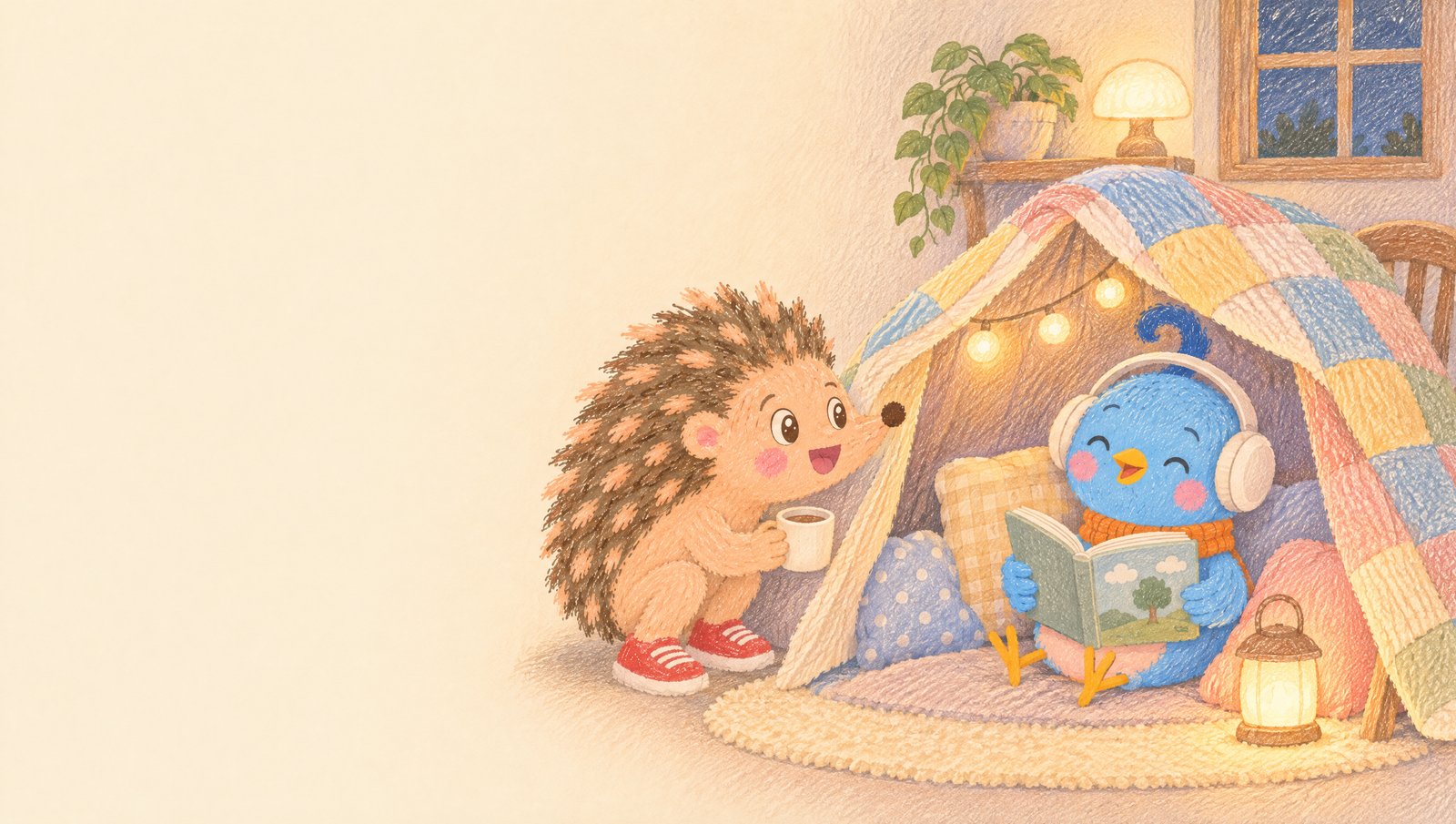
Older kids can help make the plan. Ask them: "What's the hardest part of Grandma's party for you? What would help?" They can learn to notice their own early signs ("my body feels buzzy"), take a break on their own and use breathing or movement to reset. They may also feel embarrassed about being different from cousins, so offer tools that look ordinary, like regular headphones, and let them choose when to use them.
Holiday clothes, food and routines
Picking a sensory-friendly holiday outfit
Tags, seams, stiff collars, tights, sequins and velvet can feel really uncomfortable to children who are sensitive to touch. A few tips: let your child choose between two or three comfy options, wash new clothes a few times before the big day, cut out tags, look for seamless socks and soft knit fabrics, and try the outfit on at home for short stretches first. And remember, a soft holiday T-shirt counts as dressed up.
Keeping a little routine
You don't need a perfect schedule. Keep a few anchors steady: wake-up time, meals and snacks at about the usual times, and the same bedtime routine. Mark the calendar so your child can see which days are busy and which days are home days, and try to leave at least one quiet day between big events. The AAP notes that keeping routines steady during the holidays helps head off tantrums.
Our therapists' product picks for sensory-friendly holidays
You don't need to buy anything to make the holidays easier. Your calm, a quiet room and a good plan matter most. If you'd like a few tools for your calm kit, these are favorites of many pediatric occupational therapists. Always check the age label and supervise young children.
1. Kids' noise-reducing earmuffs
Soft, adjustable earmuffs that turn down the volume of loud rooms, music and fireworks without blocking out voices completely. This pair is made for kids about 3 to 12 and folds up for the calm kit.
Why it works: lowering the volume gives a sound-sensitive child a little more room before they feel overwhelmed, and protects young ears at fireworks and other very loud events.
Vanderfields kids' earmuffs on Amazon
2. Volume-limited kids' headphones
Wired headphones that cap the volume at 85 decibels, for shows, music and audiobooks on planes and long drives.
Why it works: familiar music or a story can calm a child in a noisy, unfamiliar place, and a volume limit keeps listening at a safer level.
Puro Sound Labs PuroBasic kids' headphones on Amazon
3. A quiet fidget for the hands
A twisty, connected fidget that kids can turn, bend and twist in their lap at the dinner table, in the car or on a plane. It's labeled for ages 3 and up.
Why it works: busy hands help many children sit, wait and listen longer, and the steady movement is calming without making noise.
4. Seamless socks
Truly seamless socks with a soft, stretchy top, made for kids who are sensitive to the feel of seams and tight bands.
Why it works: for touch-sensitive kids, an uncomfortable sock can ruin a whole morning. Starting the day comfortable leaves more room to handle everything else.
SmartKnitKIDS seamless socks on Amazon
5. A visual schedule kit
A routine chart with picture cards you can arrange for each day, including a "done" spot to move cards to as you go.
Why it works: seeing the plan helps kids know what's coming next, which makes changes and transitions easier, especially during busy, unpredictable weeks.
Visual schedule routine chart on Amazon
6. Llama Llama Holiday Drama by Anna Dewdney
Little Llama gets more and more overwhelmed by all the holiday rushing, until it's all too much, and Mama Llama helps him slow down and remember what the season is really about.
Why it works: a familiar story about holiday overwhelm gives you and your child words for big feelings, and a calm way to talk about your own plan.
Llama Llama Holiday Drama on Amazon
How an occupational therapist can help
If sensory reactions make daily life hard for your child, a pediatric occupational therapist can help you understand why and what to do. For a broader look, see our guide to what pediatric occupational therapy is.
The evaluation
An OT will talk with you about your child's daily life (dressing, eating, sleep, play, school), use questionnaires about how your child responds to different senses, and watch your child play and move. They'll also look at related skills, like balance, coordination and fine motor skills. You'll come away with a clearer picture of your child's sensory patterns and what's getting in the way. Curious about the details? Here's what happens at a pediatric therapy evaluation.
A plan for real life
OTs build plans around the moments that matter to your family: getting dressed without a battle, haircuts, mealtimes, car rides, birthday parties, school and yes, the holidays. That can include a set of daily sensory activities (sometimes called a sensory diet), changes to your home or routine, and strategies you can use in the moment. Some children also benefit from therapy that uses play-based sensory activities in a therapy gym with swings, climbing equipment and other tools. You can read more about sensory integration therapy and what an OT does.
What the research says
The AAP notes that sensory processing difficulties are common in children with developmental and behavioral differences, and that occupational therapy using sensory-based approaches can be one part of a child's overall treatment plan. It encourages families and therapists to set clear goals together and track whether the therapy is helping. Good OTs do exactly that: they set goals that matter to your family and check progress along the way. If you're wondering about therapy for sensory processing challenges more broadly, our guide to therapy for sensory processing disorder walks through the options.
When to talk to a professional
Almost every child has a hard moment during the holidays. That alone isn't a reason to worry. It may be time to talk with your pediatrician or a pediatric occupational therapist if:
- Sensory reactions are making everyday life hard, not only on big days: dressing, bathing, brushing teeth, haircuts, eating or sleep.
- Your child has meltdowns most days, or they're getting more frequent, longer or more intense.
- Your child avoids or can't take part in things kids their age usually enjoy, like playgrounds, birthday parties, school events or playing with other children.
- Your child eats a very small number of foods, gags often or mealtimes are a daily struggle.
- Your child seeks movement or crashing in ways that are often unsafe, or doesn't seem to notice pain, cold or hunger.
- Your child has trouble with coordination, like seeming clumsier than other kids, or struggles with buttons, utensils or drawing.
- Your child's teacher or caregiver has mentioned a concern about behavior, attention or sensory reactions.
- You've noticed other developmental concerns, like speech delays, a loss of skills or limited eye contact or interest in others. Talk with your pediatrician; they can help decide on next steps, including any evaluations your child may need.
Hearing and vision should always be checked when a child reacts strongly to sounds or sights, or seems to miss them. If insurance is a question, we explain how insurance covers pediatric therapy in Texas.
And if you're not sure? Asking is never wrong. An evaluation can either reassure you or help your child get support at the best time.
FAQ
Why does my child melt down at every holiday party?
Holiday gatherings stack up a lot of sensory input (noise, lights, crowds, smells, new foods and touch) on top of broken routines, late nights and excitement. Many children can handle each piece alone, but not all of it at once. Look for the early signs, take breaks before your child is upset, use a quiet spot, and leave while things are still going well.
Are noise-canceling headphones or earmuffs okay for kids?
Yes. Hearing protection like earmuffs is recommended for children at very loud events such as fireworks and concerts, and many sound-sensitive kids feel more comfortable wearing them in noisy places. Some OTs suggest using them for loud moments and breaks rather than all day, so your child still gets practice with everyday sounds. An OT can help you find the right balance for your child.
Does my child have sensory processing disorder?
Only a qualified professional can evaluate your child, and many children who struggle during the holidays are simply overtired and overloaded. If sensory reactions are affecting everyday life, a pediatric occupational therapist can evaluate your child's sensory processing and recommend support. Sensory differences are also common with autism, ADHD and anxiety, so your pediatrician may suggest looking at the bigger picture too.
How do I explain my child's sensory needs to relatives?
Keep it short and positive, and give them a job. For example: "Big noisy rooms are hard for Sam's body. If he puts on his earmuffs or goes to the quiet room, that's him taking care of himself. A wave hello is perfect, and he'd love to show you his new game later." Most relatives want to help; they just need to know how.
How can I help my child sleep while traveling for the holidays?
Bring familiar bedding or a comfort item, keep your usual bedtime routine, use a nightlight and white noise, and try to keep bedtime close to normal. Leave a quiet day after late nights when you can. For babies, always follow safe-sleep rules in travel cribs.
When should I see an occupational therapist about sensory issues?
If sensory reactions are making daily routines, eating, sleep, school or play hard most days, not just on special occasions, it's worth an evaluation. You can talk to your pediatrician first or contact a pediatric therapy clinic directly.
The bottom line
The holidays are loud, bright, crowded and full of change, and some kids feel all of it more strongly. That doesn't mean your family has to miss out. Learn which senses bother and calm your child, preview each event, pack a calm kit, find the quiet spot first, watch for early signs and leave while it's still going well. Protect sleep, keep a little routine and give yourself permission to do less. The memories that last are usually the small, calm ones anyway.
If sensory struggles are making everyday life hard for your child, not just in December, we're here when you're ready. Our occupational therapists see children at our Lake Highlands and Rockwall clinics, and getting started takes just a few minutes on our Get Started form.
Sources
- American Occupational Therapy Association. Sensory Integration and Processing.
- Watling R, Davies PL, Koenig KP, Schaaf RC. Occupational Therapy Practice Guidelines for Children and Adolescents With Challenges in Sensory Processing and Sensory Integration. AOTA Press; 2018.
- Zimmer M, Desch L; American Academy of Pediatrics. Sensory Integration Therapies for Children With Developmental and Behavioral Disorders. Pediatrics. 2012;129(6):1186-1189.
- American Academy of Pediatrics, HealthyChildren.org. Sensory Integration Therapy.
- American Academy of Pediatrics, HealthyChildren.org. Comfort and Joy: Family Tips for Enjoying the Winter Holidays.
- American Academy of Pediatrics, HealthyChildren.org. 12 Tips to Keep Families Joyful This Season.
- American Academy of Pediatrics, HealthyChildren.org. Winter Car Seat Safety Tips.
- American Academy of Pediatrics, HealthyChildren.org. Healthy Sleep Habits: How Many Hours Does Your Child Need?
- Paruthi S, Brooks LJ, D'Ambrosio C, et al. Recommended Amount of Sleep for Pediatric Populations: A Consensus Statement of the American Academy of Sleep Medicine. Journal of Clinical Sleep Medicine. 2016;12(6):785-786.
- Moon RY, Carlin RF, Hand I; American Academy of Pediatrics. Sleep-Related Infant Deaths: Updated 2022 Recommendations for Reducing Infant Deaths in the Sleep Environment. Pediatrics. 2022;150(1):e2022057990.
- Ahn RR, Miller LJ, Milberger S, McIntosh DN. Prevalence of Parents' Perceptions of Sensory Processing Disorders Among Kindergarten Children. American Journal of Occupational Therapy. 2004;58(3):287-293.
- Ben-Sasson A, Carter AS, Briggs-Gowan MJ. Sensory Over-Responsivity in Elementary School: Prevalence and Social-Emotional Correlates. Journal of Abnormal Child Psychology. 2009;37(5):705-716.
- Miller LJ, Anzalone ME, Lane SJ, Cermak SA, Osten ET. Concept Evolution in Sensory Integration: A Proposed Nosology for Diagnosis. American Journal of Occupational Therapy. 2007;61(2):135-140.
- Dunn W. The Sensations of Everyday Life: Empirical, Theoretical, and Pragmatic Considerations. American Journal of Occupational Therapy. 2001;55(6):608-620.
- Steinbrenner JR, Hume K, Odom SL, et al. Evidence-Based Practices for Children, Youth, and Young Adults with Autism. National Clearinghouse on Autism Evidence and Practice, University of North Carolina; 2020.
- National Institute on Deafness and Other Communication Disorders. Protect Your Child's Hearing and Hearing Protectors.
- Transportation Security Administration. Passenger Support (TSA Cares).
This article is for education and is not a diagnosis or medical advice. If you have concerns about your child's development, behavior, hearing or sensory processing, talk with your pediatrician or a pediatric occupational therapist.