
Picky eaters at Thanksgiving: our feeding therapists' plan for holiday meals

The table is beautiful. The turkey took all morning. Grandma made her famous sweet potato casserole. And your three-year-old is sitting in front of a full plate, arms crossed, asking for plain noodles. Somebody at the table says, "Just one bite." Your child melts down, you feel every eye in the room, and the meal you were looking forward to turns into the hardest part of the day.
If that sounds familiar, you are in very good company. Picky eating is one of the most common worries parents bring to our feeding therapists, and holidays bring it to the surface. This guide is the plan our pediatric speech and occupational therapists share with families before Thanksgiving: what's typical at each age, what to do the week before, the day of and the day after, what to say to well-meaning relatives, and the signs that mean picky eating might be something more. Everything is based on guidance from the American Academy of Pediatrics (AAP), the Centers for Disease Control and Prevention (CDC), the American Speech-Language-Hearing Association (ASHA) and published research, with sources at the end.
Some links below are affiliate links, which may earn Oaklin Lane a small commission at no cost to you. As an Amazon Associate, Oaklin Lane earns from qualifying purchases.
The 60-second answer
- Picky eating is common and usually a phase. Many toddlers and preschoolers are wary of new foods, and the CDC notes that picky habits often fade by about age 5.
- Put one "safe food" on every plate. Make sure your child's plate has at least one food they already eat, like a roll, plain pasta or fruit. Bring it from home if you need to.
- Offer, don't push. A tiny taste of a holiday food sits next to the safe food. Your child decides whether, and how much, to eat. No "one more bite," no bribes, no clean-plate rule.
- Prepare before the big day. Talk about the menu, try one holiday food at home, and let your child help cook. Kids who help make a food are more likely to try it.
- Plan for the setting, not just the food. New faces, noise and a long sit can be harder than the menu. Keep table time short for little ones and plan a quiet break spot.
- Count anything as a win. Looking at, touching, smelling or serving a new food all count. Tasting is the last step, not the first.
- Talk to a professional if your child eats fewer than about 20 foods, gags or vomits often at meals, isn't gaining weight, or if meals are a daily battle. That can be a feeding disorder, and feeding therapy helps.
Why holiday meals are so hard for picky eaters
Picky eating is common, and it usually gets better
First, some reassurance. In studies, the share of parents who describe their child as a picky or fussy eater ranges from about 6% to as high as 59%, depending on the age of the children and how picky eating is defined. A 2015 review in the journal Appetite pulled those studies together and found that picky eating tends to peak in the toddler and preschool years. In other words, it is a normal stage for a lot of kids.
There's a reason for that. Babies tend to be adventurous eaters. Then, somewhere in the second year, many children become cautious about foods they don't know. Researchers call this "food neophobia," which means fear of new foods. It tends to be strongest between about 2 and 6 years old. A widely cited review of food neophobia and picky eating suggests it may once have protected young children who were starting to move around on their own from eating something harmful. Today, it mostly shows up as a toddler who loved peas last month and now won't let them touch the plate.
Growth plays a part, too. After the first birthday, growth slows down a lot, and so does appetite. The AAP points out that toddlers may eat a lot one day and very little the next, or want the same one or two foods for weeks. That's frustrating, but it's typical.
What makes Thanksgiving extra hard
Holiday meals stack up almost everything a cautious eater finds hard, all at once:
- A table full of new foods. Most families only make stuffing, cranberry sauce and green bean casserole once or twice a year. To a toddler, that's a whole plate of strangers.
- Mixed textures. Casseroles, gravies and sauces blend foods together, and many picky eaters prefer foods they can see and separate.
- Strong smells. A kitchen full of roasting, baking and spices can be a lot for a child who is sensitive to smell.
- A different schedule. Late lunches, early dinners, car rides and missed naps mean kids arrive at the table too hungry, too full of snacks, or too tired.
- A different place. New chairs, a grown-up-height table, unfamiliar plates and cups. Your child's usual booster or high chair may not be there.
- Lots of people and noise. Crowded rooms and loud conversation are a lot to take in, especially for kids with sensory differences.
- A long sit. Holiday meals can last an hour or more. Most toddlers are done long before the pie comes out.
- An audience. Relatives notice what your child eats, and they comment. Even kind comments add pressure.
When you look at it that way, a child who only eats a roll at Thanksgiving isn't being difficult. They're handling a lot. The plan below helps with the food and with everything around it.
Picky eating by age: what's typical
Every child is different, and the normal range is wide. These are general patterns our therapists see. If your child's eating worries you at any age, trust that instinct and ask.
Babies 6 to 12 months
Most babies start solids around 6 months. At this age, it's normal for a baby to make faces at new tastes, push food out with their tongue, or eat three bites one day and none the next. Babies may need to try a food many times before they accept it. The CDC says it can take 8 to 10 tries before a young child accepts a new food, and the AAP notes it can take 10 or more. For a Thanksgiving baby, soft, mashed or finely chopped foods from the table, like mashed sweet potato or well-cooked squash, can be a fun first holiday taste. Skip added salt and sugar where you can, and stay close by while they eat.
Toddlers 1 to 3 years
This is peak picky-eating time. Appetite drops, independence grows, and "no" becomes a favorite word. Toddlers often want the same foods over and over, refuse foods that are mixed together or "touching," and are very aware of how food looks. A toddler might eat a lot at breakfast and almost nothing at dinner. That's typical. At a holiday meal, expect a toddler to eat a few bites, mostly of familiar foods, and to be ready to get down after about 15 minutes.
Preschoolers 3 to 5 years
Preschoolers can start to understand a plan ("You can put one new food on your learning plate"). They love jobs and being in charge of something. Food neophobia is still strong at this age, and some kids get more firm about their favorites before they relax. A preschooler might happily help make the cranberry sauce and still not want to taste it. That's progress, too.
School-age kids 5 to 8 years
Many children become more open to new foods in the early school years, often because they see friends eating them. If your child is 5 or older and is still very limited, gets very upset around new foods, or is eating fewer foods over time instead of more, that's worth a conversation with your pediatrician or a feeding therapist. We cover the specific signs below.
The plan: before, during and after Thanksgiving
Our therapists think about holiday meals in three parts: getting ready the week before, making the day itself easier, and keeping things positive afterward. You don't need to do every step. Pick the ones that fit your child and your family.
The week before
1. Preview the menu. Kids handle new things better when they know what's coming. Talk about the meal ahead of time: "At Grandma's, there will be turkey, mashed potatoes, rolls and green beans. You love rolls!" Some families look at pictures of the foods together or draw the meal. The goal isn't to get your child to promise to eat anything. It's to make the foods familiar, so they don't feel like a surprise.
2. Practice with one holiday food at home. Pick one food that will be on the table and offer it a few times during the week, with no pressure, next to foods your child already likes. The AAP suggests building "food bridges," which means moving from a food your child accepts to similar ones. If your child eats pumpkin bread, try a little pumpkin pie filling. If they like plain mashed potatoes, try mashed sweet potatoes with nothing on top. If they eat chicken nuggets, try a small strip of roasted turkey. Small, similar steps work better than big leaps.
3. Read a food story. Picture books about trying new foods give kids a low-pressure way to think about it, and they make good bedtime reading the week of Thanksgiving. One favorite is in our picks below.
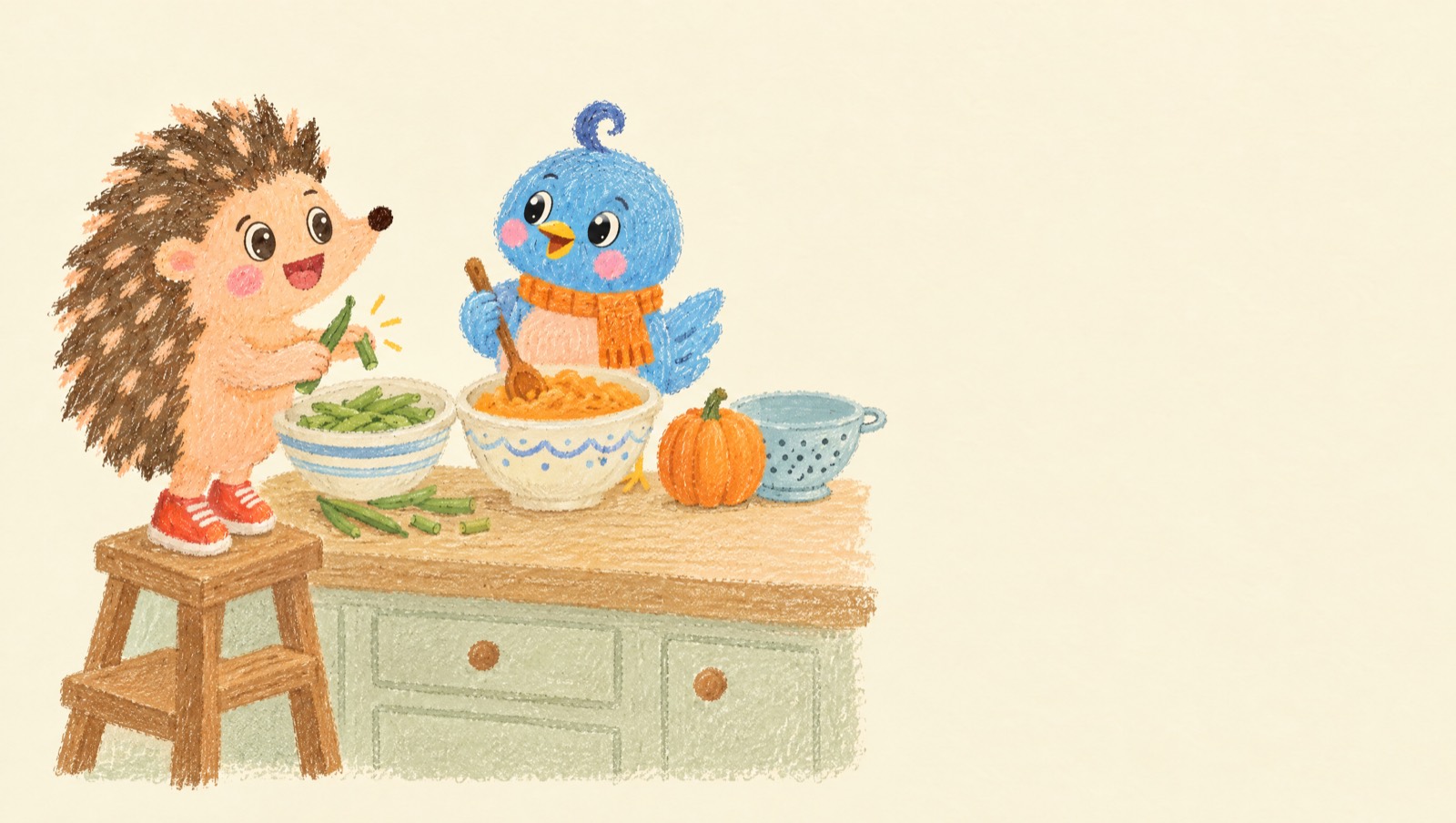
4. Let your child help cook. This is one of our therapists' favorite tips, and there's research behind it. In a 2014 study published in Appetite, children who helped make a meal ate more of it, including about 76% more salad, than children whose parent made the meal alone. Cooking lets your child see, touch and smell a food long before anyone asks them to taste it. Toddlers can wash potatoes, tear lettuce, snap green beans, stir, pour pre-measured ingredients or press cookie cutters into dough. Preschoolers can mash, spread, measure and, with a kid-safe knife and close supervision, cut soft foods like bananas or cooked carrots. Let them taste as they go if they want to, and don't worry if they don't.
5. Plan the day's schedule. Think about when the big meal will happen and work backward. If dinner is at 2:00, a normal breakfast and a small mid-morning snack, then nothing but water for the 2 hours before the meal, helps your child come to the table hungry but not starving. Try to protect nap time, or plan a quiet rest in the car.
6. Pack a safe food. If you're eating at someone else's house, bring one or two foods you know your child will eat. A container of plain pasta, a favorite fruit or a few crackers is enough. It's not rude. It's a backup plan, and it takes pressure off everyone, including the host.
On Thanksgiving day
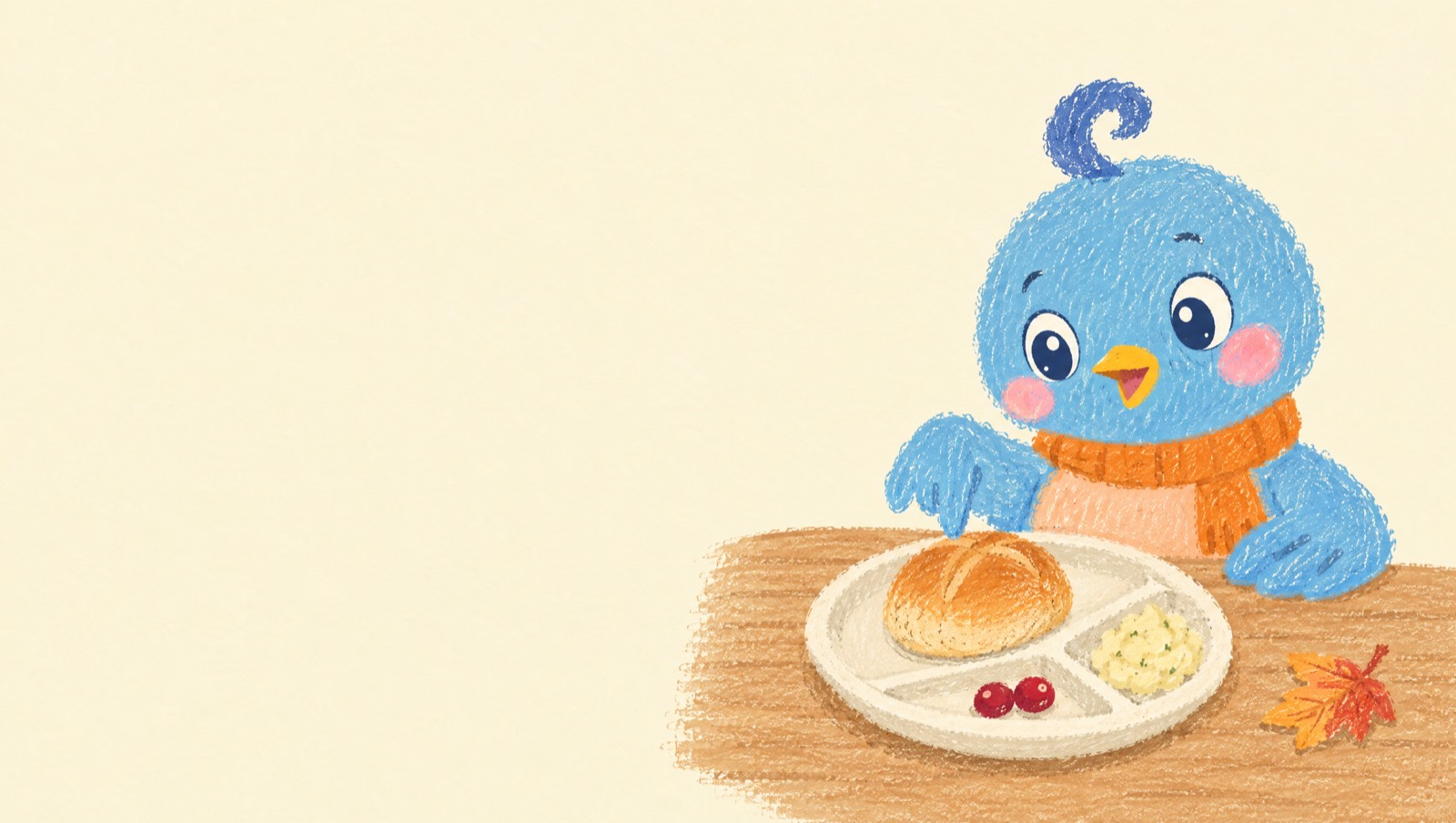
7. Build a "safe plate." This is the heart of the plan. Every plate gets at least one food your child already eats and likes, in a regular portion. Then add a very small amount of one or two holiday foods: a spoonful of mashed potatoes, two cranberries, one green bean. Small portions matter. A heap of something new looks like a mountain to climb. A tiny taste looks doable. A divided plate can help kids who don't want foods touching.
8. Let kids serve themselves when you can. Family-style serving, where bowls are passed and everyone takes their own, gives children a sense of control. Even a toddler can use a big spoon to put a bit of corn on their plate with your help. Kids are often more willing to try a food they chose to put on their own plate.
9. Follow the "you decide, I decide" rule. Many pediatric dietitians and feeding therapists use an approach called the Division of Responsibility in Feeding, developed by dietitian Ellyn Satter. Parents decide what food is offered, when and where. Children decide whether to eat and how much. On Thanksgiving, that means you choose what goes on the plate and when the meal is. Your child chooses what to eat from it. That one shift takes a lot of the fight out of mealtime, because you're no longer trying to make your child eat.
10. Skip the pressure, bribes and "clean plate" rules. This is the hardest step for a lot of families, because we were raised on "just one bite." But research is clear that pressure tends to backfire. In a well-known 2006 study, preschoolers ate less soup and said more negative things about it when they were pressured to finish it than when they weren't. The AAP also warns that bribing kids with dessert makes the dessert more exciting and the vegetables less appealing. Instead, keep the mood light and talk about other things. Let the food sit there. The quieter you are about it, the more room your child has to get curious.
11. Make every step toward a food count. Feeding therapists know that tasting is the last step, not the first. Before a child tastes a new food, they usually need to get comfortable being near it, looking at it, touching it, smelling it and maybe touching it to their lips. All of those steps count. You might say, "Can you tell me what color that is?" or "Does it feel squishy or crunchy?" or "Want to see if it's warm or cold?" If your child touches a green bean, that's a win. If they smell the cranberry sauce and say "yuck," that's still a win. They got close enough to smell it.
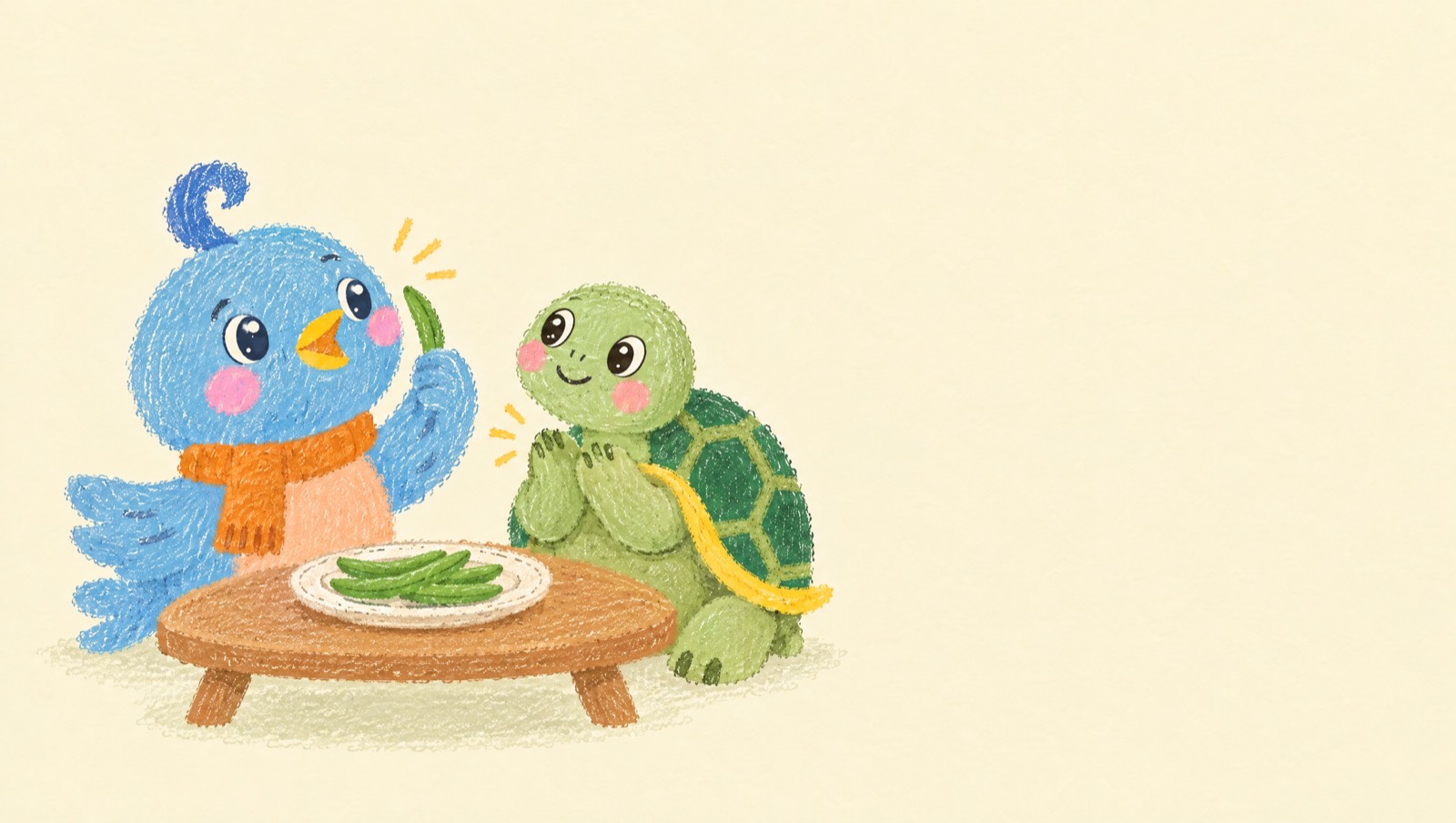
12. Try a "learning plate." Some families put a small extra plate or napkin next to the child's main plate. New foods go there. Your child can look at them, touch them or move them around, and they never have to go on the "real" plate. A learning plate gives a child a safe way to be near a food without feeling like they have to eat it. It also gives them a place to put a food they tried and didn't like, which is a polite, calm alternative to spitting it out.
13. Eat it yourself, and enjoy it. Kids learn a lot by watching. Talk about what you like about a food: "These sweet potatoes are so soft and warm." Let cousins and older kids model trying foods, too. Peers can be powerful.
14. Give your child a job. Having a role takes the focus off the food. Little ones can pass the napkins, hand out rolls, put a sticker place card at each seat or be in charge of the "What are you thankful for?" question. A child who feels helpful at the table often feels calmer at the table.
15. Keep table time realistic. Toddlers usually do well with about 15 to 20 minutes at the table. Preschoolers can often handle a bit longer. Let your child be excused when they're done, and have something quiet for them to do while the grown-ups finish. It's much better to end on a good note at 15 minutes than to force an hour and end in tears.
16. Plan a quiet break spot. For kids who get overwhelmed by noise and people, a quiet room with a blanket, a few books and their favorite stuffed animal can be the difference between a meltdown and a good day. Show your child the spot when you arrive, and let them know they can go there anytime they need a break.
17. Keep holiday foods safe for little mouths. Holiday tables have more choking hazards than a usual dinner. The AAP recommends keeping high-risk foods away from children until at least age 4, depending on the child. On a Thanksgiving table, watch for whole nuts (in salads, stuffing and pecan pie), whole grapes, popcorn, hard candy, raw carrot and celery sticks, and chunks of meat or cheese. Cut grapes into quarters, cut turkey into small, thin pieces, and keep nut dishes out of reach. Make sure little ones eat sitting down, with a grown-up nearby, not while running around with cousins.
After Thanksgiving
18. Bring a holiday food home. Leftovers are a great chance for more low-pressure tries. A food your child only looked at on Thursday might get a touch on Friday and a lick on Sunday. Repeat exposure is how kids learn to like foods, and the AAP says it can take 10 or more tries.
19. Praise the effort, not the bites. Instead of "Good job eating your green beans," try "You helped snap the green beans!" or "You smelled the cranberry sauce. What did you think?" You're teaching your child that being curious about food is something to be proud of.
20. Go back to your routine. After a big day, kids do best with their usual meal and snack times. Don't worry if your child ate mostly rolls on Thanksgiving. One meal doesn't make or break nutrition. What matters is the pattern over weeks and months.
Wondering whether your child's picky eating is more than a phase? Our feeding therapists help families with this every week. You can get started with an evaluation at Oaklin Lane, and we'll help you figure out what's going on.
What to say to well-meaning relatives
For many parents, the hardest part of a holiday meal isn't the child. It's the comments. "She'll eat if she's hungry enough." "In my day, you ate what was on your plate." "Just one bite, for Grandpa." These come from love, and from a time when advice was different. A little preparation makes them easier to handle.
Before the meal, a quick text or call to the host can help: "We're working on new foods with no pressure, so we're letting her try things at her own pace. I'll bring a couple of things I know she'll eat. Thank you for understanding!" Most hosts are relieved to know what helps.
At the table, short, friendly lines work best. You might try:
- "We're letting him look at it today. That's a big step for him."
- "She's still getting to know sweet potatoes. Maybe next time!"
- "We have a no-pressure rule at meals. It's really helping."
- "He helped make the cranberry sauce this morning. Tell Grandma what you did!"
- "Our feeding therapist says looking and smelling count as practice."
Redirect the conversation. Ask your child to tell everyone what they're thankful for, or ask Grandma to share her favorite Thanksgiving memory. Changing the subject takes the spotlight off the plate.
Be kind to yourself. You don't have to defend your parenting at the table. A smile and "We've got a plan" is enough. Your child is watching how you handle pressure, too, and staying calm teaches them that the table is a safe place.
Picky eaters with sensory differences, autism or ADHD
Some children have a harder time with food because of how their bodies take in the world. Kids with sensory processing differences, autistic children and children with ADHD are more likely than other kids to be very selective eaters. For them, the texture, smell, temperature or even the look of a food can feel truly overwhelming, not just unfamiliar.
The same plan works, with a few extra supports:
- Lean on safe foods even more. For a child with a short list of accepted foods, bringing those foods isn't just a backup. It's the main plan, and that's okay.
- Keep foods separate. A divided plate or small bowls help children who need to see each food on its own.
- Think about the room, not just the plate. Seat your child at the end of the table, near a door or away from the kitchen smells. Noise-reducing headphones and a quiet break spot can help a lot.
- Keep the routine as normal as you can. Their usual cup, plate or utensils from home can make a new table feel more familiar.
- Use a visual schedule. A simple picture list of the day ("car ride, play with cousins, dinner, break, pie, home") helps kids who do better when they know what's next.
If your child's eating is very limited or causes a lot of stress, a feeding evaluation can help sort out what's driving it, whether that's sensory, motor, medical or a mix. Our occupational therapists and speech-language pathologists work on feeding together, so your child gets one plan instead of two.
Our therapists' picks for picky eaters
You don't need to buy anything to help a picky eater. Your patience, a calm table and lots of no-pressure chances to try foods do the real work. But a few simple things can make the plan above easier. These are favorites of many pediatric feeding therapists, and each one earns its spot for a specific reason.
ezpz Mini Mat
A one-piece silicone placemat and divided plate that suctions to the table or high chair tray, with three sections for different foods.
Why it works: it makes the "safe plate" easy. Put a safe food in the big section and tiny tastes of new foods in the small ones, so nothing touches. The suction keeps the plate from flipping when a toddler is done eating, and it's small enough to pack for a meal at someone else's house.
- Ages: about 6 months and up
- Best for: babies and toddlers, kids who don't want their foods touching
- Find it: ezpz Mini Mat on Amazon
Guidecraft Classic Kitchen Helper
A sturdy wooden standing tower with a safety rail and an adjustable platform that brings little ones up to counter height.
Why it works: it's the easiest way to let a toddler help cook safely. Standing at the counter, your child can wash, stir, pour and snap green beans right next to you, which is where so much food exploring happens. Always stay right beside your child, and keep them away from the stove, sharp knives and hot dishes.
- Ages: about 2 years and up, once your child stands and climbs steadily
- Best for: kitchen helpers, families who cook together often
- Find it: Guidecraft Classic Kitchen Helper on Amazon
Curious Chef Kid Safe Kitchen Knife Set
Three nylon knives in different sizes, with serrated edges that cut soft foods but are much less sharp than metal knives.
Why it works: cutting is a big, satisfying job for a preschooler, and it means touching and smelling a food up close. Kids can slice bananas, strawberries, cooked sweet potatoes, soft cheese or rolls for the holiday table. They're still tools, so supervise closely.
- Ages: 4 years and up, with an adult
- Best for: preschool and school-age helpers
- Find it: Curious Chef Kid Safe Kitchen Knife Set on Amazon
I Will Never Not Ever Eat a Tomato, by Lauren Child
A funny picture book about Lola, who refuses to eat almost everything, and her big brother Charlie, who gets her to try new foods by giving them silly new names.
Why it works: kids recognize themselves in Lola, and the story shows trying new foods as playful, not scary. Reading it the week before Thanksgiving gives you a fun, pressure-free way to talk about the meal. Some families even make up their own funny names for the holiday dishes.
- Ages: about 3 to 8 years
- Best for: preschoolers and early readers, bedtime reading before the holiday
- Find it: I Will Never Not Ever Eat a Tomato on Amazon
What you don't need
- Hidden-veggie tricks as your main plan. Adding vegetables to foods your child eats is fine, but kids still need to see and get to know foods in their real form to learn to like them.
- Special "kid meals" every night. One family meal with at least one food your child likes works better than cooking a separate dinner.
- Reward charts for bites. Rewards for eating can make the food feel like a chore. Praise curiosity and helping instead.
Picky eating or a feeding problem? When to talk to a professional
For most kids, picky eating is a normal phase that slowly gets better with time and patience. But for some children, it's more than that. A pediatric feeding disorder is when a child's eating doesn't meet their needs for their age, and it affects their health, growth, development or daily life. A 2019 consensus paper in the Journal of Pediatric Gastroenterology and Nutrition defined it, and a 2021 study in The Journal of Pediatrics found that about 1 in 37 privately insured children under 5 in the United States is diagnosed with a pediatric feeding disorder each year, with higher rates in the Medicaid groups studied. It's more common than most parents think, and it's very treatable.
It's a good idea to talk with your pediatrician, and ask about a feeding evaluation, if you notice any of these:
- Your child eats fewer than about 20 different foods, or the list is getting shorter over time.
- Your child drops whole groups of foods, like all vegetables or all meats, and doesn't add them back.
- Your child gags, coughs, chokes or vomits often during meals.
- Your child cries, panics or melts down when a new food is near them, not just at the table but at the sight of the food.
- Your child isn't gaining weight or growing as expected, or your doctor has mentioned concerns about growth.
- Your child is still mostly on purees or soft foods past about 12 to 18 months, or has a hard time chewing.
- Meals regularly take longer than 30 minutes, or your child needs screens or distractions to eat at all.
- Mealtime is a daily battle, and it's affecting your family.
- Your child has trouble drinking, drools a lot while eating, or seems to have a hard time moving food around in their mouth.
- Your gut tells you something isn't right. You know your child best.
The American Speech-Language-Hearing Association notes that feeding problems in children can have many causes, including medical, oral-motor, sensory and behavioral factors, and often more than one. That's why a team approach helps.
What feeding therapy at Oaklin Lane looks like
At Oaklin Lane, feeding therapy starts with an evaluation. A feeding therapist (a speech-language pathologist or occupational therapist trained in feeding) will talk with you about your child's eating history, growth, health and daily routines, then watch your child eat and play with food. They'll look at how your child chews, swallows and moves food around in their mouth, how their body handles sitting at the table, and how they respond to different textures, smells and tastes. If your child needs therapy, you'll get a plan built around your child's safe foods, with small steps you can practice at home. Our approach is playful and never forceful. Kids learn that food can be interesting instead of scary. You can read more about what happens inside a pediatric feeding clinic and what happens at a pediatric therapy evaluation. For babies and young toddlers learning to drink from a cup, see our guide to the best first cups.
FAQ
Should I make my child take "one bite" at Thanksgiving?
We don't recommend it. Pressure to eat, even gentle pressure like "just one bite," tends to make kids less willing to try foods over time. Research shows children eat less of a food, and like it less, when they're pressured to eat it. Offer the food, eat it yourself, and let your child decide. Looking, touching and smelling all count as practice.
Is it okay to bring my child's own food to someone else's house?
Yes. Bringing one or two foods you know your child will eat is a smart backup plan, not an insult to the host. A quick heads-up ("I'll bring a little plain pasta for Mia, just in case") usually goes over well. Put the safe food on your child's plate next to a small taste of the holiday foods.
My child only ate rolls at Thanksgiving. Is that a problem?
Not on its own. One meal doesn't decide your child's nutrition. What matters is what your child eats over a week or a month. If your child eats a reasonable variety on most days and is growing well, a rolls-only Thanksgiving is normal. If your child only ever eats a handful of foods, talk with your pediatrician.
Should my child get dessert if they didn't eat dinner?
Many feeding therapists suggest serving a small, normal-sized dessert with the meal or at its usual time, without tying it to eating dinner. Using dessert as a reward makes sweets seem more special and vegetables seem like a chore, which is the opposite of what you want. A regular portion of pie, the same as everyone else, keeps dessert from being a battle.
How many times should I offer a new food?
Keep offering it, in small amounts, without pressure. The CDC says it can take 8 to 10 tries for a young child to accept a new food, and the AAP says it can take 10 or more. Some kids need even more. Every time your child sees, touches or smells a food, it counts.
Is it okay to hide vegetables in foods my child likes?
It's fine as an extra, like adding pumpkin to pancakes. But it works best alongside, not instead of, offering vegetables in their real form. Kids learn to like foods by getting to know them, so they need to see and try the real thing too. Telling your child what's in a food also helps build trust.
What age do kids grow out of picky eating?
It varies. Picky eating often peaks in the toddler and preschool years, and the CDC notes that it often fades by about age 5. Many kids keep a few strong dislikes for years, which is normal. If picky eating is getting worse instead of better, or your child is very limited, it's worth getting a feeding evaluation.
Can my baby eat Thanksgiving food?
If your baby has started solids, many soft holiday foods work well, like mashed sweet potatoes, mashed potatoes, soft cooked squash, or very finely shredded, moist turkey. Skip added salt and sugar where you can, avoid honey before age 1, and keep choking hazards like nuts, whole grapes and chunks of meat off your baby's plate. Ask your pediatrician if you have questions about allergies or new foods.
Does picky eating mean my child has a sensory problem?
Not necessarily. Most picky eaters are going through a typical developmental phase. But if your child is very sensitive to textures, smells or sounds in other parts of life too, or if eating is very limited, an occupational therapist or speech-language pathologist can help figure out whether sensory differences are part of the picture.
From all of us on the Lane
Thanksgiving is about being together, not about how many green beans anyone eats. If your child spends the meal eating rolls, helping pass the napkins and smelling the cranberry sauce, that's a good day. Every calm, pressure-free meal teaches your child that the table is a safe and happy place, and that's what helps picky eaters grow into adventurous eaters over time. If you have questions about your child's eating, our feeding therapists see families every day at our Lake Highlands and Rockwall clinics. Fill out the Get Started form, and our team will help you with the next step. Happy Thanksgiving from all of us at Oaklin Lane.
Sources
- American Academy of Pediatrics, HealthyChildren.org. 10 Tips for Parents of Picky Eaters.
- American Academy of Pediatrics, HealthyChildren.org. Choking Prevention.
- Centers for Disease Control and Prevention. Picky Eaters and What to Do.
- American Speech-Language-Hearing Association. Pediatric Feeding and Swallowing (Practice Portal).
- Ellyn Satter Institute. The Division of Responsibility in Feeding.
- Taylor CM, Wernimont SM, Northstone K, Emmett PM. Picky/fussy eating in children: Review of definitions, assessment, prevalence and dietary intakes. Appetite. 2015;95:349-359.
- Dovey TM, Staples PA, Gibson EL, Halford JC. Food neophobia and "picky/fussy" eating in children: A review. Appetite. 2008;50(2-3):181-193.
- Galloway AT, Fiorito LM, Francis LA, Birch LL. "Finish your soup": Counterproductive effects of pressuring children to eat on intake and affect. Appetite. 2006;46(3):318-323.
- van der Horst K, Ferrage A, Rytz A. Involving children in meal preparation. Effects on food intake. Appetite. 2014;79:18-24.
- Goday PS, Huh SY, Silverman A, et al. Pediatric Feeding Disorder: Consensus Definition and Conceptual Framework. Journal of Pediatric Gastroenterology and Nutrition. 2019;68(1):124-129.
- Kovacic K, Rein LE, Szabo A, Kommareddy S, Bhagavatula P, Goday PS. Pediatric Feeding Disorder: A Nationwide Prevalence Study. The Journal of Pediatrics. 2021;228:126-131.
This article is for education and is not a diagnosis or medical advice. If you have concerns about your child's eating, growth or health, talk with your pediatrician.