

Therapy for sensory processing disorder: what works and what the evidence says

Occupational therapy (OT) is the main therapy for SPD. The research behind it is mixed, so it works best as goal-based OT, where the therapist sets clear targets with you and measures them every few weeks.
This guide is for parents who have heard the words "sensory processing disorder" from a teacher, a pediatrician, or their own gut. You will learn what the label means, what the best studies found, which popular tools have weak support, and how to tell if therapy is helping your child.
A licensed clinician on our team reviewed this guide before it went live. Our clinical team has served more than 10,000 kids over 22 years, and both of our clinics have sensory gyms built for this work.
What therapy helps a child with sensory processing disorder?
The therapy for SPD with the most research behind it is occupational therapy that uses a sensory integration approach. Strong programs add caregiver coaching, so parents learn the strategies too. Progress gets measured against functional goals, like getting dressed without a meltdown or eating lunch in a loud cafeteria. A set trial period helps you judge whether it is working.
The best-known early study came out in 2007. Researchers randomly assigned 24 children with sensory modulation problems, ages 3 to 11, to one of three groups: OT using a sensory integration approach, an activity program with no sensory focus, or a wait list.
The OT group had about 20 sessions over 10 weeks. That group made bigger gains on its personal goals than both other groups, plus gains on a test of attention. The study was small, and the authors asked readers to treat the results with caution.
Newer guidance points the same way. The American Occupational Therapy Association's 2024 practice guidelines for autistic people grade caregiver coaching for families of young children as an approach OTs could consider, based on moderate evidence. That matters here, because up to 90% of autistic children have sensory processing difficulties.
You can read how our clinicians approach sensory integration therapy on our service page. The rest of this guide covers the evidence, so you can ask sharp questions at any clinic you visit.
SPD disorder: what the diagnosis status means
SPD has no entry in the DSM-5, the manual most U.S. clinicians use to diagnose mental and developmental conditions. That makes it a contested label. The daily struggle behind it is real, and it deserves a plan.
What pediatricians are told
In 2012 the American Academy of Pediatrics (AAP) advised pediatricians to hold off on diagnosing SPD. When a child shows sensory symptoms, the AAP says to evaluate for autism, ADHD, developmental coordination disorder (DCD), and anxiety. Each of those has its own treatment path, so ruling them in or out comes first.
What the early childhood manual says
A second manual takes a different view. The DC:0-5, a diagnostic system for children from birth to 5 published by Zero to Three, lists sensory processing disorders, including sensory over-responsivity and under-responsivity. For over-responsivity, a child must be at least 6 months old, and the pattern has to show up in more than one setting and disrupt daily life.
What brain research shows so far
Brain research is early but worth knowing. A 2013 study scanned the brains of 16 boys with SPD, ages 8 to 11, and 24 boys without it. The SPD group showed differences in white matter, the brain's wiring, mostly toward the back of the brain. Sixteen children is a small group, so read this as a clue that still needs bigger studies.
How common SPD is
Estimates range from 5% to 16% of children in the general population, depending on how each study defined the condition. We give the range on purpose. A single number would claim more certainty than the research has.
So here is the honest frame. The SPD disorder label is still debated. The shirt tags that end every morning in tears, the meltdown in the grocery store, the refusal to touch sand at the park: those are real, and they make good therapy targets. Therapy for SPD works on the behaviors and daily tasks, whatever name ends up in the chart.
Therapy for SPD options compared
Most therapy for SPD falls into a few groups: OT using Ayres Sensory Integration, sensory tools, caregiver coaching, motor work, and changes to the child's surroundings. The evidence behind each one varies a lot.
OT for SPD using Ayres Sensory Integration
Ayres Sensory Integration (ASI) is the original, structured form of sensory integration therapy. The OT uses swings, climbing, and textures to build play-based challenges matched to the child. We walk through a full session in our guide to ot sensory integration therapy. Here, the focus is the evidence.
The largest trial so far is SenITA, published in the UK in 2022. It enrolled 138 autistic children with sensory processing difficulties in mainstream primary schools. Half got 26 weeks of manualized sensory integration therapy, and half got usual care.
On the main outcome, problem behavior rated at 6 months, the therapy group showed no gain over usual care. Parents and caregivers did report clear gains on each child's individual goals. Those goal ratings were only tracked in the therapy group, so the trial leaves open how much of the gain came from therapy itself.
A 2025 trial in the journal Autism Research compared OT using ASI with applied behavior analysis (ABA) and with no treatment, in autistic children who also had sensory differences. Each child got 30 one-hour sessions. Both therapy groups made similar gains on individual goals compared with the no-treatment group.
Put together, the research points one way. OT for SPD shows its clearest results when it chases specific, measurable goals. Broad claims about changing behavior across the board have weaker support so far.
Sensory tools: weighted vests, brushing, therapy balls
Tools are a small part of therapy for SPD. Weighted vests have weak evidence, and autism research groups advise caution. Deep pressure and caregiver training have much stronger support.
The Association for Science in Autism Treatment (ASAT) reviewed the research on weighted vests and found it insufficient. One review it cites labels vests a red-light practice for children with sensory challenges. ASAT suggests families try options with stronger evidence first.
If you still want to try a vest, ASAT suggests a wearing schedule, clear target behaviors, and real data. Keep going only if the data show a clear benefit for your child.
A 2025 systematic review of sensory-based interventions, covering studies from 2015 to 2024, found strong evidence for two things: deep pressure touch input, and training caregivers to use sensory strategies. It also found moderate evidence that alternative seating left attention unchanged. That category often includes therapy balls used as chairs.
If an OT suggests a brushing protocol, ask what goal it serves, how long the trial will run, and how you will measure change. That same test works for any sensory tool, toy, or product.
Other occupational therapy SPD approaches
Beyond ASI, occupational therapy SPD plans often include caregiver coaching, motor skills work, and changes to the child's environment. The evidence for environment changes is thin.
Here is how the main approaches to therapy for SPD stack up, based on the sources in this guide.
| Approach | Evidence level | Who delivers it |
|---|---|---|
| OT using Ayres Sensory Integration | Mixed. Gains on individual goals. The largest trial found no gain over usual care on behavior. | Licensed occupational therapist |
| Caregiver training in sensory strategies | Strong in the 2025 review. AOTA grades coaching for young autistic children as moderate. | OT trains the parent, who carries it into daily routines |
| Deep pressure touch input | Strong in the 2025 review | OT designs it. Caregivers often deliver it at home. |
| Weighted vests | Insufficient. ASAT advises caution. | OT or school team, only with a schedule and data |
| Alternative seating (such as therapy ball chairs) | Moderate evidence of no effect on attention | Teacher or OT |
| Changes to the child's environment | Insufficient in the 2025 review | OT with the family and school |
| Motor skills work | Depends on the child and any other diagnosis. Ask your OT what research supports the plan. | OT or physical therapist |
How to treat sensory disorder signs at home
If you are asking how to treat sensory disorder signs at home, start with your OT's plan. Home strategies help most when an OT has trained you first. The 2025 review rated caregiver training as strong evidence, and that training is what turns a list of activities into a plan for your child.
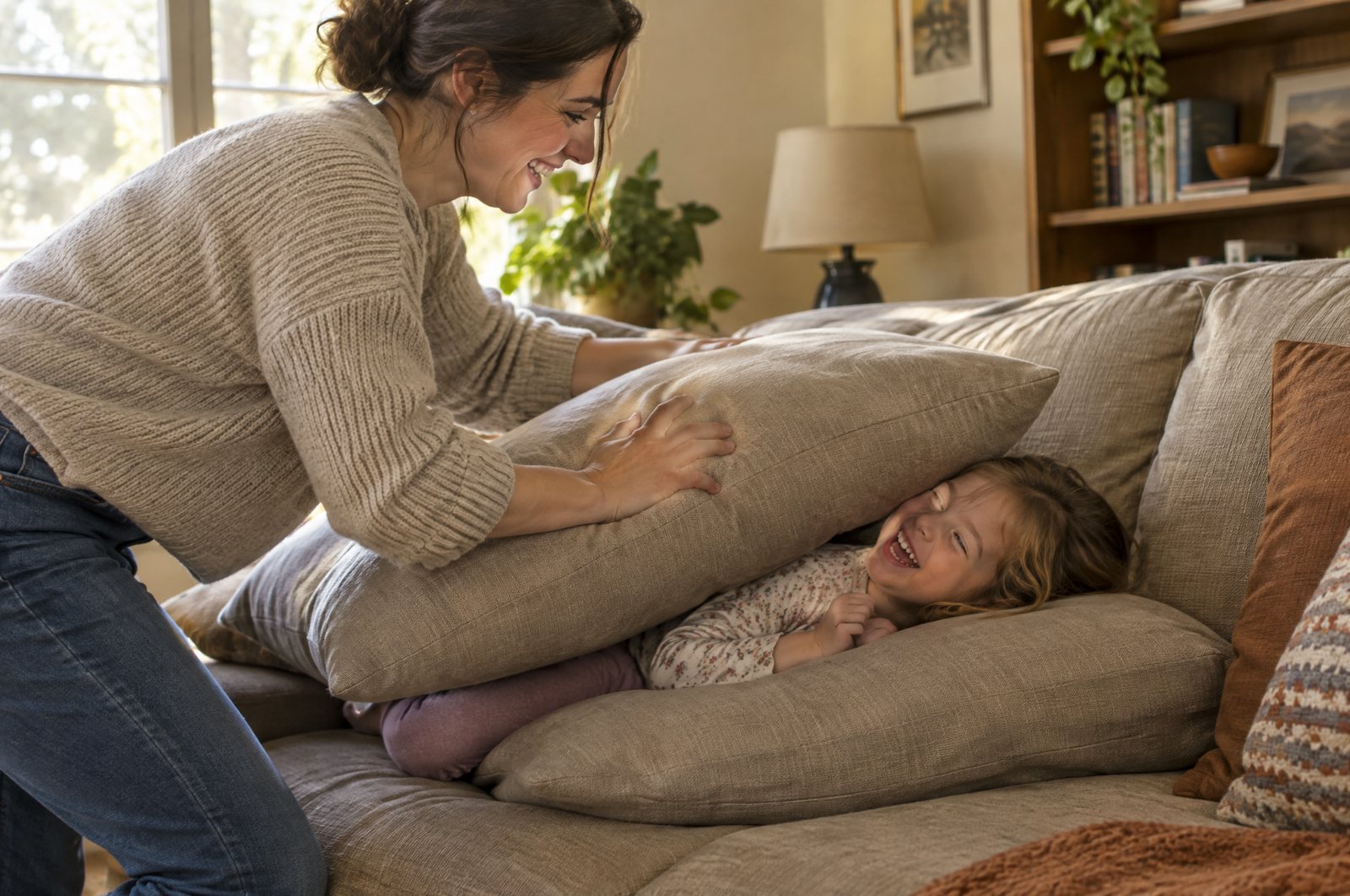
Here is what OT-guided home work often looks like:
- Track the pattern. Keep a short daily log: what happened, what came right before, and how long it lasted. The AAP suggests this type of behavior diary as a way to measure therapy.
- Prepare for known triggers. Give a warning before the blender runs, the vacuum starts, or the school bell rings. Offer two clothing choices your child already tolerates.
- Use the activities your OT picked. Heavy work, movement breaks, and deep pressure can help, but the type, amount, and timing should come from your child's OT.
- Keep routines steady. Predictable mornings and bedtimes lower the number of surprises your child's nervous system has to handle.
- Watch what you reward. A psychologist quoted by the Child Mind Institute warns that a sensory break offered right after a meltdown can end up rewarding the meltdown.
A sensory diet is a schedule of sensory activities that an OT designs for one specific child. We explain how it works in our upcoming guide to sensory seeking behavior. Every family at our clinics also leaves with an individualized home program, so practice continues between visits.
SPD in infants and toddlers
SPD in infants can show up as crying that is hard to soothe after loud noise, or distress when a caregiver tries to calm the baby with gentle rocking. The DC:0-5 manual lists both as examples of sensory over-responsivity.
Young babies cry, and plenty of them dislike noise. What matters is a steady pattern, across places and caregivers, that gets in the way of feeding, sleep, play, or family routines. A one-time fuss at a loud party is a different thing from distress that shows up every day.
In Texas, Early Childhood Intervention (ECI) serves children from birth to 36 months. A medical diagnosis or confirmed delay is unnecessary for a referral. Anyone who knows your child can make one, including you, a grandparent, a daycare teacher, or your pediatrician.
The ECI evaluation is free. Other ECI services follow a sliding fee scale based on family size and income, and no family is turned away for inability to pay. You can also ask your pediatrician about a clinic-based OT evaluation.
Sensory integration dysfunction treatment: judging progress
Judge sensory integration dysfunction treatment the way the AAP suggests. Set explicit goals at the start, use before-and-after ratings, and agree on a trial period with a follow-up date.
The AAP's 2012 statement asks pediatricians to help families set up simple tracking, like behavior diaries or rating scales filled out before and after treatment. Goals should focus on everyday life: paying attention, tolerating new foods, or handling a noisy room.
Ask for the goal sheet
Every goal in therapy for SPD should be something you can see. A good goal sheet names the behavior, where your child is today, how progress will be measured, and when it will be checked. If a goal says "improve sensory processing," ask the OT to rewrite it as something you can see, like "puts on socks and shoes with one prompt, 4 of 5 mornings." The same standard applies to OT for sensory integration disorder at any clinic.

Expect a re-evaluation about every 6 months. One Texas Medicaid health plan's OT guideline, for example, calls for a formal re-evaluation every 180 days, or sooner if a child's status changes. Plans differ, so ask how yours works.
Red flags to watch for
Any therapy for SPD should come with written goals and scheduled re-checks. Treat any claim of a cure as a red flag. The research supports gains on specific goals. A cure is a promise beyond what the studies show. Be wary of programs that skip goals, skip re-checks, or sell equipment as the main treatment.
Sensory issues often travel with other conditions. Studies cited by CHADD found that 46% to 69% of children with ADHD show signs of sensory over-responsivity. Our sensory integration ADHD primer covers that overlap, and our guide to occupational therapy and ADHD explains how OT supports attention.
What this looks like at Oaklin Lane
At our clinics, an OT evaluation takes about an hour and is usually scheduled within 2 weeks. The therapist writes a plan of care with short-term and long-term goals, then walks you through the results in a caregiver conference. Many parents tell us that conference is their favorite part, because it is the first time the results make sense.
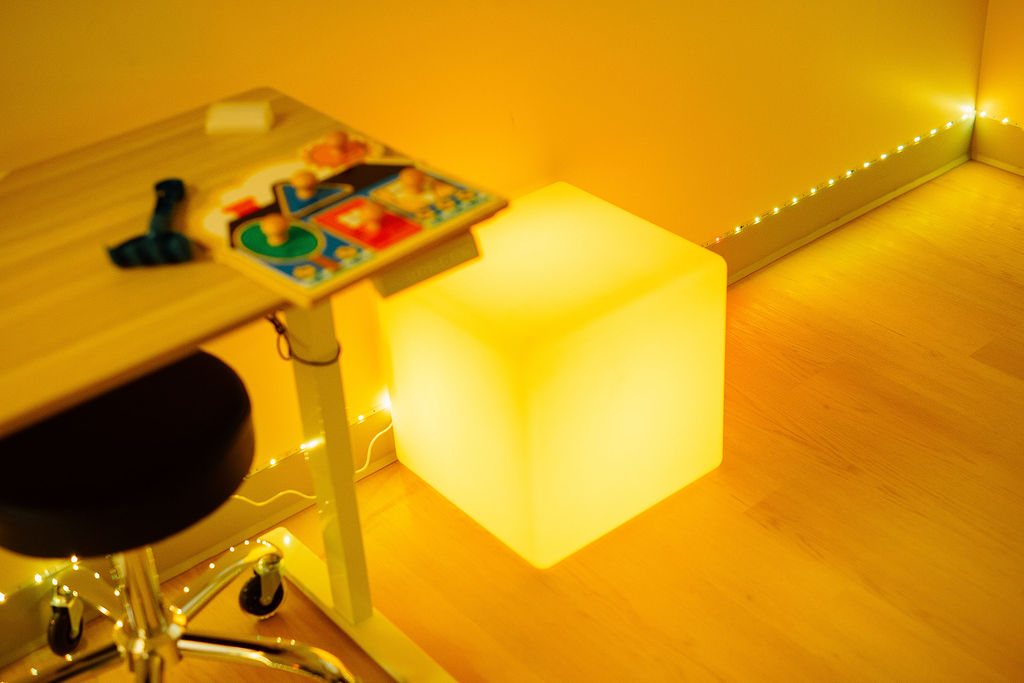
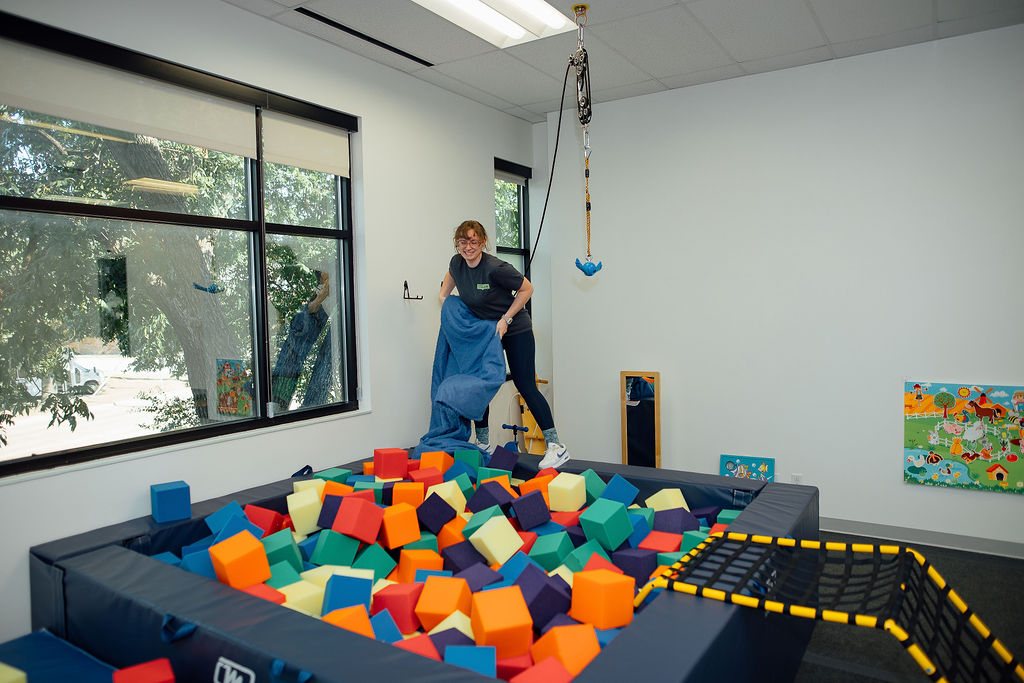
Most children come twice a week, and OT sessions usually run 45 minutes. Our gyms include suspended obstacle courses, swings, foam pits, crash pads, and tactile bins, so the OT can build sensory challenges into play. Our team treats children with autism and ADHD. Diagnosis of either condition comes from a physician, developmental pediatrician, or psychologist.
Frequently Asked Questions
How long does therapy for SPD take?
It depends on the child and the goals. The AAP suggests agreeing on a trial period up front, with a follow-up visit to review progress. Many plans re-evaluate about every 6 months, which gives you a natural checkpoint.
Is OT for sensory integration disorder evidence-based?
Partly. Trials show gains on individual goals, and a 2025 trial found OT using Ayres Sensory Integration matched ABA on goal gains. The largest trial found no extra benefit over usual care on behavior, so the evidence is mixed.
Do you need a diagnosis to start OT?
For children under 36 months, Texas ECI accepts referrals without a medical diagnosis. At our clinics, therapy starts with a referral from your child's doctor, then an OT evaluation, and our team checks your insurance benefits before treatment begins.
Can a baby have SPD?
The DC:0-5 manual allows a sensory over-responsivity diagnosis from 6 months of age. Signs include crying that is hard to soothe after loud noise and distress with gentle rocking. Talk with your pediatrician, and in Texas you can refer your baby to ECI yourself.
Next step
Two things to take with you. OT with a sensory integration approach is the most studied therapy for SPD, and it shows the clearest results when it is tied to goals you can see. Before you start anywhere, ask for the goal sheet, a trial period, and a re-check date.
Want to go deeper? Our sensory integration therapy page explains how we work with a child's nervous system. Our guide to ot sensory integration therapy shows what happens in the gym, our guide to occupational therapy and ADHD covers the overlap with attention, and an upcoming guide on sensory seeking behavior will cover kids who crave movement.
When you are ready, fill out our 10-minute Get Started form. Oaklin Lane's team will talk with you about what you are noticing, check your benefits, and schedule an evaluation, usually within 2 weeks.
Sources
- Miller, Coll, and Schoen (2007), randomized controlled pilot study of OT using sensory integration, AJOT
- AOTA 2024 Occupational Therapy Practice Guidelines (AJOT 78(3))
- AAP (2012), Sensory Integration Therapies for Children With Developmental and Behavioral Disorders, Pediatrics
- Zero to Three, DC:0-5 Version 2.0 supplement, Sensory Processing Disorders
- Owen et al. (2013), Abnormal white matter microstructure in children with sensory processing disorders, NeuroImage: Clinical
- Mulligan, Douglas, and Armstrong (2021), Characteristics of idiopathic sensory processing disorder in young children, Frontiers in Integrative Neuroscience
- Randell et al. (2022), SenITA randomized controlled trial, Health Technology Assessment
- Schaaf et al. (2025), comparative trial of OT using Ayres Sensory Integration and ABA, Autism Research
- ASAT, Weighted vests
- Piller et al. (2025), Systematic review of sensory-based interventions for children and youth (2015-2024), Frontiers in Pediatrics
- Texas Education Agency, A Parent's Guide to ECI and ECSE (June 2026)
- Child Mind Institute, The debate over sensory processing (reviewed October 9, 2026)
- CHADD, New research in sensory processing dysfunction (September 21, 2017)
- Texas Children's Health Plan, Occupational Therapy Guidelines (effective June 27, 2023)