

16 holiday gifts that build skills, picked by our pediatric therapy team (2026)

You want a gift that still gets played with in March, not one that gets opened in December and forgotten by New Year's. Our therapists see which toys earn their spot every single week, so we asked them. Sixteen people on the Oaklin Lane team, from occupational, speech and physical therapists to the people who keep our clinics running, each picked one gift they would hand to a family without a second thought.
Every pick turns ordinary play into practice: pinching, stacking, pretending, hopping, talking. Most cost under $40. None of them need a screen. And for each one, we explain the part most gift guides skip: exactly which skill it builds, and why our therapists reach for it.
Some links below are affiliate links, which may earn Oaklin Lane a small commission at no cost to you. As an Amazon Associate, Oaklin Lane earns from qualifying purchases.
The short answer: the best skill-building gifts for 2026
If you only have a minute, here are our therapists' top picks by goal. Every one is a regular toy any child can enjoy, chosen because it quietly builds a skill children use every day.
- For stronger, steadier hands (fine motor): Theraputty, The Fuzzies Stacking Game, Grab That Monster and the Wooden Mystery Box.
- For more words and conversation (language): the Critter Clinic Vet Set, the Campfire S'mores Play Set, the Scoop and Serve Ice Cream Counter and Counting Party Presents.
- For balance, strength and coordination (gross motor): Stepping Stones, Walking Monster Feet, the Hippity Hop and a Spinning Chair.
- For calm and body awareness (sensory): Kinetic Sand, Squigz, a Mini Trampoline and a Handheld Massager.
- Best under $20: Theraputty, Kinetic Sand and the Hippity Hop.
- Best for toddlers (2+): the Critter Clinic Vet Set.
- Best for big kids (8+): The Fuzzies Stacking Game.
How to read each pick
Every gift below lists four things: the ages it fits best, a price range, the skills your child practices while playing, and the therapist who picked it. The price ranges are simple: $ is under $20, $$ is $20 to $40, and $$$ is over $40. Holiday prices move around, so check the price before you buy.
Want it on paper? Download the free printable gift guide. Stick it on the fridge, or text it to the grandparents who keep asking what to buy.
Why the right toy makes a difference
Children build skills through play. A toy that asks a child to do something, like squeeze, balance, pretend or take a turn, gives them hundreds of small practice reps without it ever feeling like work. The American Academy of Pediatrics makes the same point in its guidance on choosing toys: simple, hands-on toys, played with a parent or caregiver, do more for language and learning than toys that do the playing for the child.
That is the test our therapists used. Each pick below is simple, open-ended and fun enough that your child will come back to it on their own. The skill-building happens in the background.
Hands and senses: gifts that build fine motor skills
Our occupational therapy team picked these four. Fine motor skills are the small, precise movements of the fingers and hands. They are the skills behind holding a pencil, cutting with scissors, buttoning a coat and opening a lunchbox. They grow from three building blocks: hand strength, finger control, and the ability to feel what the hands are doing. Each of these gifts works on at least one of them.
The Fuzzies Stacking Game
Your child pulls fuzzy balls out of a squishy tower with tweezers or fingertips, then balances them higher and higher without letting it topple. It is a game, so nobody notices they are practicing a precise pincer grasp and hand-eye coordination. It is a great pick for older kids who want a real challenge, and it works for family game night, since grown-ups knock it over too.
Why our therapists like it: using tweezers asks the thumb, pointer and middle finger to work together, the same three fingers that hold a pencil. Pull too hard and the tower falls, so your child also learns to control how much force they use. Losing gracefully and trying again is a nice bonus skill.
- Ages: 8+
- Price: $$ ($20 to $40)
- Skills: fine motor, hand-eye coordination
- Picked by Casey Espinoza, OTR/L
- Find it: The Fuzzies Stacking Game on Amazon
Grab That Monster Game
Kids use their fingers and little tools to grab, lift and sort silly monster pieces. Every turn practices a controlled grasp and release, plus careful, accurate hand movements.
Why our therapists like it: the squeeze tools open and close just like scissors, so they work the same small hand muscles your child will use for cutting. Guiding a tool to a small target trains visual-motor skills, which means the eyes and hands working as a team. That teamwork shows up later in copying letters and catching a ball.
- Ages: 3+
- Price: $$ ($20 to $40)
- Skills: fine motor, visual-motor
- Picked by Sydni Valk, OT Tech
- Find it: Grab That Monster on Amazon
Wooden Mystery Box
Your child reaches inside, feels an object without looking, then matches it to a picture or texture card. Touch does the job the eyes usually do, which builds touch awareness, focus and curiosity.
Why our therapists like it: recognizing an object by touch alone is a real skill. It is how we find a coin in a pocket or a button behind our back without looking. Strong touch awareness makes hands more skillful. Turn it into a guessing game ("Is it bumpy or smooth? Big or small?") and you sneak in describing words, too.
- Ages: 3+
- Price: $$ ($20 to $40)
- Skills: tactile sensory, focus
- Picked by Tammy Lightfoot, COTA/L
- Find it: Wooden Mystery Box on Amazon
Theraputty
Hide a few small beads in the putty and have your child dig them out using only a thumb and pointer finger. Five minutes a day builds hand strength and a precise grasp. Stay close while the beads are out.
Why our therapists like it: therapy putty is a staple in occupational therapy because the resistance is adjustable. The set comes in color-coded firmness levels, from soft to firm, so your child can start easy and move up as their hands get stronger. Squeezing, pinching and rolling it works the small muscles inside the hand that make handwriting less tiring. Ask our OTs which firmness to start with.
- Ages: 3+
- Price: $ (under $20)
- Skills: hand strength, tactile sensory
- Picked by Emily Oliver, OTR/L
- Find it: Therapy putty set on Amazon
Words and play: gifts that spark conversation
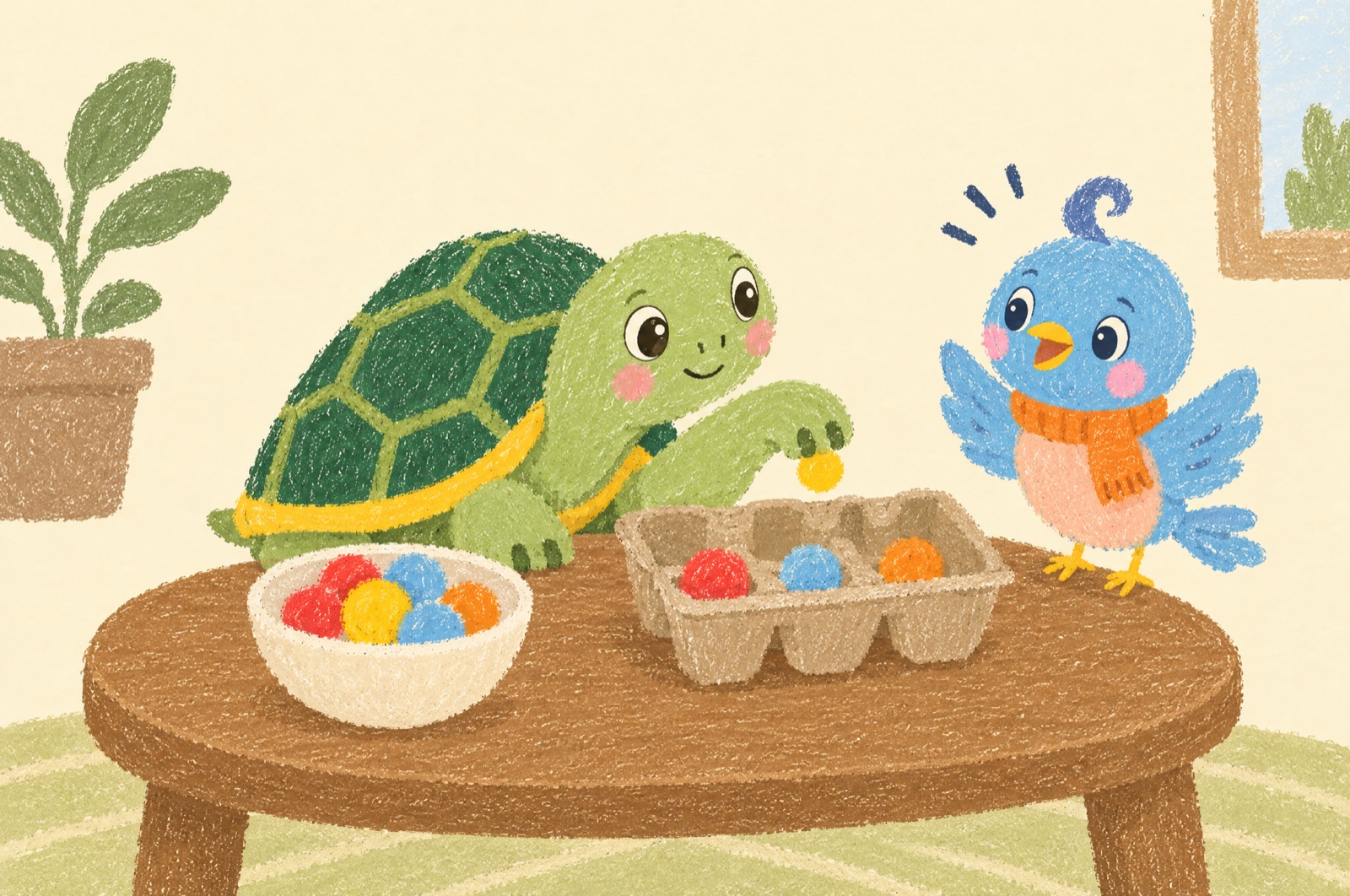
Our speech therapists picked these four. Pretend play and language grow up together: when a child pretends a block is a phone, they are using the same thinking that lets a word stand for a thing. Pretend play also gives children something to talk about, someone to talk to and a reason to take turns. The most important piece in every one of these sets is you: sit down, play along and talk about what you are both doing.
Campfire S'mores Play Set
Your child builds a pretend campfire and toasts marshmallows, with plenty to talk about along the way. Play together to grow new words ("hot," "sticky," "crunch"), shared attention and "wh" questions like "Who wants one?" and "Where did the marshmallow go?"
Why our therapists like it: making a s'more has clear steps, which makes it easy to practice sequencing words like first, next and last. It is also a perfect setup for a simple trick speech therapists use called expanding: when your child says "marshmallow," you say "hot marshmallow." One word more than your child said is just the right stretch.
- Ages: 3+
- Price: $$ ($20 to $40)
- Skills: language, pretend play
- Picked by Shannon Nalley, M.S., CCC-SLP
- Find it: Campfire S'mores Play Set on Amazon
Scoop and Serve Ice Cream Counter
Your child scoops, stacks and serves wooden treats while taking your order. It is a natural way to practice following directions ("Two scoops, the pink one on top"), describing colors, and asking and answering questions.
Why our therapists like it: ordering ice cream is a real-life social script, with a greeting, a request, a please and a thank you. Two-step and three-step orders build listening and memory. Words like on top, under, first and last are early concept words that show up again in kindergarten directions. Swap roles halfway through so your child gets to order, too.
- Ages: 3+
- Price: $$$ (over $40)
- Skills: following directions, social skills
- Picked by Dondi Hampton, CCC-SLP
- Find it: Scoop and Serve Ice Cream Counter on Amazon
Counting Party Presents
Your child opens numbered presents to find a small surprise inside each one. Name it, describe it and ask for it together to build vocabulary and back-and-forth conversation. Learning Resources sells it as the Counting Surprise Party.
Why our therapists like it: a closed box is a built-in reason to talk. Speech therapists call this a communication temptation: your child wants what is inside, so they have a reason to ask, guess or tell you what they found. Before you name the next surprise, wait a beat. That small pause gives your child room to talk first.
- Ages: 3+
- Price: $$ ($20 to $40)
- Skills: vocabulary, conversation
- Picked by Caitlyn Schroeder, CF-SLP
- Find it: Counting Surprise Party at Learning Resources
Critter Clinic Vet Set
Your child unlocks six colorful doors with matching keys to find the animal patients inside, then plays vet. It is great for requesting ("Key, please!"), core words like "open," "in" and "more," "wh" questions and taking turns.
Why our therapists like it: core words are the small, powerful words children use all day long, in every setting. This set gives your child a reason to use them over and over. Caring for the animals also brings in feeling words like sick, hurt, better and happy. Turning the little keys adds some hand practice as a bonus. At 2 and up, it is the youngest pick in this guide.
- Ages: 2+
- Price: $$ ($20 to $40)
- Skills: language, turn-taking
- Picked by Bethel Michael, CF-SLP
- Find it: Critter Clinic Vet Set on Amazon
Move and balance: gifts that get bodies moving
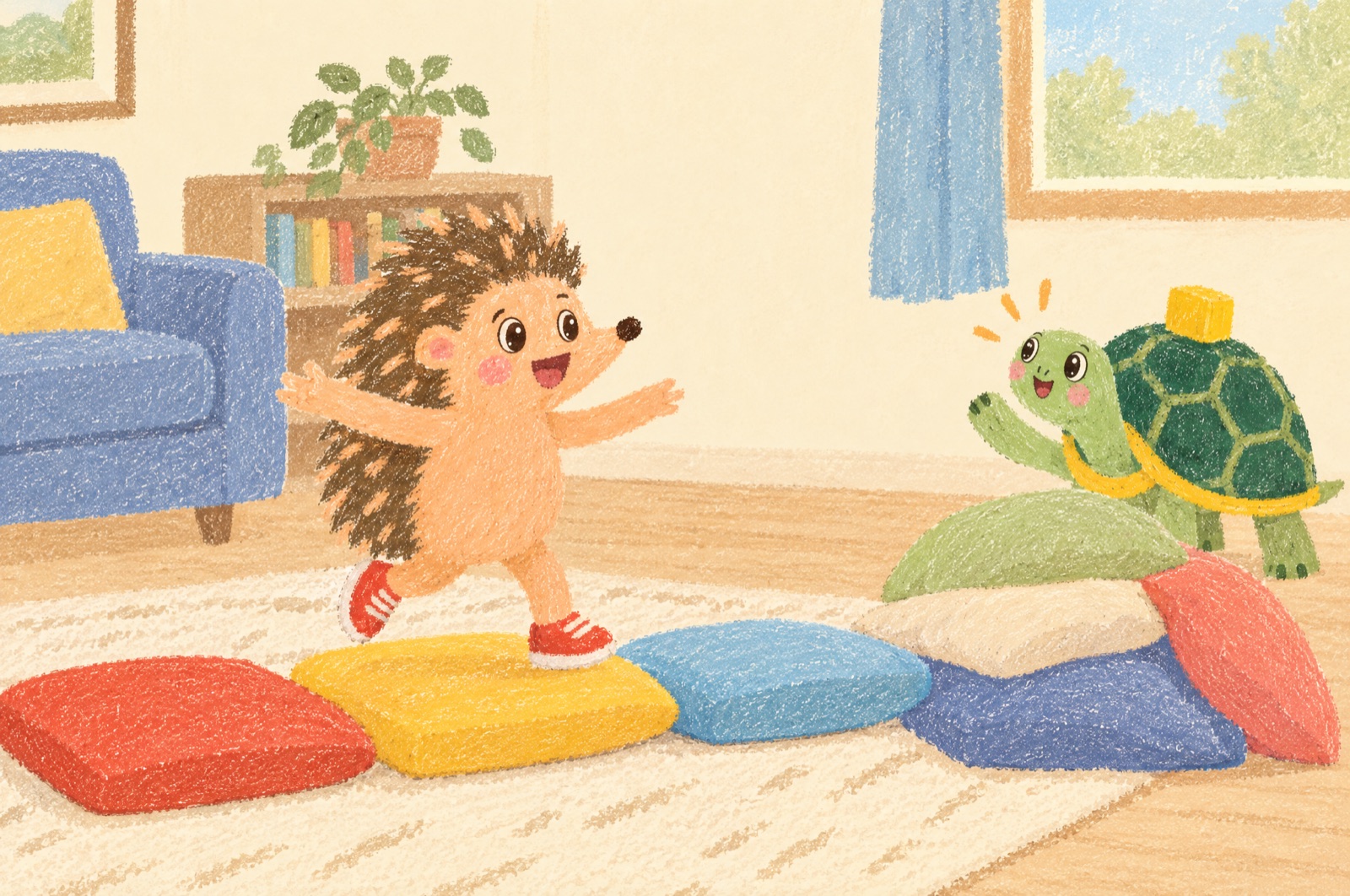
Our physical therapy team picked these four. Gross motor skills are the big movements that use the whole body: walking, jumping, climbing and balancing. They depend on a strong core, steady balance and good coordination between the two sides of the body. Winter means more time indoors, and these gifts turn a living room or backyard into a place to practice all three without ever feeling like exercise.
Walking Monster Feet
These chunky stilts turn every step into a balance challenge. Add them to a backyard obstacle course to build coordination, body awareness and confidence. Start on flat, open ground and hold hands for the first few laps.
Why our therapists like it: walking on stilts raises your child a little higher and gives them a smaller surface to stand on, so the balance muscles in the ankles, hips and core work harder with every step. Holding the strings while lifting each foot asks arms and legs to work together, which is a big part of coordination.
- Ages: 5+
- Price: $$ ($20 to $40)
- Skills: dynamic balance, coordination
- Picked by Jeanine Thomas, PT
- Find it: Walking Monster Feet stilts on Amazon
Hippity Hop
Bouncing across the room builds core and leg strength while your child plans each hop. It is a big-movement favorite for balance and coordination, too. Try a race to the couch and back, or hop to a song and freeze when the music stops.
Why our therapists like it: to stay on, your child has to sit tall and keep their trunk steady, which is real core work. Each hop takes motor planning, the brain's job of figuring out a movement and putting the steps in order. Children who practice motor planning in play often find new skills, like skipping or pumping a swing, easier to learn. Pick a size that lets your child's feet rest flat on the floor.
- Ages: 3+
- Price: $ (under $20)
- Skills: core strength, motor planning
- Picked by Trisha Gremminger, PT
- Find it: Hopper ball on Amazon
Stepping Stones
Arrange the stones into paths or stacks for stepping up and down. Call out a color to find next, and you have added a listening challenge. Change the path every few days so it always feels new.
Why our therapists like it: every step to a new stone is a moment of standing on one leg, which builds single-leg balance for stairs, kicking a ball and getting dressed standing up. Stones of different heights add stepping up and down. Following a called-out color adds auditory processing, which is understanding and acting on what you hear.
- Ages: 3+
- Price: $$ ($20 to $40)
- Skills: dynamic balance, auditory processing
- Picked by Morgan Coronado, PT
- Find it: Balance stepping stones on Amazon
Spinning Chair
Spinning gives the movement input that helps the body learn balance. It also builds core strength, posture, and calm, organized movement.
Why our therapists like it: the vestibular system, in the inner ear, senses movement and where the head is in space. It is a big part of balance, posture and even keeping the eyes steady while moving. Spinning gives this system strong input, which is why it is a classic in therapy gyms. Let your child set the pace, keep sessions short, and take a break if they seem dizzy or uneasy.
- Ages: 3+
- Price: $$$ (over $40)
- Skills: vestibular input, core strength
- Picked by Yumi Calugay, PTA
- Find it: Spinning chair on Amazon
Home and sensory: simple tools for everyday routines
These four bring therapy home and into the everyday: a bounce before school, a sand bin before dinner, a calm minute before bed. Sensory play gives the body information through touch, pressure and movement. Many children find that kind of input calming and focusing, which is why these tools show up so often in home programs. They are simple, they last, and the whole family ends up using them.
Mini Trampoline
A lightweight trampoline with a safety handle that folds away when you are done. Bouncing gives calming body input while building balance and strength. Keep it to one jumper at a time, with a grown-up nearby.
Why our therapists like it: every bounce presses into the joints and muscles. This is called proprioceptive input, and it tells the brain where the body is. Many children feel more settled and ready to focus after a few minutes of it. Rhythm games add learning: bounce and count to 10, bounce fast then slow, or bounce once for every letter in their name.
- Ages: all ages
- Price: $$$ (over $40)
- Skills: body awareness, balance
- Picked by Chelsey Anderson, Director of Clinical Operations
- Find it: Folding mini trampoline on Amazon
Kinetic Sand
Moldable sand that is satisfying to squeeze, shape and dig through. Keep it in a shallow lidded bin and hide small toys or puzzle pieces to find. It makes a calm, quiet activity for the hour before dinner, and cleanup takes about a minute.
Why our therapists like it: for children who are unsure about messy textures, kinetic sand is a gentle place to start. It holds together, so it feels less messy than regular sand, and your child can begin with a scoop or a toy before using their hands. Squeezing and molding it also builds hand strength.
- Ages: 3+
- Price: $ (under $20)
- Skills: tactile sensory, hand strength
- Picked by Maddy Rainsbarger, Authorization Specialist
- Find it: Kinetic Sand on Amazon
Squigz
Suction toys that stick to each other and to any smooth surface, like a window or the bathtub. Pushing them on and pulling them apart strengthens grip and steadies the shoulders.
Why our therapists like it: steady hands start with steady shoulders. A strong, stable shoulder gives the hand a solid base to work from, the way a tripod steadies a camera. Stick a few up high on a window so your child has to reach. Working on an upright surface also tips the wrist back into a good position for writing and drawing.
- Ages: 3+
- Price: $$ ($20 to $40)
- Skills: grip strength, shoulder stability
- Picked by Candice Beck, OT Tech
- Find it: Squigz Starter Set on Amazon
Handheld Massager
Gentle vibration offers calming touch input and helps your child notice and settle their body. It is a soothing addition to a bedtime or wind-down routine.
Why our therapists like it: vibration is a strong, easy-to-feel kind of touch, which helps children notice different parts of their body. That body awareness is part of moving with control and calming down. Start on hands and arms, then try the back and feet. Let your child decide where it goes and when it stops, so it always feels good.
- Ages: all ages
- Price: $$ ($20 to $40)
- Skills: tactile sensory, calming
- Picked by Kira Peters, PT Tech
- Find it: Mini handheld massager on Amazon
Gift picks by age
Every child is different, so use these as starting points and check each product's age label.
- Ages 2 to 3: the Critter Clinic Vet Set, plus a Handheld Massager for bedtime routines.
- Ages 3 to 5: Theraputty, Grab That Monster, the Wooden Mystery Box, the Campfire S'mores Play Set, the Scoop and Serve Ice Cream Counter, Counting Party Presents, the Hippity Hop, Stepping Stones, the Spinning Chair, Kinetic Sand and Squigz.
- Ages 5 to 7: Walking Monster Feet, plus any of the 3+ picks with a harder twist, like firmer putty or a longer stepping-stone path.
- Ages 8 and up: The Fuzzies Stacking Game.
- The whole family: the Mini Trampoline and the Handheld Massager.
What to look for in any skill-building toy
Shopping beyond this list? Our therapists look for the same five things in every toy.
- Your child does the work. The best toys need hands, bodies or words to make something happen.
- It can be played more than one way. Open-ended toys grow with your child and stay interesting longer.
- The challenge can go up or down. Firmer putty, a longer path, a harder order at the ice cream counter.
- It works with two players. Toys you can play together build turn-taking and conversation.
- It fits your child today. Pick what your child loves right now, and follow the age and small-parts labels.
How to get the most out of any gift
The gift is only half of it. These four habits turn any toy, including the ones already in your playroom, into better practice.
- Play together for 10 minutes. A toy teaches more with you on the floor. Follow your child's lead and say out loud what they are doing: "You stacked it so high!"
- Put a few toys away. Fewer toys out means longer play with each one. Rotate them every week or two, and old favorites feel brand new.
- Let it be a little hard. Count to five before you jump in to help. That small stretch is where the skill grows.
- Ask your child's therapist. If your child already works with one of our therapists, bring the gift to a session or ask which picks fit their goals. Many of these make great home practice.
FAQ
What are the best holiday gifts for building skills in kids?
Our therapists' top picks for 2026 are Theraputty and The Fuzzies Stacking Game for hand skills, the Critter Clinic Vet Set and Campfire S'mores Play Set for language, Stepping Stones and the Hippity Hop for balance, and Kinetic Sand and Squigz for sensory play. All are simple, hands-on toys any child can enjoy.
What makes a toy good for building skills?
It asks your child to do something: pinch, pull, balance, pretend or talk. Simple toys that can be played many ways usually give more practice than toys that do the playing for the child. The best ones are fun enough that your child picks them up without being asked.
What toys do occupational therapists recommend?
Occupational therapists often recommend toys that build hand strength and finger control, like therapy putty, tweezer and tong games, and touch-based games like a mystery box. Our occupational therapy team picked Theraputty, The Fuzzies Stacking Game, Grab That Monster and a Wooden Mystery Box for this guide.
What toys help a toddler talk more?
Toys that create a reason to talk work best: pretend play sets, toys with doors and lids, and anything you play together. Our speech therapists picked the Critter Clinic Vet Set for ages 2 and up. Name what your child is doing, add one word to what they say, and pause so they can respond.
Are these gifts only for children in therapy?
No. Every pick is a regular toy any child can enjoy. Our therapists chose them because they build skills every child uses, like a strong grip, steady balance and back-and-forth conversation.
How do I choose the right gift for my child's age?
Start with the age listed for each gift, then think about what your child loves right now. A climber will enjoy the move and balance picks. A storyteller will enjoy the words and play picks. Check each product's age label and small-parts warning before you buy.
Are these gifts safe for babies and toddlers?
Most picks are labeled for ages 3 and up, and some have small parts. Follow each product's age label, stay close during play, and keep beads, sand and small pieces away from children who still put things in their mouths. Use the trampoline and spinning chair with a grown-up nearby.
Is there a printable version of this gift guide?
Yes. Download the free printable Oaklin Lane Holiday Gift Guide and share it with family members who are shopping for your child this year.
Happy holidays from all of us on the Lane
Curious how your child is doing with hand skills, words or movement? Our occupational, speech and physical therapists see children every day at our Lake Highlands and Rockwall clinics. Fill out the Get Started form, and our team will help you with the next step. Until then, enjoy the wrapping paper, the noise and the play.