

Occupational therapy for autism: goals, methods, and honest expectations

Good autism occupational therapy treatment helps a child take part in the daily life they want: getting dressed, eating with the family, playing with friends, and resting well. It supports participation and independence. Autism is a different way of being, and OT works with how a child already thinks, moves, and feels.
Many families are looking at this question. About 1 in 31 (3.2%) of 8-year-olds were identified with autism in 2022, according to CDC's Autism and Developmental Disabilities Monitoring Network (CDC).
This guide was clinically reviewed by a licensed Oaklin Lane occupational therapist. Below, you will find the goals families set, the methods OTs use, what the evidence says about each one, and what progress looks like.
How does occupational therapy help a child with autism?
Occupational therapy helps an autistic child do the daily activities that matter to them and their family. An OT sets goals with you, builds skills through play, adapts spaces and routines to the child's sensory needs, and coaches caregivers so progress carries into home and school. Success means more participation on the child's terms.
The 2024 American Occupational Therapy Association practice guidelines for autistic people back this approach. They report strong to moderate evidence for goal-oriented interventions delivered by multidisciplinary teams, and support coaching caregivers and adapting the environment to the child's sensory needs (Patten et al., 2024).
Common goals in autism OT include:
- Dressing, toothbrushing, toileting, and other self-care steps
- Joining family meals and trying new foods at a comfortable pace
- Fine motor skills for school, like cutting, writing, and opening containers
- Motor planning for play, like climbing, riding, and ball games
- Playing alongside or with other kids
- Finding calm in loud or busy places, and resting well at night
- Moving between activities with less distress
Autism occupational therapy treatment goals families set
Families usually choose goals in three areas: daily living, play and motor skills, and regulation and rest. The best autism occupational therapy treatment plans pick a few goals that matter most to the child and family right now.
Daily living skills
Daily living skills cover the routines of a day: getting dressed, brushing teeth, using the toilet, washing hands, and eating at mealtimes. An OT breaks each task into small steps, adds visual supports, and adjusts the task to the child's sensory needs. Tag-free socks or a vibrating toothbrush can turn a daily battle into a manageable routine.
Take toothbrushing. An OT might split it into six picture steps: wet the brush, add paste, top teeth, bottom teeth, spit, rinse. If the taste is the problem, a milder paste may help. If the bristles feel too sharp, a softer brush may help. If timing is hard, a song that lasts as long as the brushing can mark the end.
Here is an honest note. The 2024 AOTA guidelines say more evidence is needed to support participation in activities of daily living for autistic youth (Patten et al., 2024). OTs work on these goals every day, and the research base for specific ADL programs is still thin.
Play, motor, and handwriting skills
Many autistic children have motor differences. Some find fine motor tasks tiring. Others find it hard to plan a new movement, like pumping on a swing or climbing a ladder. This planning skill is called motor planning, or praxis.
OT builds these skills through play. A session might include a scooter ramp, an obstacle course, or a game of catch with a big soft ball. At the table, it might include play dough, tongs, and short handwriting practice. A 2020 systematic review found strong evidence for therapeutic practice in handwriting intervention (Grajo et al.). Our physical and occupational therapies page lists more of the motor and play goals OTs support.
Play with peers is its own goal. An OT can set up a shared game, model turn-taking, and let the child join in at their own level. Parallel play counts too.
Regulation and rest
Regulation means getting to a body state that feels okay for the task at hand. Some autistic kids seek movement and pressure. Others find noise, light, or touch overwhelming. An OT helps the child and family find what works.
The OT watches how your child responds to movement, sound, touch, and light, and asks you what you see at home. A child who crashes into the couch may be seeking pressure. A child who covers their ears at the store may be avoiding sound. Each pattern points to different supports.
Rest is a big part of this. A 2020 systematic review found strong evidence that sleep preparation activities improve the quality of rest and sleep for children and youth (Beisbier and Laverdure). That can mean a steady bedtime routine, a dim and quiet room, a calming activity before bed, and a visual list of the steps.
A bedtime list might read: bath, pajamas, two books, lights low, favorite stuffed animal, sleep. The same order every night lowers the guesswork, and the visual list lets the child see what comes next. Many autistic kids also have ADHD, and our guide to occupational therapy and ADHD covers how OT supports attention and regulation.
Methods ASD OT uses
ASD OT draws on a few main methods: Ayres Sensory Integration, environmental changes, caregiver coaching, and strength-based goals. Each has a different level of evidence, and parents deserve to know which is which.
Ayres Sensory Integration
Ayres Sensory Integration (ASI) is a play-based approach in a sensory gym, run by a trained OT who follows a fidelity measure. A 2025 systematic review of randomized trials found strong evidence that ASI helps autistic children meet their individual goals. The same review found moderate evidence that ASI gives no benefit for behaviors such as irritability, so it is advised against for those (Acuña et al., 2025).
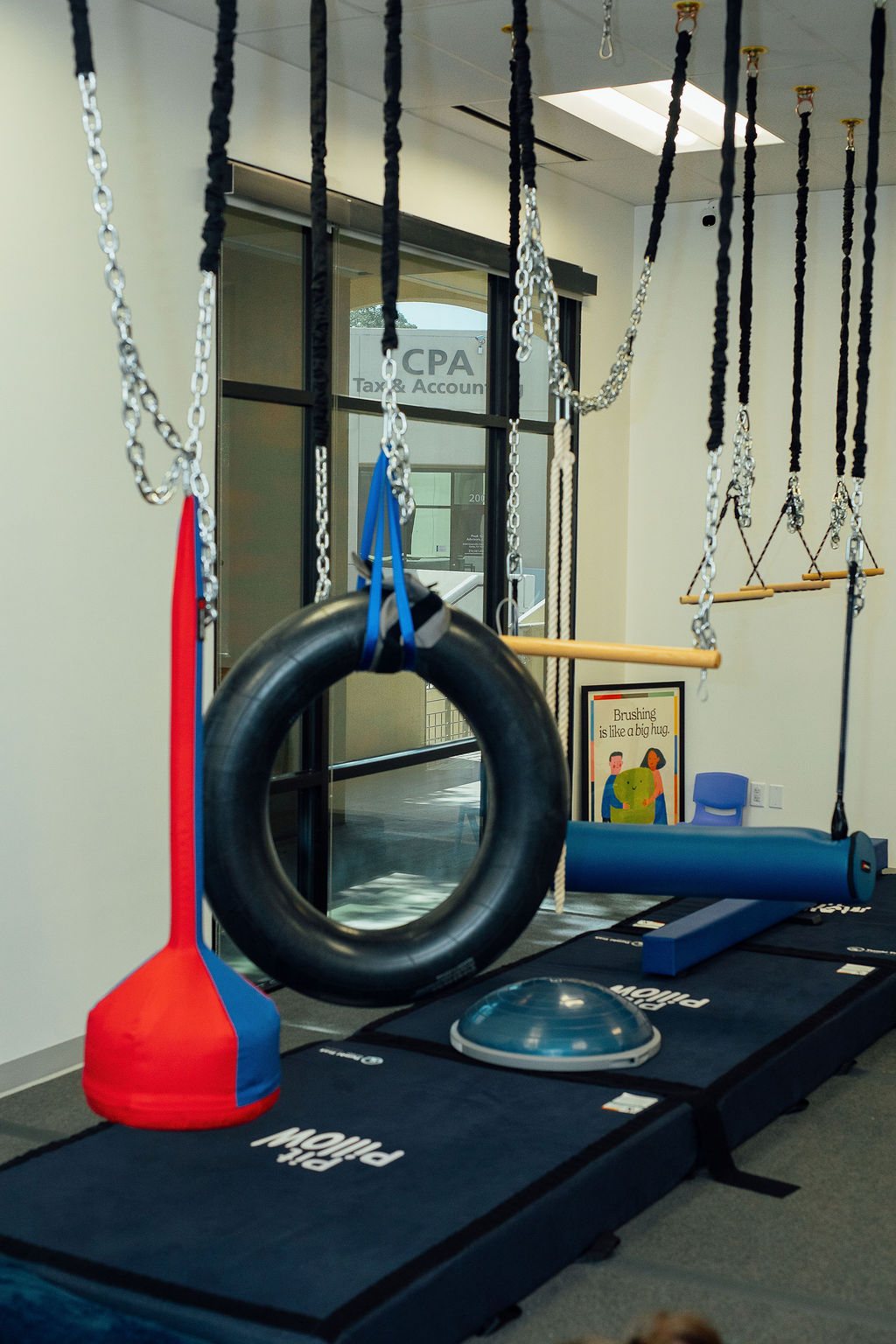
Other researchers read the evidence differently. A 2026 review of studies that followed the ASI fidelity measure found limited, weak evidence and concluded ASI should come after interventions with stronger support (Kishida et al., 2026). One more point: the National Clearinghouse on Autism Evidence and Practice lists ASI as an evidence-based practice, and lists other sensory approaches, like sensory diets and weighted vests, as having insufficient evidence (NCAEP).
The takeaway: ASI can help some autistic kids reach their own goals, and the debate is ongoing. For a full look at ASI in the gym, see our guide to ot sensory integration therapy.
Environmental changes and caregiver coaching
Often the fastest change comes from changing the space around the child. An OT might suggest a visual schedule for the morning, a quiet space at home, noise-reducing headphones for the grocery store, or a different seat at the table.
School counts too. An OT can coach teachers on a seat away from the door, planned movement breaks, or a picture schedule for the day. The 2024 AOTA guidelines grade teacher coaching for classroom engagement with moderate evidence (Patten et al., 2024).
Caregiver coaching makes those changes stick. The OT shows you a strategy, you try it during a real routine, and you troubleshoot together. The 2024 AOTA guidelines grade goal-focused caregiver coaching with moderate evidence (Patten et al., 2024).
Strength-based goals
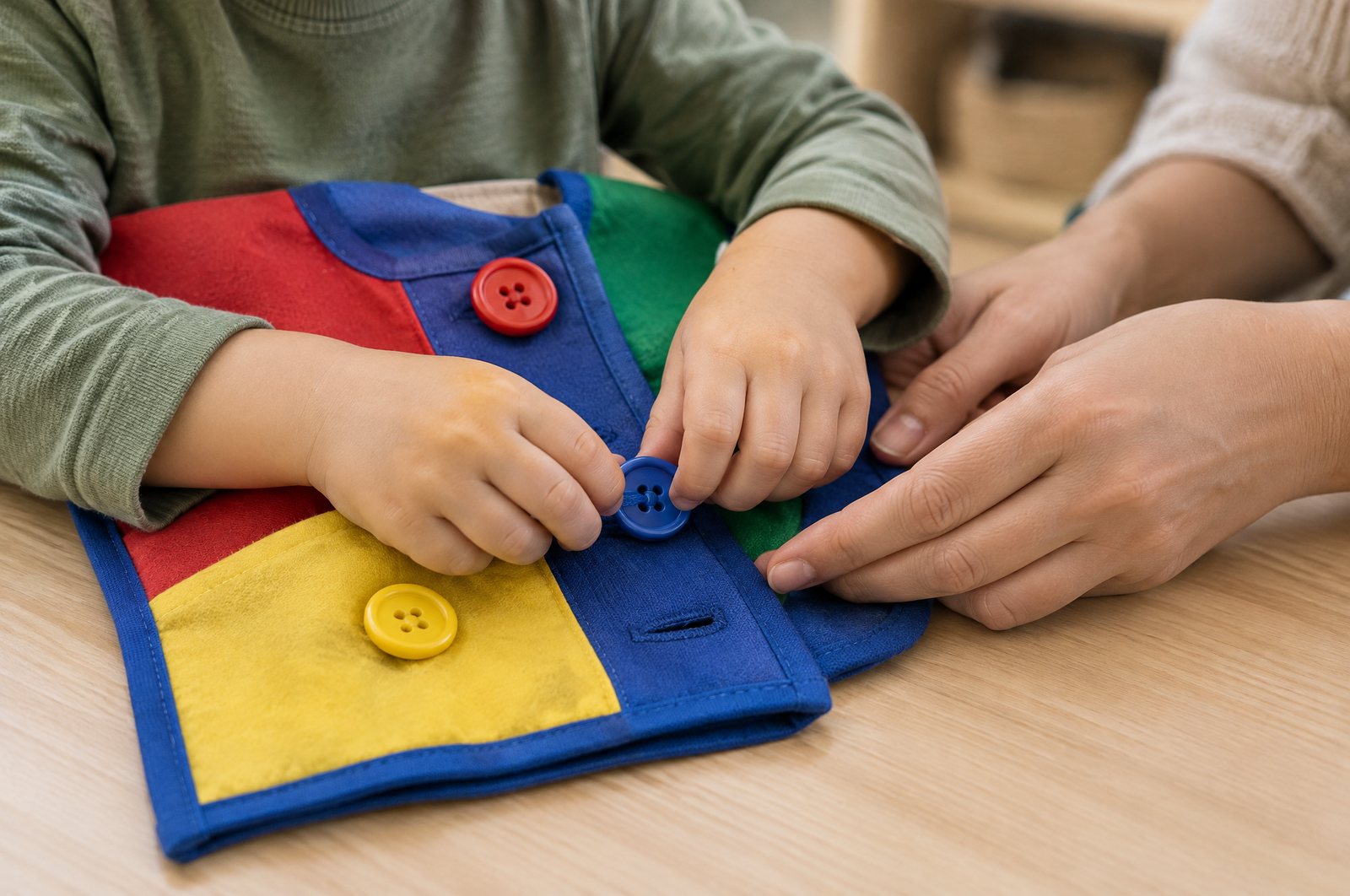
Strength-based OT starts with what the child loves. A child who loves trains might practice buttoning on a conductor's vest, or follow a visual schedule shaped like a train track. A child who loves drawing might build hand strength with chalk on the driveway. Interests make practice feel worth doing, and they respect who the child is.
Honest expectations for autistic occupational therapy
Autistic occupational therapy measures progress on the child's own goals. A good plan tracks things like "brushes teeth with one prompt" or "stays at the table for most of dinner." Progress is never about looking less autistic. Stimming, special interests, and different ways of communicating are part of who the child is.
Progress can look like this:
- Getting dressed with fewer steps of help
- Staying at a family meal a little longer, or touching one new food
- Using a calm-down space before a meltdown builds
- Joining a game at the playground for a few turns
- Falling asleep with less struggle
Some popular tools also have weak evidence. A 2020 review rated weighted vests and stability balls as low-strength evidence for classroom participation (Grajo et al.), and NCAEP lists weighted vests among sensory approaches with insufficient evidence (NCAEP). Some kids still enjoy them. They work best as one small part of a plan an OT designs and checks.
Questions to ask any OT
These questions help you judge a plan:
- What goals will we work on, and how will we measure them?
- How will my child's interests shape sessions?
- What will I practice at home between sessions?
- How often will we review progress together?
- What evidence supports this method for my child?
Be cautious with any provider who promises to cure autism or to make a child look typical. Clear goals and honest updates are better signs.
How goals are set and reviewed
Goal setting usually follows a cycle. The OT evaluates your child and asks what matters most to your family. Together you choose a few goals with clear, observable targets. Each session moves toward those targets, and the OT tracks what changes. At set check-ins, you and the OT review progress, keep what is working, and adjust or replace goals as your child grows.
OT ideas for autism to try at home
These OT ideas for autism can support your child between sessions. They work best alongside therapy, and your OT can tailor them to your child.
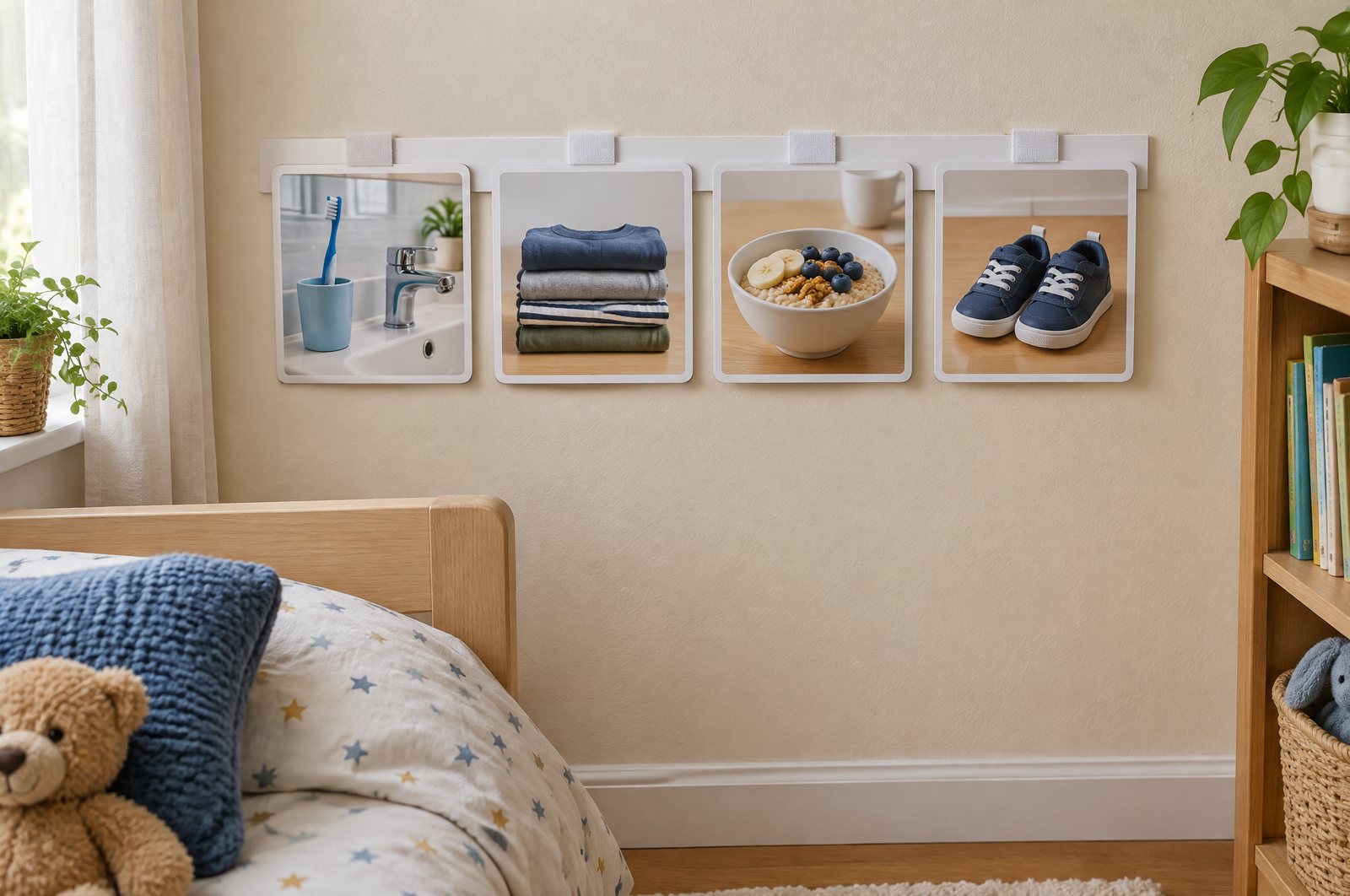
- Visual morning routine. Make a picture list of the steps: bathroom, clothes, breakfast, shoes. Let your child move a clip or check a box as each step ends.
- Heavy-work chores. Carrying groceries, pushing a laundry basket, or watering plants gives deep pressure through the muscles. Some kids find it calming.
- Calm-down corner. Set up a small quiet space with soft lighting, a blanket, and a few favorite items. Practice using it when your child is already calm.
- Food play at meals. Let your child touch, smell, and play with a new food with zero pressure to eat it.
- Movement breaks. A few minutes of jumping, swinging, or a wheelbarrow walk before homework or a meal can help some kids settle.
- Interest-based practice. Fold favorite topics into practice, like counting dinosaur stickers while practicing a pincer grasp.
These occupational therapy ideas for autism support skill-building at home. Bring questions back to your OT, especially if an idea causes distress.
How OT works with speech and PT
Autism occupational therapy treatment works best as part of a team. The 2024 AOTA guidelines report strong to moderate evidence for goal-oriented interventions delivered by multidisciplinary teams (Patten et al., 2024).
A speech-language pathologist supports communication in all its forms, including spoken words, signs, pictures, and devices. Our post on nonverbal children covers how communication can grow before words. A physical therapist builds strength, balance, and gross motor skills. When these therapists share goals, a child practices the same skill from several angles. Our guide to occupational therapy speech explains why one roof can help.
Picture one shared goal: ordering a snack at a cafe. The SLP works on the words or picture card. The OT works on opening the wrapper and handling a busy room. The PT works on standing in line and carrying the tray. The child practices one real-life task from three sides.
Occupational therapy for kids with autism: getting started
Starting occupational therapy for kids with autism takes two steps: a referral and an intake. Our clinics require a referral from your child’s doctor before therapy starts, and the intake form takes about 10 minutes. Our guide on whether you need a referral to start pediatric therapy in Texas explains how that works.
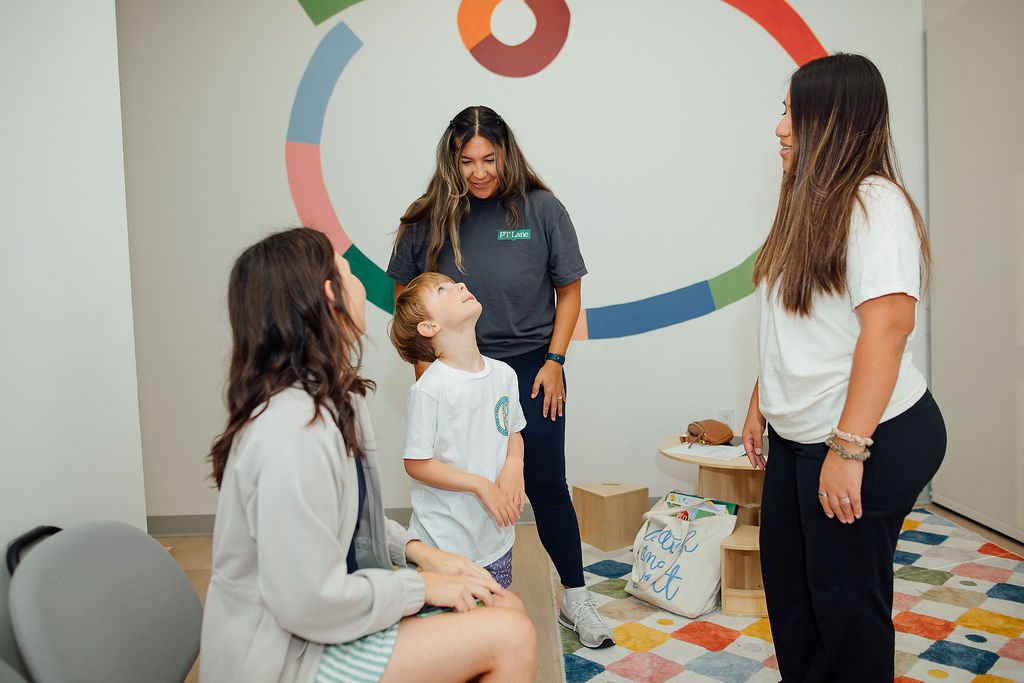
To be plain about our role: Oaklin Lane provides therapy only. Our team treats autistic children with occupational, speech, physical, feeding, and sensory integration therapy. An autism diagnosis comes from a physician, developmental pediatrician, or psychologist, so families start there if they need one.
Bring a few things to the first visit if you have them: any diagnosis report, an IEP or 504 plan, notes from teachers or other therapists, and two or three daily routines that feel hardest right now. Your child's strengths and favorite things help too.
Frequently Asked Questions
What does autism occupational therapy treatment involve?
Autism occupational therapy treatment starts with an evaluation and a few family-chosen goals. Sessions build daily living, play, motor, and regulation skills through play, and the OT coaches caregivers on strategies for home.
What are occupational therapy ideas for autism at home?
Popular ideas include a visual morning routine, heavy-work chores like carrying groceries, a calm-down corner, and pressure-free food play at meals. They support therapy between sessions, and your OT can tailor them to your child.
How long does ASD OT last?
It depends on the child and their goals. Your OT sets goals after the evaluation, tracks progress at each session, and reviews the plan with you at set check-ins. Some goals take weeks and others take months.
Does OT help autistic toddlers?
OT can help autistic toddlers with play, early self-care like feeding, motor skills, and regulation. Caregiver coaching is often a big part of OT at this age, since most practice happens in daily routines at home.
Next step
Three things to keep from this guide. OT supports participation in the daily life your child and family care about. Progress is measured on your child's own goals. The evidence is strongest for goal-oriented team care, caregiver coaching, sleep routines, and handwriting practice, while ASI is still debated.
If you are ready to explore OT for your child, start with our Get Started intake. The introductory form takes about 10 minutes and starts insurance verification. From there, our team connects with you about your child's strengths, your goals, and what comes next.
Every child is different. Occupational therapy can help many autistic kids, and results depend on the child, their goals, and practice at home. Good neighbors show up, and we are here when you are ready.
Sources
- CDC, "Data and Statistics on Autism Spectrum Disorder" (ADDM Network, 2022 surveillance year)
- Patten KK, Murthi K, Onwumere DD, Skaletski EC, Little LM, Tomchek SD. "Occupational Therapy Practice Guidelines for Autistic People Across the Lifespan." American Journal of Occupational Therapy, 2024;78(3):7803397010
- Beisbier S, Laverdure P. "Occupation- and Activity-Based Interventions to Improve Performance of Instrumental Activities of Daily Living and Rest and Sleep for Children and Youth Ages 5-21: A Systematic Review." American Journal of Occupational Therapy, 2020;74(2)
- Grajo LC, Candler C, Sarafian A. "Interventions Within the Scope of Occupational Therapy to Improve Children's Academic Participation: A Systematic Review." American Journal of Occupational Therapy, 2020;74(2)
- Acuña C, Gallegos-Berrios S, Barfoot J, Meredith P, Hill J. "Ayres Sensory Integration With Children Ages 0 to 12: A Systematic Review of Randomized Controlled Trials." American Journal of Occupational Therapy, 2025;79(3)
- Kishida Y, Stephenson J, Kemp C, et al. "Efficacy of Interventions Adhering to the Revised Ayres Sensory Integration Fidelity Measure: A Systematic Review." Journal of Autism and Developmental Disorders, 2026
- Nowell SW, Szendrey S, Steinbrenner JR, Hume K, Odom SL. "Sensory Integration: A Companion to the NCAEP Report." National Clearinghouse on Autism Evidence and Practice