How many words should a 2-year-old say? Late talker vs speech delay, from our speech therapists

Your toddler just turned 2. At the park, another child the same age is chattering in little sentences, and yours says "ba" for ball, "uh-oh," and a handful of other words. You go home and type the question into your phone: how many words should a 2-year-old say?
You're asking a great question, and you're asking it at the right time. Two is the age when speech therapists, pediatricians and parents all start paying closer attention to talking, because it's when the range of "normal" is widest and when a little extra help can make the biggest difference. This guide walks you through how many words most 2-year-olds say, what counts as a word, what "late talker" really means, the difference between a late talker and a speech or language delay, ten things our speech-language pathologists teach families every week, and the signs that mean it's time to ask a professional. Everything is based on guidance from the Centers for Disease Control and Prevention (CDC), the American Academy of Pediatrics (AAP), the American Speech-Language-Hearing Association (ASHA) and published research, with sources at the end.
Some links below are affiliate links, which may earn Oaklin Lane a small commission at no cost to you. As an Amazon Associate, Oaklin Lane earns from qualifying purchases.
The 60-second answer
- The rule of thumb speech therapists use: by their second birthday, most toddlers say at least 50 words and are starting to put two words together, like "more milk" or "daddy go."
- The range is huge. Large studies show some 2-year-olds say fewer than 50 words and some say more than 500. The middle is a few hundred.
- The CDC's checklist says most children say at least two words together by 24 months, and about 50 words by 30 months. Those are the ages by which three out of four children have the skill, so most get there sooner.
- Lots of things count as words: "ba" for ball, "moo," "uh-oh," signs, and any sound your child uses the same way for the same thing.
- Understanding matters as much as talking. A toddler who understands a lot, points, gestures and plays well is in a stronger spot than one who doesn't.
- About 1 in 7 two-year-olds is a late talker. Many catch up, but nobody can tell ahead of time which ones will, so checking early is the smart move.
- Talk to a professional if your 2-year-old says fewer than 50 words, isn't combining any words, doesn't seem to understand simple directions, isn't pointing, or has lost words they used to say.
How many words should a 2-year-old say?
Here's the honest answer: there isn't one magic number, but there is a line that speech-language pathologists pay attention to. For decades, speech therapists have used a simple rule of thumb for 24 months: at least 50 words, and some two-word phrases. A child who has both is very likely right on track. A child who has fewer than 50 words, or isn't combining any words yet, is the child we want to take a closer look at.
That rule comes from research on a parent checklist called the Language Development Survey. Researchers found that "fewer than 50 words or no word combinations at 24 months" was a good way to spot toddlers whose language was behind their peers. Most speech therapists still use it today.
What the CDC milestone checklist says at 2
The CDC's free milestone checklists were updated in 2022 with the AAP. Each milestone is now set at the age by which at least 75% of children can do it. That way, a missed milestone is a real reason to check in, not just a sign that a child is a little younger than average.
At 24 months, the CDC checklist says most children:
- Say at least two words together, like "More milk."
- Point to things in a book when you ask, like "Where's the bear?"
- Point to at least two body parts when you ask.
- Use more gestures than just waving and pointing, like blowing a kiss or nodding yes.
You might notice that "50 words" isn't on the 24-month list. In the 2022 update, "says about 50 words" moved to the 30-month checklist, because that's the age by which three out of four children get there. That doesn't mean 30 months is the goal. Most children reach 50 words well before then, and a 2-year-old with fewer than 50 words is still worth a closer look. Think of the CDC list as the "everyone should be here by now" line, and the 50-word rule as the "most kids are here" line.
What a typical range looks like
Wordbank, a large open database of parent vocabulary checklists from thousands of children, shows just how wide the range is at 2. At 24 months, some toddlers say fewer than 50 words, some say more than 500, and the middle of the pack says a few hundred. Girls tend to talk a little earlier than boys on average, and first-born children sometimes a little earlier than younger siblings. These differences are real but small, and they don't change the 50-word guideline.
So if your child's friend at the park is talking in sentences and yours isn't, it doesn't automatically mean something is wrong. It means you're seeing two different spots on a very wide road.
What counts as a word
Parents often undercount, because they only count "real," clearly pronounced words. Our speech therapists count a lot more than that. A word is any sound your child uses on purpose, the same way, for the same thing. All of these count:
- Word attempts: "ba" for ball, "wawa" for water, "nana" for banana.
- Animal and vehicle sounds: "moo," "baa," "vroom," "choo choo," when your child uses them to name the animal or toy.
- Exclamations: "uh-oh," "whee," "yay," "ouch."
- Names: "mama," "dada," a sibling's or pet's name, even "Mimi" for grandma.
- Signs: "more," "all done," "milk" or any sign your child uses on their own. Most speech therapists count signs as words, too.
- Words in any language: if your family speaks two languages, count the words in both. "Agua" and "water" are two words.
Tip: write words down for one week. Keep a note on your phone or a list on the fridge, and add every word you hear. Many parents are surprised by the total. It's also the single most helpful thing to bring to a pediatrician or speech therapy appointment.
Words by age: what to expect from 12 months to 3 years
Talking doesn't start at 2. It builds on a year or more of listening, babbling, looking and gesturing. Here's a simple age-by-age guide based on the CDC's 2022 milestone checklists and ASHA's guidance. Remember that each CDC milestone is something at least 3 out of 4 children do by that age.
By 12 months
- Understanding: knows their name, understands "no" (pauses or stops when you say it).
- Talking: babbles with lots of sounds, calls a parent "mama," "dada" or another special name.
- Gestures: waves bye-bye, lifts arms to be picked up.
By 15 months
- Understanding: looks at a familiar object when you name it, follows directions that come with a gesture, like handing you a toy when you hold out your hand and say "give me."
- Talking: tries to say one or two words besides "mama" or "dada," like "ba" for ball or "da" for dog.
- Gestures: points to ask for something or to get help.
By 18 months
- Understanding: follows one-step directions without a gesture, like "give it to me."
- Talking: tries to say three or more words besides "mama" or "dada."
- Gestures and play: points to show you something interesting, copies you doing chores, plays with toys in simple ways, like pushing a car.
By 24 months (2 years)
- Understanding: points to things in a book when you ask, points to at least two body parts.
- Talking: says at least two words together, like "more milk." Most children have 50 or more words.
- Gestures: uses gestures beyond waving and pointing, like nodding yes or blowing a kiss.
By 30 months (2½ years)
- Understanding: follows simple routines and two-step directions in familiar settings.
- Talking: says about 50 words, says two or more words together with an action word, like "doggie run," names things in a book when you point and ask, and uses words like "I," "me" or "we."
By 3 years
- Understanding: understands "who," "what" and "where" questions about everyday things.
- Talking: has back-and-forth conversations with at least two turns each, asks "who," "what," "where" or "why" questions, says what's happening in a picture, says their first name when asked, and talks well enough for others to understand most of the time.
Why pointing and gestures matter so much
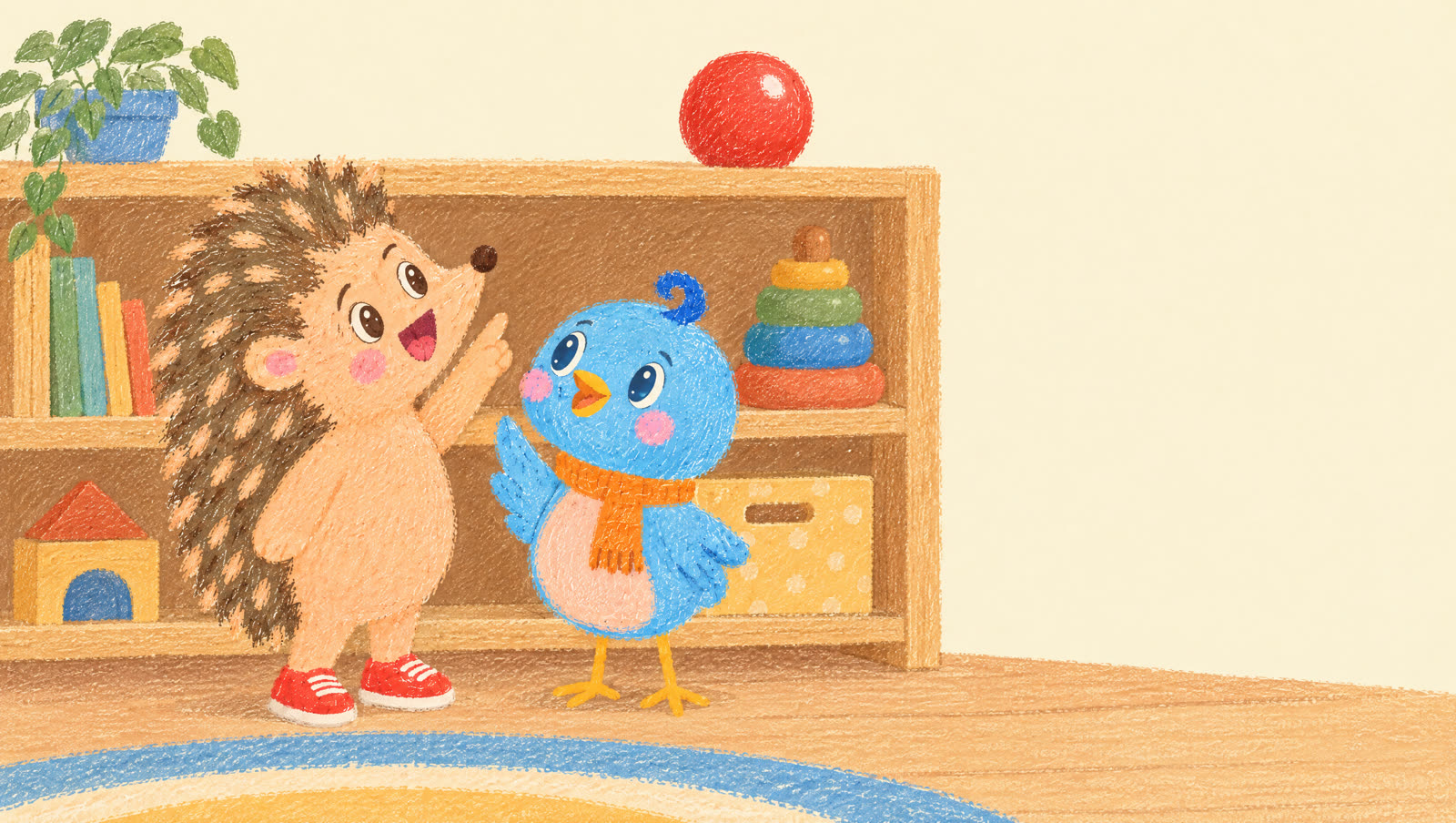
Before most children talk, they point. Pointing is how a toddler says "look at that!" and "I want that!" before they have the words. Our speech therapists pay close attention to gestures, because they're one of the best early signs that language is on its way. Research has found that toddlers who use more gestures at 14 months tend to have bigger vocabularies when they start school.
So when your toddler points, that's your cue. Look where they're pointing, then name it: "Oh, the ball! A red ball." You've just turned their gesture into a word lesson.
Late talker or speech delay? What's the difference
You've probably heard a few different terms: late talker, speech delay, language delay. They're related, but they don't mean the same thing.
What "late talker" means
Speech therapists use "late talker" (the clinical name is late language emergence) for a toddler, usually between 18 and 30 months, who:
- Says fewer words than expected for their age, often fewer than 50 words at 2, or isn't combining words yet
- Understands language well, or close to it
- Is developing typically in play, movement, thinking and social skills
- Has no other known condition, like hearing loss or autism, that would explain the delay
In other words, a late talker is a toddler whose talking is the one thing running behind.
Late talking is common. A large study of more than 1,700 two-year-olds in Western Australia found that about 13%, or roughly 1 in 7, were late talkers. The biggest predictors were being a boy, having a family history of late talking, and early growth factors such as being born early or small. Things like a parent's income, education or parenting style were not predictors. If your child is a late talker, it isn't because you didn't talk to them enough.
Speech delay vs language delay
People often say "speech delay" for any kind of talking concern, but speech therapists split it into two parts:
- Language is what we understand and what we say: words, putting words together, following directions, asking and answering questions. A toddler with only 10 words has a language concern.
- Speech is how the words sound: making the sounds clearly, in the right order, so others can understand. A 3-year-old who has hundreds of words but whom strangers can't understand has a speech-sound concern.
At age 2, most concerns are about language: not enough words, or words not yet put together. Clear pronunciation comes later. It's completely normal for a 2-year-old to say "tat" for cat or "nana" for banana. By 3, the CDC says, most children talk well enough for others to understand most of the time.
Signs your late talker may be on a good path
Many late talkers catch up on their own. Studies that follow late talkers into school age find that most move into the typical range, although as a group they often score a bit lower on language tests than children who talked on time. These signs are encouraging:
- Your child understands a lot: they follow simple directions, point to pictures you name and know the names of family members, toys and body parts.
- They use lots of gestures: pointing, showing, waving, nodding, shaking their head.
- They're social: they look at your face, share smiles, bring you things to show you and enjoy back-and-forth games like peekaboo.
- They play with toys in pretend ways, like feeding a stuffed animal or "talking" on a toy phone.
- They're learning new words every week, even slowly.
- They copy sounds, words and actions.
Signs that call for a closer look
These signs suggest it's time to talk with your pediatrician and get a speech-language evaluation, rather than wait:
- Your child understands less than you'd expect, or doesn't respond to simple words and directions.
- They rarely point, wave or use other gestures.
- They aren't adding new words, or words seem to come and go.
- They don't copy sounds or words.
- They use very few consonant sounds when they babble or try words.
- They've had lots of ear infections, or you wonder about their hearing.
- There's a family history of speech, language, reading or learning difficulties.
- They've lost words or skills they used to have. Tell your pediatrician right away.
Here's the tricky part: research hasn't found a reliable way to predict which late talkers will catch up on their own and which won't. That's why our speech therapists, and ASHA, encourage families not to "wait and see." An evaluation is low-risk. If your child is on track, you'll leave with peace of mind and some great ideas. If they need help, you've started at the age when it works best.
Hearing comes first
Children learn to talk by listening, so any child with a talking delay should have their hearing checked, even if they passed the newborn hearing screen. Fluid behind the eardrum after ear infections can muffle sound for weeks at a time. Ask your pediatrician about a hearing test, or a referral to a pediatric audiologist.
What about kids learning two languages?
Learning two languages does not cause a speech or language delay. Bilingual toddlers may have fewer words in each language than a child learning one, but when you add both languages together, they're right on track. ASHA encourages families to keep using the language they know best at home. When you count your child's words, count both languages, and count words like "agua" and "water" as two.
A bilingual toddler who is behind in both languages combined should be checked, just like any other child. Look for a speech therapist who can evaluate in your child's languages or work with an interpreter.
What about autism?
Many parents of late talkers worry about autism. Most late talkers are not autistic. But because late talking can be one early sign, the AAP recommends every child be screened for autism at their 18-month and 24-month checkups. Things that are more typical of autism than of late talking alone include little eye contact, not responding to their name, rarely pointing or showing things, not sharing smiles, and losing words or skills. If you notice any of these, mention them to your pediatrician. Getting checked early is helpful no matter what the answer is.
If you'd like a speech therapist to take a look now, our pediatric speech-language pathologists see toddlers every week. You can get started with an evaluation at Oaklin Lane, and we'll help you figure out what's going on and what to do next.
What to try at home: 10 ways to help your toddler talk
The good news: the most powerful tools for building language are free, and you already have them. Studies of parent-taught language strategies find that toddlers make real gains when parents learn a few simple techniques and use them in daily routines. Another study found that the number of back-and-forth conversational turns between adults and children, not just the number of words children hear, was linked to stronger language skills.
These are the strategies our speech therapists teach families every week. You don't need to do them all. Pick two or three, use them during routines you already do, and add more as they become habits.
1. Get face to face, and follow their lead
Get down on the floor at your child's eye level, so they can see your face and mouth. Then notice what they're interested in and join in. If they're rolling a car, roll a car too. Toddlers learn words fastest when the word matches what they're already paying attention to. Trying to pull their attention to a flashcard works much less well than naming the thing they're already holding.
2. Talk about what they're doing
Speech therapists call it "self-talk" and "parallel talk." Narrate what you're doing ("I'm cutting the apple. Cut, cut, cut.") and what your child is doing ("You're pushing the truck. Push! Fast truck!"). Keep sentences short and simple, just one step above your child's level. If your child says single words, talk to them in two- and three-word phrases.
3. Add one word
When your child says a word, say it back and add one more. If they say "ball," you say "Big ball!" or "Throw ball!" If they say "dog," you say "Dog running!" This is called expansion, and it shows them what the next step sounds like without asking them to copy you.
4. Pause and wait
This one's simple and surprisingly hard. After you say something, or when your child clearly wants something, pause and wait for 5 to 10 seconds with an expectant look. Count in your head. Toddlers often need extra time to plan a word. If you jump in too fast, they never get the chance.
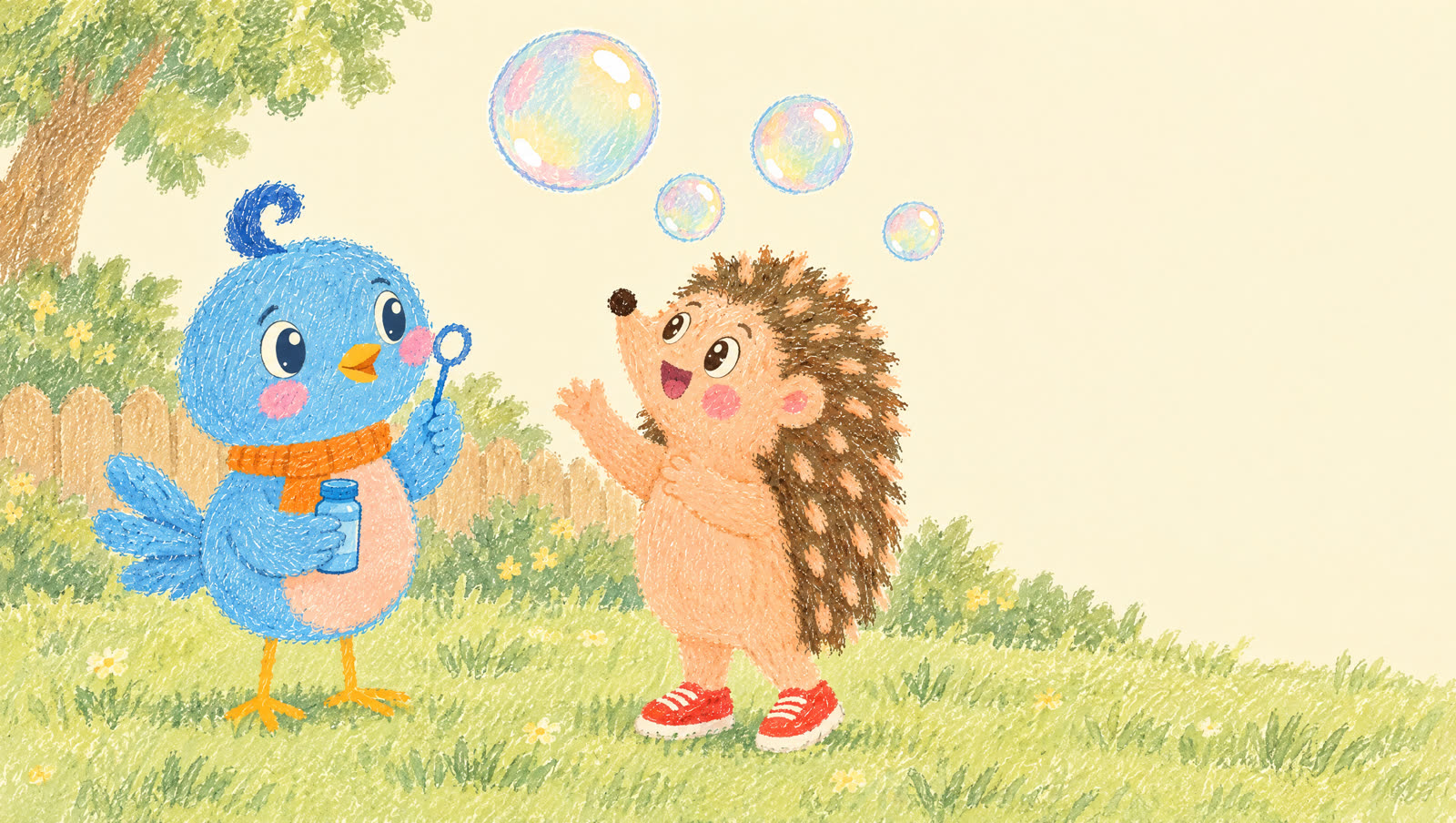
5. Create small reasons to talk
Children talk when they have something to say. Build in little moments where your child needs to communicate:
- Blow bubbles, then hold the wand and wait for "more," "bubble" or "pop."
- Put a favorite snack in a clear container they can see but can't open.
- Give them only one or two pieces of a puzzle at a time.
- Start a "ready, set..." and pause before "go!"
- Do something silly, like putting a sock on their hand, and wait for them to react.
When they gesture, make a sound or try a word, respond right away and say the word: "More! You want more bubbles."
6. Offer choices
Instead of asking "What do you want?", hold up two things and name them: "Apple or cracker?" Your child hears both words right when they need them. Even a point or a sound counts as an answer at first. Say the word they picked: "Cracker! Here's your cracker."
7. Sing songs and leave out the last word
Songs and rhymes have repeated words and a rhythm that toddlers love. Once your child knows a song well, stop before a word and let them fill it in: "Twinkle, twinkle, little..." Wait. If they don't fill it in, sing it and try again next time. The same trick works with favorite books.
8. Read together, the toddler way
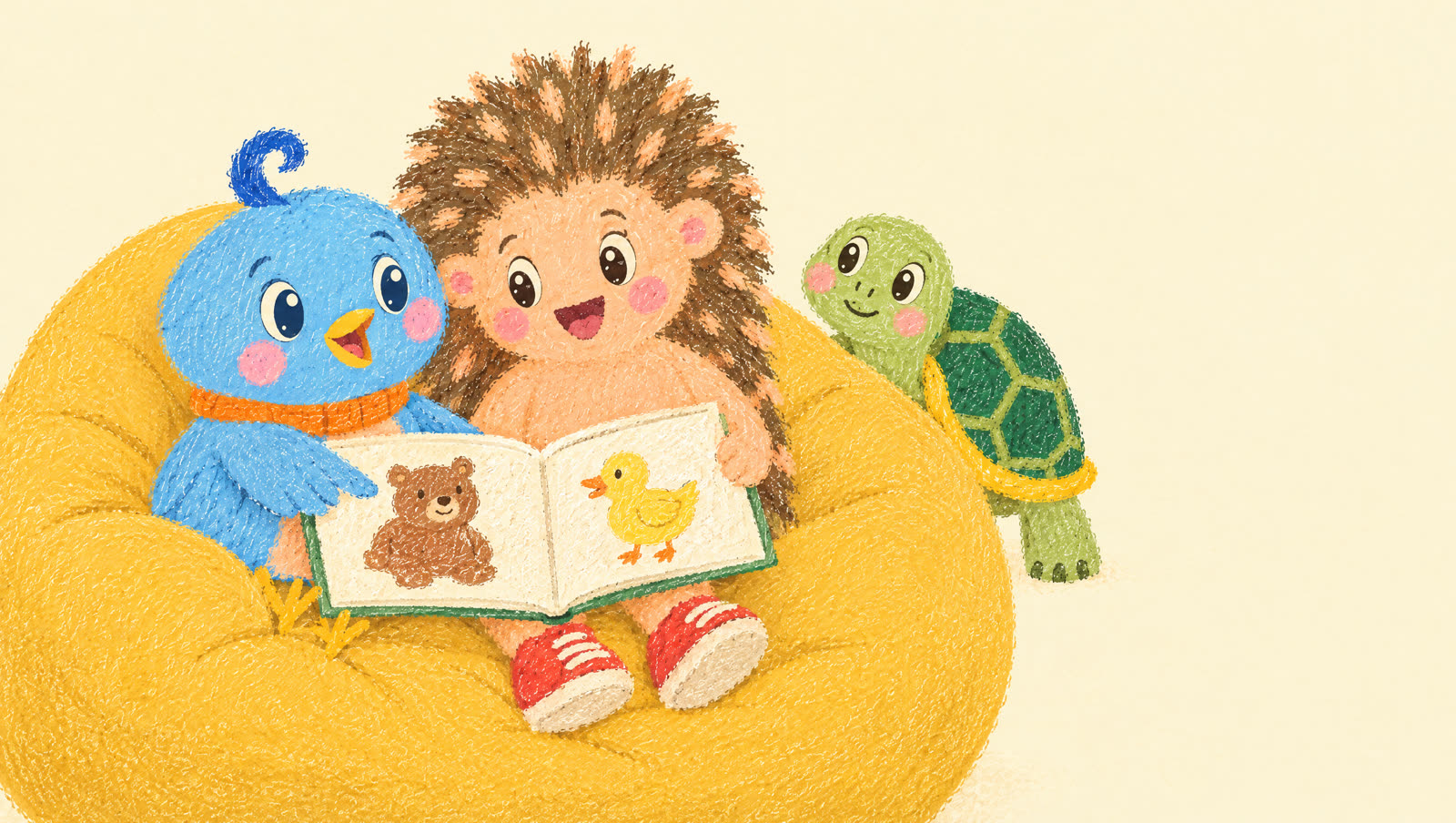
Reading with toddlers isn't about getting through the whole page. The AAP recommends reading aloud with children every day, starting in infancy, and for toddlers the best reading is a conversation. Point to pictures and name them. Make the animal sounds. Let your child turn the pages, and follow what interests them. Pick books with simple pictures, repeated lines and things to point at. Read the same favorites over and over: repetition is how new words stick.
9. Use gestures and signs with your words
Pair words with simple gestures or baby signs, like "more," "all done," "help" and "eat." Signs don't slow down talking. They give your child a way to communicate now, which takes away frustration and builds the back-and-forth that leads to words. Always say the word out loud while you sign it.
10. Ask fewer questions, and make more comments
It's natural to quiz toddlers: "What's this? What color is it? Can you say ball?" But testing questions can make some children go quiet. Try swapping most questions for comments: "Wow, a big truck!" "The truck is going up!" Then pause. Your child is more likely to add a word of their own when there's no pressure to get it right.
Fit it into your day
You don't need special "talking time." Use the routines you already do several times a day:
- Meals and snacks: choices ("milk or water?"), "more," "all done," naming foods.
- Diaper changes and getting dressed: body parts, clothes, "up," "on," "off."
- Bath time: "wet," "splash," "bubbles," "wash," naming bath toys.
- Car rides: sing songs with pauses, name what you see out the window.
- Bedtime: one or two favorite books, read the same way each night.
Five minutes of focused, face-to-face play in each of these routines adds up to a lot of language practice by the end of the day.
Small changes that help
- Keep screens off in the background. The AAP recommends avoiding screen media other than video chatting before 18 to 24 months, and for children 2 to 5, about an hour a day of high-quality shows, watched together. A TV on in the background cuts down how much parents and toddlers talk to each other.
- Save the pacifier for sleep. It's hard to babble and try words with a pacifier in. During awake play, let your toddler's mouth be free for talking.
- Don't make them say it. If your child points to the cup, you can say "Cup! Here's your cup" and hand it over. Holding things back until they say the word can turn talking into a struggle. Model, wait a few seconds, then give it.
- Don't correct pronunciation. If your child says "tat," say it back the right way with a smile: "Yes, a cat!" They'll hear the correct version without feeling corrected.
Our therapists' picks for building words
You don't need to buy anything to help your toddler talk. You are the best language toy there is. But a few simple toys and books make it easier to set up the back-and-forth moments that build words. These are favorites of many pediatric speech therapists, and each one earns its spot for a specific reason.
Brown Bear, Brown Bear, What Do You See? (board book)
The classic board book by Bill Martin Jr. with Eric Carle's bright animal pictures. The same question and answer repeat on every page, with one new animal and color each time.
Why it works: the predictable pattern is perfect for the "leave out the last word" trick. After a few readings, pause at "Brown bear, brown bear, what do you..." and let your child fill in "see." Animal names and colors make great first words, too. For bilingual families, there's an English and Spanish edition.
- Ages: about 1 to 3 years
- Best for: fill-in-the-blank reading, animal and color words
- Find it: Brown Bear, Brown Bear board book on Amazon, or the English and Spanish bilingual edition on Amazon
Gazillion Bubbles
Bottles of bubble solution with dipping wands. Bubbles might be the most-used tool in pediatric speech therapy, and for good reason.
Why it works: toddlers love bubbles, and they need you to make more. That's a built-in reason to communicate. Blow a few, then pause with the wand up and wait for a look, a sign, "more," "bubble" or "pop." A grown-up does the blowing and holds the bottle, and bubbles are for outside or the bathtub.
- Ages: 18 months and up, with a grown-up
- Best for: "more," "pop," "up," pause-and-wait practice
- Find it: Gazillion Bubbles 4-pack on Amazon
Mr. Potato Head
The classic potato toy with eyes, ears, nose, mouth, arms, shoes and a hat that pop in and out.
Why it works: it's a body-parts lesson in a box. Keep the pieces in your lap and hand them over one at a time when your child asks with a point, a sign or a word, so each piece becomes a chance to communicate. Name each part as it goes in, and add silly moves, like an ear where the nose goes, to get a reaction.
- Ages: 2 years and up
- Best for: body-part words, asking for pieces, "in" and "out"
- Find it: Playskool Mr. Potato Head on Amazon
Fisher-Price Little People Caring for Animals Farm
A toddler-size barn with a farmer, animals and a few play pieces.
Why it works: farm play is full of easy first words and sounds: "moo," "baa," "oink," "open," "in," "out," "night night, cow." It also invites simple pretend play, which grows right alongside language. Sit on the floor with your child and narrate: "Cow goes in. Moo! Bye-bye, cow."
- Ages: 1 year and up
- Best for: animal sounds, action words, early pretend play
- Find it: Little People Caring for Animals Farm on Amazon
What you don't need
You don't need flashcards, "talking" apps or expensive electronic toys that light up and talk for your child. Toys that do the talking leave less room for your child to do it. The simplest toys, the ones that need a grown-up to make them fun, are usually the best for language.
When to talk to a professional
Every child develops at their own pace, and one late skill on its own isn't always a worry. Trust your gut, and look for patterns. Talk with your pediatrician and ask about a speech-language evaluation if your child:
- Isn't babbling or using gestures like pointing and waving by 12 months.
- Doesn't say any words besides "mama" or "dada" by 15 to 18 months.
- Has fewer than 50 words at 24 months, or isn't putting any two words together.
- Doesn't follow simple directions or point to pictures and body parts by 2.
- Only copies words and phrases, but doesn't come up with their own.
- Isn't using two- or three-word phrases by 2½, or people who know them well can't understand much of what they say.
- Is hard for unfamiliar people to understand most of the time by 3.
- Seems frustrated a lot because they can't tell you what they want.
- Has had lots of ear infections, or you have any doubts about their hearing.
- Loses words or skills they used to have. Tell your pediatrician right away.
And remember: you don't need a referral to ask questions. You know your child best.
What happens at a speech-language evaluation
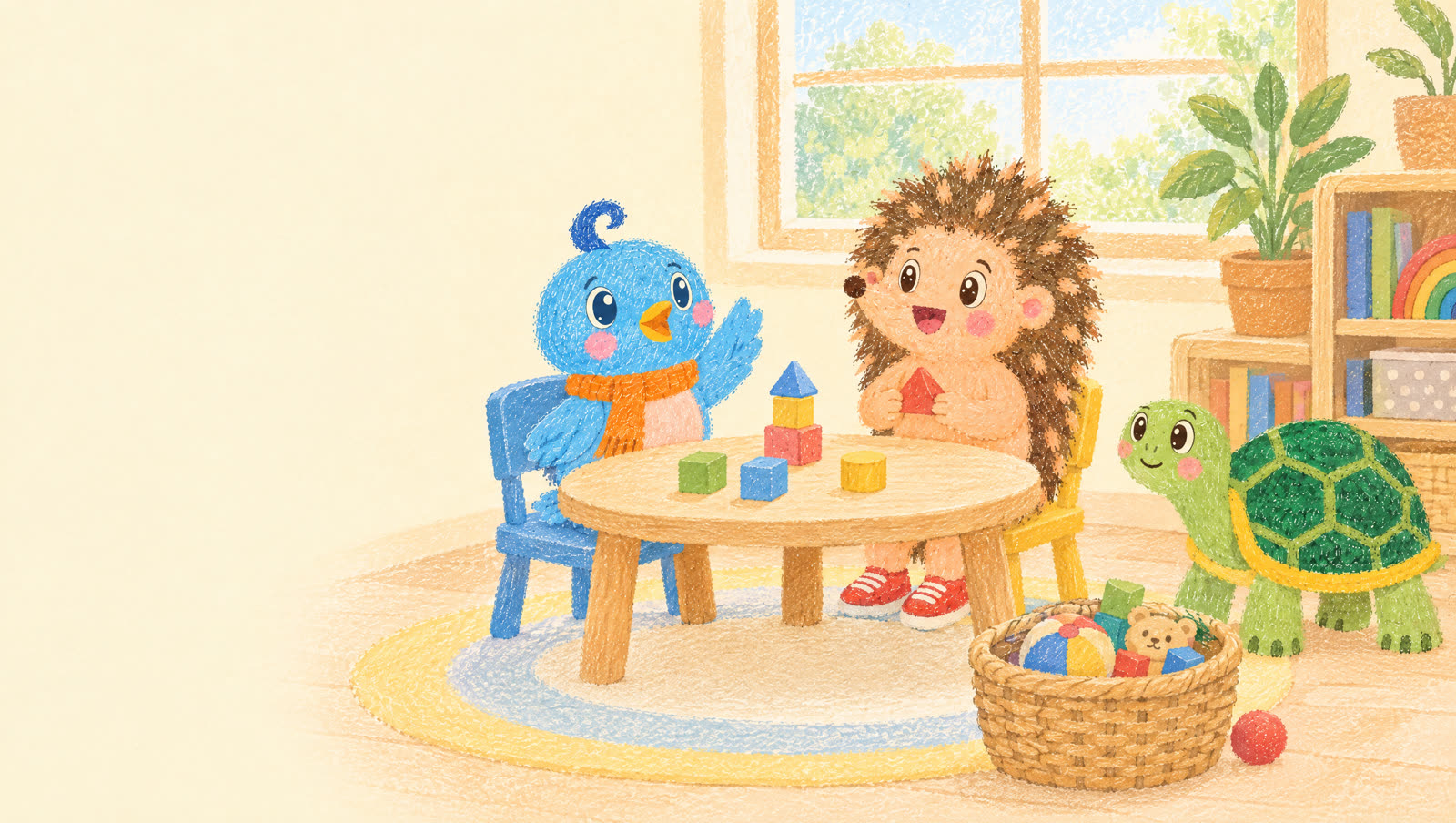
For a toddler, a speech-language evaluation looks a lot like play. At Oaklin Lane, a pediatric speech-language pathologist will play with your child on the floor with toys and books, watch how they communicate, and talk with you about their words, gestures, play, eating and daily routines. They'll look at both what your child understands and what they say, check how they use sounds, and may use standardized tests or parent questionnaires. Your word list from home is a huge help.
By the end, you'll know where your child is, whether therapy would help, and what you can start doing at home right away. If your child needs therapy, the speech therapist will build a plan around your child's interests and your family's routines, and coach you on the strategies that work best for your child. You can read more about what a pediatric speech-language pathologist does and what happens at a pediatric therapy evaluation.
Free early intervention for children under 3
Every state has a free early intervention program for babies and toddlers under 3 with developmental delays, through Part C of the federal Individuals with Disabilities Education Act. In Texas, it's called Early Childhood Intervention (ECI), run by Texas Health and Human Services. Any parent can contact ECI directly to ask for a free evaluation, with no doctor's referral needed. Families are welcome to use ECI, a private clinic like Oaklin Lane, or both, and our team is always happy to talk through the options with you. If you're wondering about coverage, see our guide to whether Texas Medicaid covers pediatric therapy.
Why early help makes sense
The toddler years are when the brain is building language faster than at any other time. That's why speech therapists encourage families to get help early instead of waiting to see if a child grows out of it. Much of early speech therapy is coaching parents to use strategies like the ones above, so the work keeps going all week at home, not just during a session. And if your child turns out to be right on track, you'll have peace of mind and a few new tricks.
FAQ
How many words should a 2-year-old say?
Most speech therapists look for at least 50 words and some two-word phrases, like "more milk," by a child's second birthday. The range is wide: some 2-year-olds say a few hundred words. The CDC's milestone checklist says most children combine two words by 24 months and say about 50 words by 30 months, the ages by which at least 75% of children have those skills.
Is it normal for a 2-year-old not to talk?
It's common for 2-year-olds to talk less than their peers, and about 1 in 7 is a late talker. But a 2-year-old who says very few words, or none, should be checked by a pediatrician and a speech-language pathologist, including a hearing test. Many late talkers catch up, but there's no way to know ahead of time which ones will, so getting checked early is the best plan.
What's the difference between a late talker and a speech delay?
A late talker is a toddler, usually 18 to 30 months, who says fewer words than expected but understands language well and is developing typically in other ways. "Speech delay" is a broader term parents often use for any talking concern. Speech therapists separate language (understanding and using words) from speech (how clearly sounds are made). A speech-language evaluation can tell you which, if either, your child has.
Do late talkers catch up on their own?
Many do. Studies following late talkers to school age find that most move into the typical range, though as a group they often score a little lower on language tests. Toddlers who understand well, use lots of gestures and play well are more likely to catch up. Since nobody can predict which children will, an early evaluation is a low-risk way to find out.
What counts as a word for a toddler?
Any sound your child uses on purpose, the same way, for the same thing. "Ba" for ball, "wawa" for water, "moo" for a cow, "uh-oh," names like "Mimi" and signs like "more" all count. If your child is learning two languages, count the words in both.
Does being bilingual cause a speech delay?
No. Learning two languages doesn't cause a delay. Bilingual toddlers may have fewer words in each language, but their total across both languages is usually right on track. Keep using the language you know best at home. A child who is behind in both languages combined should be checked.
Are boys slower to talk than girls?
On average, boys start talking a little later than girls, and boys are more likely to be late talkers. But the difference is small, and the same guidelines apply to boys and girls. Don't let "he's a boy" be a reason to wait if you're worried.
Does screen time cause speech delay?
Screens don't cause a language delay on their own, but they can take the place of the face-to-face talking and play that build language. The AAP recommends avoiding screen media other than video chatting before 18 to 24 months, and about an hour a day of high-quality programs, watched together, for ages 2 to 5. Turning off background TV is one of the easiest changes a family can make.
Should I wait until 3 to get my child evaluated?
No. If your 2-year-old has fewer than 50 words, isn't combining words or you have concerns, it's a good idea to ask now. Children under 3 can get a free evaluation through their state's early intervention program (in Texas, ECI), and a private pediatric speech therapy clinic can evaluate them too. Early help works best, and if your child is on track, you'll know sooner.
From all of us on the Lane
If you're reading this because you're worried, take a breath. You're paying attention, and that's the most important thing a parent can do. Count your child's words for a week, try two or three of the strategies above, and keep the talking playful and pressure-free. And if your gut tells you something's off, trust it. Our pediatric speech-language pathologists see toddlers every day at our Lake Highlands and Rockwall clinics, and we'd love to help. Fill out the Get Started form, and our team will help you with the next step.
Sources
- Centers for Disease Control and Prevention. CDC's Developmental Milestones (12, 15, 18, 24 and 30 month and 3 year checklists).
- Zubler JM, Wiggins LD, Macias MM, et al. Evidence-Informed Milestones for Developmental Surveillance Tools. Pediatrics. 2022;149(3):e2021052138.
- American Speech-Language-Hearing Association. Late Language Emergence (Practice Portal).
- American Speech-Language-Hearing Association. One to Two Years: Communication Milestones.
- American Speech-Language-Hearing Association. Learning Two Languages.
- Rescorla L. The Language Development Survey: A Screening Tool for Delayed Language in Toddlers. Journal of Speech and Hearing Disorders. 1989;54(4):587-599.
- Zubrick SR, Taylor CL, Rice ML, Slegers DW. Late Language Emergence at 24 Months: An Epidemiological Study of Prevalence, Predictors, and Covariates. Journal of Speech, Language, and Hearing Research. 2007;50(6):1562-1592.
- Rescorla L. Late Talkers: Do Good Predictors of Outcome Exist? Developmental Disabilities Research Reviews. 2011;17(2):141-150.
- Frank MC, Braginsky M, Yurovsky D, Marchman VA. Wordbank: An Open Repository for Developmental Vocabulary Data. Journal of Child Language. 2017;44(3):677-694.
- Rowe ML, Goldin-Meadow S. Differences in Early Gesture Explain SES Disparities in Child Vocabulary Size at School Entry. Science. 2009;323(5916):951-953.
- Roberts MY, Kaiser AP. The Effectiveness of Parent-Implemented Language Interventions: A Meta-Analysis. American Journal of Speech-Language Pathology. 2011;20(3):180-199.
- Romeo RR, Leonard JA, Robinson ST, et al. Beyond the 30-Million-Word Gap: Children's Conversational Exposure Is Associated With Language-Related Brain Function. Psychological Science. 2018;29(5):700-710.
- AAP Council on Communications and Media. Media and Young Minds. Pediatrics. 2016;138(5):e20162591.
- High PC, Klass P; Council on Early Childhood. Literacy Promotion: An Essential Component of Primary Care Pediatric Practice. Pediatrics. 2014;134(2):404-409.
- Hyman SL, Levy SE, Myers SM; Council on Children With Disabilities. Identification, Evaluation, and Management of Children With Autism Spectrum Disorder. Pediatrics. 2020;145(1):e20193447.
- Texas Health and Human Services. Early Childhood Intervention Services.
This article is for education and is not a diagnosis or medical advice. If you have concerns about your child's speech, language, hearing or development, talk with your pediatrician.